
Introduction
Your cart feels fine on the first tee, then the fabric grabs your thighs in the backswing, the waistband shifts at address, and you spend the next 18 holes tugging and readjusting instead of focusing on tempo. That kind of restriction is more than annoying; it can change how you rotate, create inner-thigh rub, and leave you sweaty and distracted right when you need clean contact.
This checklist fixes that by turning "performance golf shorts" into five quick, repeatable checks you can do at home: true four-way stretch, stable waistband and rise, inseam choice, moisture and drying performance, and pockets plus weather finish. You will also see how specific PULI options (7-inch, 9-inch, and 10-inch) map to different mobility and comfort needs. Start with Step 1 and move straight through; each step builds confidence before you commit.
Step-by-Step Guide: Choose Performance Golf Shorts That Move With You
Step 1: Confirm true four-way stretch (not just "a little give")
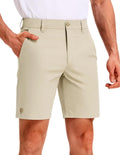
First, do a fast stretch reality check before you worry about pockets or styling. Grab a section of fabric at mid-thigh and pull it side-to-side, then front-to-back. Four-way stretch means you feel meaningful extension in both directions, and the fabric snaps back without rippling or bagging. If you only get stretch across the width (or it stays stretched out), you will feel it most when you rotate hard through impact.
Use the label to confirm the blend, then match it to how you play. For example, PULI's 9-inch golf shorts list 95% polyamide and 5% elastane, which is a classic performance mix for mobility with recovery. That elastane percentage matters because it supports rotation and stride length without forcing you to size up just to move.
Step 2: Lock the waistband and rise fit in your golf stance
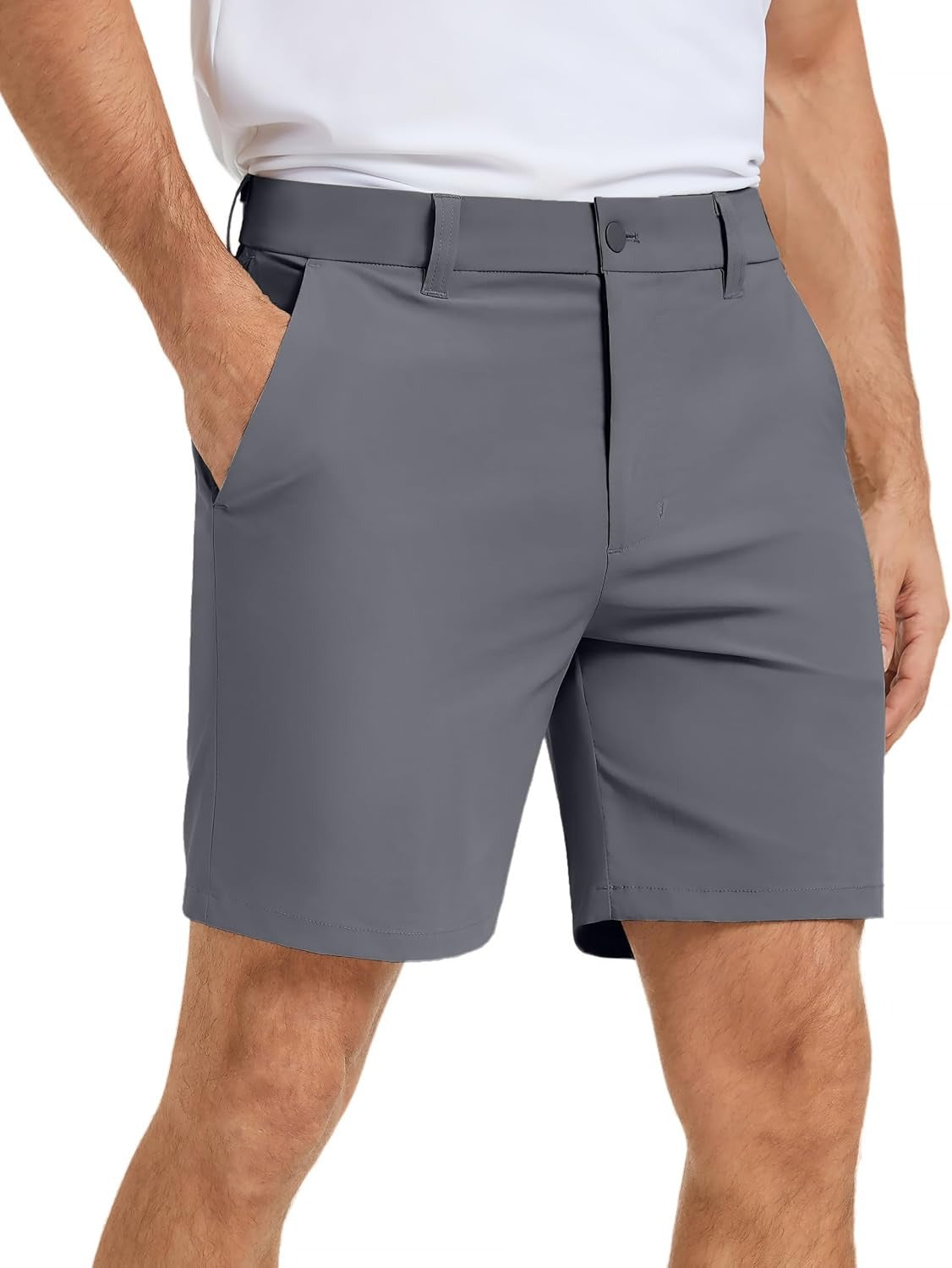
Next, test fit the way you actually play, not the way you stand in a mirror. Button and zip the shorts, then do three positions: (1) address posture (hips hinged), (2) a deep squat, and (3) a walking lunge. Your goal is zero pinching at the front hip crease, no gapping at the back waistband, and no sliding down when you hinge. If the rise is wrong, you will feel the waistband fight you every time you bend to tee a ball.
Look for waistband features that solve real on-course problems. PULI's 9-inch shorts call out an engineered stretch waistband and a brushed tricot-lined waistband intended to help keep your shirt tucked during the swing, which matters if you dislike re-tucking after every shot. When you test, load your front pocket with your phone and a few tees; if the waist stays planted, you have a workable rise and waistband tension.
Step 3: Choose inseam length for mobility (7, 9, or 10) and chafe control

Now pick inseam like you would pick club length, based on your motion. Shorter inseams can feel freer in hot weather, but they can also ride up and create inner-thigh friction if the leg opening grabs. Longer inseams can reduce rub and keep a cleaner look for work-to-course, but only if the fabric stretches well and the hem does not bind above the knee.
Use this simple decision check:
- Choose a 7-inch if you want maximum airflow and you rarely experience thigh rub.
- Choose the 9-inch if you want the most balanced option for walking 18 and rotating freely.
- Choose 10-inch if you want more coverage and a dressier silhouette without sacrificing swing comfort.
PULI gives you clear lanes here: their 7-inch shorts use a 95% polyamide and 5% spandex blend and emphasize "high stretch" plus a widened leg opening for comfort, while their 10-inch shorts list a 10-inch inseam and a 96% polyester and 4% elastane blend aimed at a business-ready straight-leg look.
Step 4: Validate moisture-wicking and drying claims with a quick at-home test
You do not need a lab to avoid sweaty cling, but you do need a method. Start by wearing the shorts indoors for 10 minutes while doing light movement (stairs, lunges, a few practice swings). If the fabric feels sticky fast, it often means sweat is staying on the inner surface instead of spreading out to evaporate. Better moisture-wicking keeps the fabric from gluing to your skin and reduces that heavy, damp feeling during the back nine.
For the "what to look for" side, reputable textile testing methods exist for liquid moisture management. AATCC introduced TM217-2025 for liquid moisture management (vertical and horizontal wicking using image analysis), which signals that wicking can be measured and compared when brands choose to publish those kinds of metrics. (inda.org) If a brand does not publish data, lean on a practical proxy: quick-dry fabric plus a smooth inner face that does not feel brushed or cottony.
PULI's 9-inch shorts describe moisture-wicking technology to pull sweat away from skin, while the 10-inch shorts emphasize quick-dry performance fabric for unrestricted swings. If you sweat heavily, prioritize the pair that feels lighter against the skin in your 10-minute test, then confirm it still passes Steps 1 and 2.
Shop: PULI Men's 10" Golf Shorts Dress Casual Summer Flat Front Lightweight Travel Short with Pockets
Step 5: Audit pockets and weather finish (carry comfort matters)
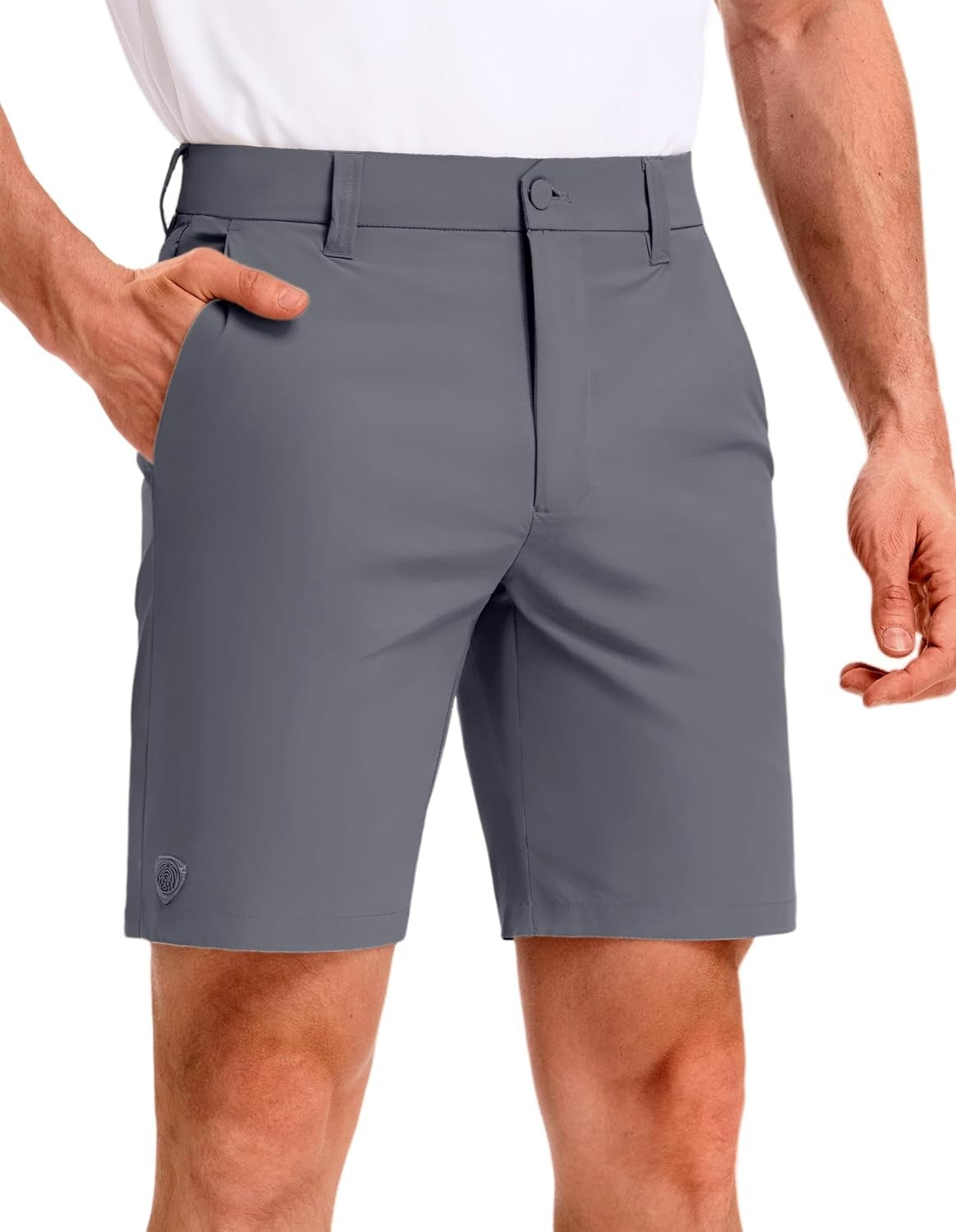
Finally, treat pockets and weather finish like course management: small choices prevent big annoyances. Load the shorts the way you actually play (phone, wallet, tees, ball marker, maybe a glove) and take five slow practice swings. If an item smacks your thigh, prints through the fabric, or pulls the shorts off-center, the pocket design is not working for your movement.
PULI makes the pocket story easy to compare:
- The 9-inch shorts list 5 pockets, including a zippered pocket for golf balls and your phone, plus back snap fastener pockets.
- The 7-inch shorts list 6 pockets, including hidden side pockets with zippers and an anti-slide waistband design.
- The 10-inch shorts highlight a 5-pocket utility setup plus a hidden phone slot sized to fit 6.7-inch devices.
For weather, look for water-resistant or water-repellent finishes if you travel or play in mixed conditions. Also, remember heat management: breathable, lightweight clothing is repeatedly emphasized in occupational heat guidance because it supports comfort and evaporative cooling in hot environments. (osha.gov) In golf terms, that translates to less overheating and fewer mid-round distractions.
Adapting Your Checklist in Different Scenarios
Hot rounds (high sweat, lots of walking)
Prioritize Step 4 first, then confirm Step 1. Quick-dry performance fabric and a lighter hand-feel reduce cling when humidity rises. Keep pocket carry minimal so the shorts do not pull when you sweat.
Rainy travel or unpredictable shoulder seasons
Put Step 5 earlier in the process. Water-resistant or water-repellent fabric helps with light rain and wet cart seats, but you still need stretch recovery so the fabric does not feel stiff after it gets damp.
Work-to-course days
Start with Step 2 and Step 3. A stable waistband and a cleaner, flat-front silhouette keep you comfortable at a desk, then ready to swing after hours. The 10-inch length can feel more "office acceptable" while still staying mobile.
Walking-heavy rounds with a lot of pocket carry
Run the loaded-pocket swing test in Step 5 twice: once with your phone in a front pocket, and once in a dedicated phone slot/zip pocket. Your best setup is the one that keeps the shorts centered during rotation.
Before You Start: Required Tools and Safety Considerations
Required Tools and Materials
- Full-length mirror: check rise and hem
- Your golf belt (if you wear one): test belt loops
- Golf shoes: match your real stance
- Phone, wallet, tees, marker: pocket audit
- A small towel: quick wicking test
- Two chairs or a stair step: lunge test
Safety Considerations
- Avoid oversized fit on stairs: extra fabric can snag and trip you.
- Do a deep squat test slowly: if the seams strain, stop and size up.
- Use zip pockets for valuables: phones can fall out on cart paths.
- Skip heavy fabric softeners on performance shorts: residues can reduce absorbency and interfere with moisture movement over time.
Troubleshooting Guide: Common Problems and Fixes
| Problem | Likely cause | Fix |
|---|---|---|
| Tight at backswing | Limited 4-way stretch | Higher elastane blend |
| Waist gapping | Rise too high/low | Try different size |
| Hem rides up | Inseam too short | Move to 9-10 inch |
| Sticky sweat feel | Weak wicking | Lighter quick-dry weave |
| Pocket swing slap | Poor pocket placement | Use zip/phone slot |
If you keep failing Step 2 (waistband shift), do not solve it by cinching harder. Instead, re-check the rise by doing the address posture and a squat; if the back waistband gaps, you need a different cut. If you keep failing Step 5 (pockets pulling), move your phone to a zip pocket or dedicated slot and remove duplicate items.
Conclusion
Choosing performance golf shorts gets easier when you stop guessing and start checking. Confirm four-way stretch first, then lock the waistband and rise in your real golf stance. After that, pick your inseam for mobility and chafe control, validate moisture-wicking and drying with a quick wear test, and finish by auditing pockets and weather readiness.
Run this checklist before your next round, and you will spend less time adjusting your kit and more time committing to the shot. If you are between two pairs, pick the one that passes Steps 1 and 2 most cleanly; mobility and stability beat extra features every time.
FAQ
What makes shorts truly four-way stretch?
Four-way stretch means the fabric extends both side-to-side and front-to-back, then returns to shape without bagging. You can confirm it by pulling the fabric in both directions and checking that it rebounds quickly. In wear, true four-way stretch feels like you can hinge at the hips and rotate through impact without the seat or thighs grabbing. If you only feel stretch across the width, you may still feel restriction during a full swing.
How much elastane is enough for golf mobility?
For many golfers, 3% to 8% elastane is a useful range, but thefabric'sc knit or weave also affects how it feels. Start by using the stretch test in Step 1 and then do an address posture plus deep squat test in Step 2. If the shorts pull across the thighs or seat when you hinge, you likely need more stretch or a different cut. If the shorts stretch but do not recover, size stability can suffer by the back nine.
Should performance golf shorts fit tighter or looser?
They should skim your body without pulling at the hips, thighs, or seat, and without excess fabric flapping at the leg opening. A too-tight fit creates chafe and restricts rotation, while a too-loose fit shifts when you walk and can feel bulky during the swing. Use a loaded-pocket practice swing to see if the shorts stay centered on your waist. If the waistband slides down or twists, adjust the size or try a different rise.
Is water-resistant the same as waterproof?
No, water-resistant usually means the fabric sheds light moisture but will eventually wet through in sustained rain. Waterproof products typically rely on membranes or coatings that block water more fully, which can reduce breathability. For golf, water-resistant shorts can be a smart balance because they handle drizzle and wet grass while staying comfortable in warm weather. If you play in heavy rain, you may still want dedicated rain gear over your shorts.
How do I choose between 7-inch, 9-inch, and 10-inch inseams?
Choose based on how the hem behaves during walking and rotation, and how sensitive you are to inner-thigh rub. A 7-inch inseam often feels cooler and less restrictive, but it can ride up if the leg opening is narrow or you have larger quads. A 9-inch inseam is a common middle ground for walking 18 without losing mobility. A 10-inch inseam can reduce thigh friction and look more polished, as long as the fabric has enough stretch to avoid binding above the knee.
Do fabric care choices affect performance?
Yes, care choices can change how performance fabric feels over time, especially for moisture movement and softness. Wash with mild detergent, avoid high heat when possible, and skip heavy softeners if the shorts rely on moisture-wicking performance. If the shorts start to feel sticky or hold odor, re-wash without additives and consider an extra rinse cycle. Always follow the garment care label first, then re-test stretch and fit after drying.