
You know the moment: you are halfway through a round, you take a full backswing, and your shorts either grab your thighs, ride up, or bunch under your belt line. That tiny friction point is enough to pull your focus off the shot, and it gets worse when you add sweat, a sticky waistband, or pockets that swing and slap your legs. If you guess wrong on fit, you can spend 18 holes managing your clothes instead of your tempo.
This guide breaks down when slim fit golf shorts actually deliver a minimal-fabric feel, and when they do the opposite by increasing contact and cling. You will learn how to map fit to your leg shape, match fabric and stretch to movement, choose inseam for airflow without ride-up, and keep pocket load from adding bounce. Follow the same selection path a gear-focused golfer uses: fit first, then fabric, then construction details.
Golf Shorts Minimal-Fabric Feel Fundamentals
What a "minimal-fabric feel" really is
A minimal-fabric feel is not just "less cloth." On the course, it is the combination of low friction (nothing rubbing or grabbing as you walk and rotate) and enough airflow (heat and sweat do not get trapped so the fabric does not cling). Slim fit golf shorts can help with the airflow side in a surprising way: less extra fabric means fewer folds that hold sweat. However, slim fit can also increase friction because there is more consistent skin-to-fabric contact, especially at the inner thigh and front hip crease.
To judge minimal feel correctly, run two checks:
- Contact check: do you feel fabric pressure at inner thigh, seat, and hip crease?
- Ventilation check: after 10 minutes walking, does the fabric stay dry and "float" or start sticking?
If either check fails, the shorts will feel heavier over time, even if the fabric is lightweight.
Fit taxonomy: slim, athletic, relaxed
Before you optimize anything, classify your scenario correctly. Most fit mistakes happen because golfers buy "slim" to reduce bulk, but what they needed was an athletic cut (room in the thigh, cleaner line at the leg opening). In simple terms:
- Slim fit: narrow thigh and leg opening, least excess fabric
- Athletic fit: shaped seat and thigh room, tapered leg opening
- Relaxed fit: more drape, more airflow space, more fabric movement
Slim fit golf shorts feel minimal when your thigh-to-waist ratio is low-to-moderate and you prefer less drape. If you have stronger quads or carry more muscle in the adductors (inner thigh), a true slim cut often creates "tension points" that you feel on every step.
Fabric stack: knit vs. woven
Fit is the frame, but fabric decides whether the frame behaves in heat. Most golf shorts use woven fabrics because they look clean and resist wrinkling. Knits can feel softer, but they may show pocket outlines and sometimes hold shape less in a dressier golf setting.
For a minimal-fabric feel, prioritize how the fabric handles moisture:
- Moisture-wicking: moves sweat off skin so fabric does not stick
- Quick-dry: evaporates fast so the shorts do not feel damp
- Stretch (often elastane/spandex): reduces binding when you rotate
PULI uses performance blends like 95% polyamide, 5% elastane (relaxed 5-inch inseam model) and 96% polyester, 4% elastane/spandex (hybrid and 7-inch dress models). Those blends are common in performance wear because they balance structure with stretch and fast drying.
Slim Fit vs Relaxed Feel
Module 1: Slim Fit vs Relaxed Feel
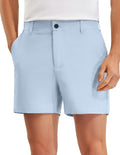
Slim fit golf shorts can feel "lighter" because they remove the two things golfers hate most: flapping fabric on windy tees and bunching behind the knees as you walk. When fabric does not swing, your brain stops tracking it, and that is a real comfort benefit. A cleaner leg line can also reduce the feeling of pocket bags moving around, because there is less fabric volume for them to pull.
However, slim fit is not automatically minimal. If the cut is narrow at the thigh, the fabric stays in constant contact with sweat zones. That usually increases cling, especially in humid conditions, which makes the shorts feel heavier as the round goes on. The giveaway is the "mid-swing grab" at the front hip crease or a hem that rides up after only a few steps.
Use this quick decision test before you commit to slim:
- If you can walk 20 steps without the hem creeping up, slim may work.
- If you can hinge and rotate (mock backswing) without hip crease pressure, slim will feel cleaner.
- If inner thigh contact feels warm or sticky within 5 minutes, you likely need athletic or relaxed.
PULI offers a relaxed-fit option that still targets a minimal feel by reducing friction points through roomier shaping while keeping performance features like moisture-wicking and UPF 50+ listed in the product details. That combination is often the best path if you want less distraction without forcing a tight cut.
Fabric and Stretch Mapping
Module 2: Fabric and Stretch Mapping

If you want a minimal-fabric feel, treat fabric like a system: moisture management plus stretch under tension. The common failure mode is buying a "lightweight" short that technically weighs less, but still feels heavy because it holds sweat in the wrong places. In practice, sweat increases friction, and friction makes you feel every seam and every fold.
Start by mapping your movement to where shorts bind:
- Address to backswing: waistband and hip crease tension
- Transition and follow-through: seat stretch and outer thigh
- Walking: inner thigh rub, hem stability, pocket bounce
Then match fabric behavior to those stress points. A small elastane/spandex percentage can make a big difference because the fabric can extend during rotation instead of pulling tight across the hips. Moisture-wicking matters just as much because when sweat stays on your skin, fabric adhesion rises and the shorts feel "stuck" rather than floating.
PULI lists performance blends like 96% polyester, 4% spandex on the hybrid dress shorts, alongside features like quick-drying, wrinkle resistance, UPF 50+, and moisture-wicking. That is a classic athleisure-style performance wear stack: structured enough to look like dress shorts, but engineered to move during a golf swing and walk.
On sun protection, it helps to understand what UPF means in plain numbers. A garment rated UPF 50 allows roughly 1/50th (about 2%) of UV radiation through the fabric, which is why UPF 50+ is widely treated as the top labeled tier in many markets. As Textile World explains, UPF 50 fabric blocks about 98% of UV and allows about 2% (1/50th) to reach skin. Textile World
Inseam, Hem, and Range
Module 3: Inseam, Hem, and Range
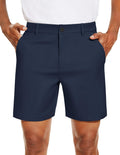
Before you change fit, check inseam. Inseam is the easiest lever for airflow, but it also changes where the hem lands relative to your quad. A shorter inseam often feels more minimal because it exposes more skin to air and reduces fabric surface area. That matters in hot, humid rounds where sweat makes fabric stick. The problem is that too short, combined with a narrow leg opening, can increase ride-up and inner thigh friction.
Think of inseam as a stability trade-off:
- Shorter inseam: more airflow, less fabric weight, higher ride-up risk
- Longer inseam: more coverage, potentially less ride-up, slightly warmer feel
To choose well, do a two-move test at home: a deep squat and a slow mock swing. If the hem climbs more than about an inch and stays there, the inseam is fighting your thigh shape or the leg opening is too tight. If the hem returns to place after you stand and take 5 steps, you are likely in the safe zone.
PULI offers different inseam options, including a 5-inch inseam relaxed-fit model and a 7-inch flat-front dress short model. The 7-inch version also lists moisture-wicking, lightweight quick-drying, UPF 50+, and a stretch waistband, which is a good package if you want a cleaner look with stable coverage.
Shop: PULI Men's Golf Dress Shorts Flat Front 7 Inch Lightweight Quick Dry Chino Casual with Pockets
How to Choose Slim Fit Golf Shorts for Minimal-Fabric Feel
Slim fit: less fabric, more contact
Slim fit golf shorts are better for minimal-fabric feel when your main annoyance is excess drape and flapping. They are worse when your main annoyance is thigh rub or cling. So the key is to identify where you generate friction:
- If you chafe at the inner thigh, do not chase slim by sizing down.
- If you feel bunching at the seat when walking, a slightly trimmer cut can help.
- If you feel pressure at the hip crease, you need more stretch or a different rise.
A practical rule: slim should feel "present but not pressurized." If you feel tension standing still, it will feel restrictive when you rotate.
Stretch percentage: mobility under tension
Stretch is not about doing gymnastics. It is about removing tension at the exact moment your body rotates and loads. Even a small elastane/spandex content can reduce binding at the hip crease and seat, which is where golfers feel restriction first.
Use this checklist when you evaluate performance wear shorts:
- Can you rotate into a backswing without the waistband pulling down?
- Do you feel the seat seam tug when you step up a slope?
- Does the fabric rebound, or does it stay stretched and bag out?
If you want that athleisure balance (clean look, easy motion), prioritize fabric that stretches and recovers instead of only feeling soft.
Waistband: flex, grip, comfort
A waistband should anchor the shorts without becoming the tightest point in your outfit. If you constantly adjust your belt or tug the waistband after swings, the shorts are not moving with you.
Look for waistband features that support movement:
- elastic or engineered stretch element
- enough height to distribute pressure
- lining that helps keep a shirt tucked
PULI lists a stretch waistband concept on multiple shorts, including a brushed tricot-lined waistband on the hybrid and 7-inch dress shorts. That detail matters because a smoother waistband lining reduces shirt bunching and helps prevent that sticky, compressed feeling around the midsection during a warm round.
UPF and breathability: heat management without cling
Heat management is a comfort multiplier because heat drives sweat, and sweat drives cling. UPF helps with sun exposure, but breathability and quick dry help with the minimal feel you notice shot-to-shot.
If you play midday rounds, UPF-rated shorts can reduce one part of the heat load by limiting UV reaching the skin. In May 2025, The Skin Cancer Foundation announced updated criteria for its Seal of Recommendation program, which includes standards related to UPF for fabrics as part of sun-protective clothing guidance. The Skin Cancer Foundation
However, do not confuse UPF with breathability. A tightly woven fabric can score high on UPF but still feel warm if airflow is low. So when you want a minimal-fabric feel, keep the hierarchy straight:
- Fit controls friction points.
- Fabric controls cling and drying.
- Construction controls bounce, pressure, and seam rub.
Conclusion
Slim fit golf shorts can be better for a minimal-fabric feel when they remove extra drape without creating new friction points. The goal is balance, not tightness: you want less bulk, but you also need enough room and stretch to rotate, walk, and stay dry. Pick fit first (slim, athletic, relaxed), then confirm fabric behavior (moisture-wicking, quick-dry, stretch), and only then evaluate details like waistband, pockets, and seams.
If you follow that order, you can build a small, reliable set of performance wear shorts that feel clean in motion and stay comfortable across different temperatures and tee times.
FAQ
Do slim fit golf shorts always feel lighter?
No, slim fit golf shorts do not always feel lighter because less fabric can still mean more friction. Slim cuts reduce flapping and bunching, which can feel more minimal when you stay dry. However, slim shorts can feel heavier if sweat makes them cling at the inner thigh or hip crease. You should judge "lighter" by how little you notice the shorts after 30 minutes walking, not by how they feel standing still. If you feel pressure points before you start sweating, that slim fit will usually feel worse mid-round.
How should golf shorts fit at the waist for comfort?
Golf shorts should sit securely at the waist without pinching when you rotate and breathe. A waistband with stretch can help because it maintains contact without forcing you to over-tighten a belt. You should be able to slide two fingers under the waistband when standing, then feel it stay stable during a mock swing.
How much stretch do you need in golf shorts for a full swing?
You typically need enough stretch to remove tension at the hip crease and seat during rotation, even if you do not feel "restricted" at address. A small spandex or elastane percentage can make a noticeable difference because it lets the fabric extend under load and then recover. You should confirm stretch by doing a slow backswing and follow-through while paying attention to waistband pull and seat tightness.
Why do my golf shorts ride up when I walk?
Golf shorts ride up most often because the thigh opening is too narrow for your quad shape or because the fabric grips when you sweat. When the hem is under tension, each step pulls the shorts upward and they do not settle back down. A shorter inseam can make this worse if it lands at the widest part of your thigh. You can reduce ride-up by choosing a cut with more thigh room, improving moisture management so the fabric slides instead of sticks, and avoiding sizing down. If ride-up happens within the first 10 minutes of walking, it will usually be a consistent problem all round.
Can pocket design really change comfort during a round?
Yes, pocket design changes comfort because pocket bags, zippers, and carried items alter how shorts drape and move. When you load a heavy phone or multiple balls on one side, the shorts twist slightly with every step. That twist increases rubbing at the inner thigh and can make the waistband feel unstable. More pockets can improve organization, but they also add layers and seams that you may feel in heat. If you want a minimal-fabric feel, keep pocket carry simple and spread weight so the shorts stay balanced.