
Picking sun-protective golf shorts sounds simple until you are halfway through a hot back nine and start noticing what the product page did not explain. A pair can look polished at hole one, then feel sticky, tight at the waistband, or too exposed after hours of walking and repeated swings. That mismatch costs you comfort, distracts your setup, and can leave more skin exposed than you expected from performance wear marketed for sunny rounds.
This guide breaks down what actually makes sun-protective golf shorts hold up in long rounds: fabric protection, coverage, moisture-wicking behavior, stretch recovery, and fit. From there, it moves into three course-ready PULI options with different inseams, then finishes with a simple decision framework and practical mistakes to avoid. If you want golf shorts that work as real athleisure and not just shelf appeal, start with the basics below.
Sun-Protective Golf Shorts Fundamentals
Choosing sun-protective golf shorts well starts with one principle: fabric rating alone is not enough. A pair may block a high share of UV through the cloth itself, but long-round performance also depends on how much skin the shorts cover, how the fabric behaves when stretched, and whether the shorts still feel dry and stable after several hours on the course.
What UPF tells you
UPF measures how much ultraviolet radiation a fabric lets through. UCSF Health explains that UPF is the clothing version of sun protection measurement, while Cleveland Clinic notes that UPF 50 clothing blocks most UV rays. In plain terms, the higher the UPF, the less UV reaches the skin through the fabric. That matters for golf because your legs, hips, and waist stay exposed to light for hours during walking rounds and range sessions. According to UCSF Health, UPF is specifically designed to describe clothing-based UV protection, and WHO says UPF 50 fabric blocks about 98% of the sun's rays.
Why coverage matters as much as rating
A strong UPF label does not cancel out a short hemline. Coverage still decides how much skin is actually protected. Cancer Council explains that garment design affects protection because coverage, stretch, moisture, and fabric structure all influence real-world performance. That means longer inseams can create a practical protection advantage during long rounds, especially when you spend hours walking in direct sun.
What to check:
- Inseam length versus your usual stance width
- Whether the hem stays in place when you crouch
- How much upper thigh remains exposed
- Whether the fabric gets tight when seated in a cart
Stretch, shape, and recovery
Stretch is great for mobility, but it creates a trade-off. Shorts need enough elastane or spandex to support rotation, bending, and walking comfort, yet too much tension can reduce coverage consistency and make the garment feel loose by hole fifteen. Cancer Council notes that stretched fabrics can become less protective, which is one reason correct sizing matters for golf apparel that promises sun protection. A pair that fits cleanly without over-pulling across the hips usually performs better than one that feels painted on.
Key specs or signals:
- Polyester-elastane or polyester-spandex blends
- Smooth drape instead of cling
- Waistband that recovers after sitting
- Seams that do not twist after movement
10-Inch Inseam Course Fit
If your priority is balanced coverage with a clean, traditional golf look, a 10-inch inseam is often the easiest place to start. It usually covers enough thigh for better sun protection than shorter cuts, but it does not feel as long or casual-heavy as a below-knee short. That balance matters on long rounds because you want coverage that helps without changing how your stance, squat, or walk feels.
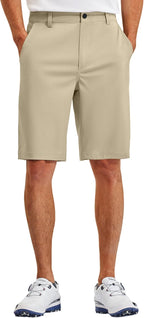
PULI Men's 10" Golf Shorts Dress Casual Summer Flat Front Lightweight Travel Short with Pockets uses a 96% polyester and 4% elastane fabric blend with a listed 10-inch inseam, zipper closure, stretch fabric, and UPF 50+ quick-dry construction. The flat-front shape and straight-leg profile keep the look closer to classic golf attire than gym-style performance wear, which helps if you want one pair to move from course to clubhouse without feeling too technical. The product page also notes wrinkle resistance and a five-pocket layout, including a hidden phone slot sized for larger devices.
Why it matters
For long rounds, this inseam length works best when you want to reduce upper-thigh exposure without stepping into oversized territory.
What this means:
- Better coverage than 5-inch shorts
- Easier dress-code fit at traditional clubs
- Less exposed skin during walking rounds
- Enough length for seated comfort in carts
Best fit
This option suits golfers who prefer a polished silhouette and want their athleisure pieces to still look course-appropriate.
What to check:
- Whether the hem lands above the knee on your height
- Whether the hidden phone pocket stays flat when loaded
- Whether the waistband stays calm after nine holes
- Whether the fabric still feels light in humid weather
Shop: PULI Men's 10" Golf Shorts
5-Inch Inseam Hot Weather Play
When heat is your biggest problem, shorter shorts can feel better fast. A 5-inch inseam usually improves airflow perception and makes the legs feel less boxed in during humid rounds. That can be a real performance gain if longer shorts bother you during walking or if you naturally prefer more modern performance wear. The trade-off is obvious: you gain openness and athletic mobility, but you expose more skin to direct sun.
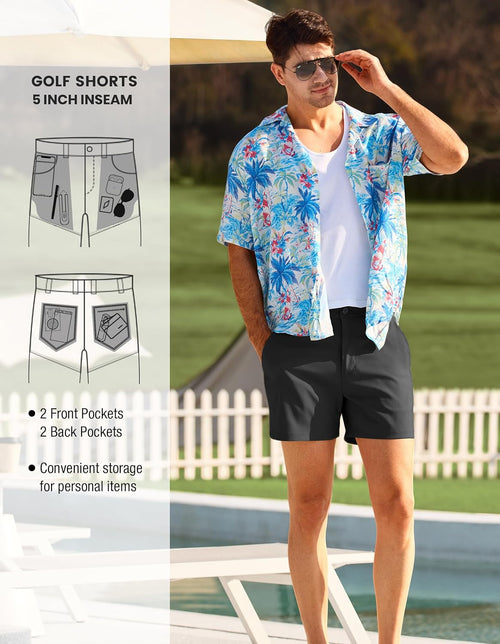
PULI Golf Shorts Men's 5 Inch Inseam Stretch Casual Dress Shorts with Pockets Waterproof Lightweight Quick Dry uses a 96% polyester and 4% elastane fabric, zipper closure, lightweight stretch build, quick-dry behavior, and water-resistant fabric. The page also highlights an elastic waistband and a pocket setup with two side pockets, two back pockets, and one secure zippered pocket. For golfers who want an athletic look without moving into gym shorts territory, that combination is practical. The shorter inseam, however, means sun-protective golf shorts in this category depend more heavily on your sunscreen plan and on whether you accept the lower coverage for better ventilation.
Why it matters
This cut works best for very warm days, casual rounds, and players who dislike fabric bunching around the knee.
Best fit:
- Hot and humid play
- Casual club settings
- Players who prefer shorter athleisure cuts
- Rounds where airflow matters most
What to check
Because the coverage is lower, pay attention to both comfort and sun strategy.
Mini-checklist:
- Test the inseam while bending to read putts
- Check if the elastic waist stays stable
- Make sure pockets do not flare open
- Pair with sunscreen on exposed thigh area
Shop: PULI Men's 5" Stretch Golf Shorts
Long-Round Stress Points for Sun-Protective Golf Shorts
The real test for sun-protective golf shorts happens after the first hour. Long rounds expose pressure points that short fittings miss: waistband fatigue, pocket drag, seam friction, sweat retention, and shape loss. Cancer Council points out that garment design affects protection, which is useful here because practical wear issues often change how consistently a pair covers and supports you during play. (cancer.org.au)
Waist comfort changes as the round goes on
A waistband that feels fine on the first tee can start pressing into your midsection after lunch, cart time, or repeated bending.
What to check:
- Stretch without rolling
- Recovery after sitting
- No pinching at the front button
- Stable feel when walking uphill
Pocket load affects swing freedom
Pockets are useful, but they also change how shorts hang. Tees, phone, wallet, glove, and range token weight can pull fabric off line.
What this means:
- Hidden phone storage reduces visible bulk
- Zippered pockets improve security
- Overloaded back pockets can disrupt drape
- Heavy carry changes swing comfort over time
Seams reveal durability under movement
Durability often shows up first at the inseam, pocket edge, and waistband join. If the fabric twists, binds, or rubs after repeated walking, the shorts may not hold up well over a season.
Common mistake:
- Judging quality only by first-touch softness
- Ignoring seam placement around the inner thigh
- Assuming stretch always means durability
- Forgetting to test movement before keeping a pair
Inseam length: coverage versus mobility
Start with inseam because it drives both UV coverage and comfort.
| Inseam length | Coverage | Mobility feel | Best fit |
|---|---|---|---|
| 5 inch | Lowest | Freest | Hot casual rounds |
| 10 inch | Balanced | Stable | Traditional golf use |
| 12 inch | Highest | Relaxed | Walking and crossover wear |
Fabric blend: stretch versus crispness
Most of the featured PULI shorts use a polyester blend with 4% elastane or spandex, which is a common performance wear formula.
What to check:
- Polyester for lighter weight and quick drying
- 4% stretch fiber for movement
- Smooth surface for cleaner drape
- Enough body so pockets do not print through
Pocket layout: storage versus bulk
Storage helps on course, but extra compartments can make shorts feel heavier or less tidy.
| Pocket feature | Advantage | Trade-off |
|---|---|---|
| Hidden phone pocket | Cleaner silhouette | Slight added structure |
| Zippered pocket | Better security | Less quick access |
| Deep front pockets | Easy reach | Can widen front drape |
| Back pockets | Classic golf look | Bulk when overfilled |
Conclusion
Yes, sun-protective golf shorts can hold up in long rounds, but only when fabric performance and fit work together. UPF matters, yet coverage, quick-dry comfort, stretch recovery, pocket design, and waistband stability decide whether the shorts still feel good after several hours outdoors.
If you want the safest all-around starting point, a 10-inch inseam usually gives the best mix of coverage and mobility. If you walk often and want more protection, a 12-inch hybrid short makes sense. If you play in high heat and care most about airflow, a 5-inch option can work well when paired with a stronger sunscreen routine and realistic expectations about exposed skin.
FAQ
How do sun-protective golf shorts perform during long rounds?
Sun-protective golf shorts perform well during long rounds when lightweight fabric, stretch, and waistband comfort stay consistent over several hours. The shorts need to keep their shape through walking, bending, and repeated swings without turning sticky or restrictive. In practice, quick-dry fabric helps just as much as UV blocking because wet, clingy material becomes distracting late in the round. The best pairs also keep pocket bulk controlled, since extra drag can change how the shorts hang and move.
What should you check before buying golf shorts for sun protection?
You should check inseam length, fabric density, stretch behavior, and dry feel before buying golf shorts for sun protection. Start with how much skin the shorts actually cover, because coverage changes the practical value of any UPF claim. Then look at whether the fabric stays light and smooth after sweat or light moisture. Finally, test pocket placement and waistband recovery, since both affect comfort more during hour four than during a quick try-on.
Are shorter golf shorts worse for sun protection?
Shorter golf shorts are not automatically worse in fabric performance, but they do provide less physical coverage. That means more skin is exposed even if the fabric itself has strong protective qualities. A 5-inch inseam can still be a smart choice for hot weather if airflow and freedom of movement matter most to you. You just need to pair that choice with sunscreen and a broader sun plan because the exposed thigh area increases.
What helps golf shorts last for multiple seasons?
Golf shorts last longer when the fabric blend recovers well, the seams stay stable, and the waistband does not lose shape. Polyester-stretch blends are often chosen because they dry quickly and handle repeated movement better than heavier casual fabrics. Good durability also depends on how you use the shorts, especially if you regularly overload the pockets or wash them roughly. Over time, fading, loosened seams, and weak waistband recovery are usually the first signs that a pair is aging.
Do quick-dry golf shorts feel better in hot weather?
Yes, quick-dry golf shorts usually feel better in hot weather because they shed sweat and light moisture faster. That keeps the fabric from sticking to your thighs or feeling heavy during long walks between shots. Moisture-wicking performance also helps reduce rubbing at the inseam and waistband, which matters more as body heat rises. In very warm conditions, dry feel can shape your comfort almost as much as inseam length.
Can golf shorts replace other sun-protection steps?
No, golf shorts cannot replace other sun-protection steps. They protect only the skin they cover, and even that protection depends on garment design, fit, and condition. Exposed areas still need sunscreen, while your head and eyes still need protection from a hat and sunglasses. For the best long-round setup, think of sun-protective shorts as one part of a layered outdoor routine rather than a complete solution.
How does pocket design affect comfort during eighteen holes?
Pocket design affects comfort by changing weight distribution, swing freedom, and how cleanly the shorts hang on your body. Deep front pockets are practical, but they can pull the front panel outward if you carry too much. Hidden or zippered pockets help keep valuables secure and can reduce bouncing during walking rounds. The key is to carry only what you need, because even well-designed pockets cannot fully hide extra bulk over four or five hours.