
A winter wrap is a simple piece that does a lot of work. It can add warmth on a windy walk, soften a sharp office outfit, and act like a light blanket on cold flights. When you choose the right wrap, you get comfort without giving up style.
Most people run into the same three problems:
-
Slipping: A wrap looks great in the mirror, then slides off in five minutes.
-
Itch: Some fibers feel scratchy, especially at the neck.
-
Overheating: A cozy layer can turn into a sweaty layer indoors.
This Ultimate Guide solves those pain points with a clear, wearable framework. You will learn how fibers behave, how construction changes warmth, how to style a wrap so it stays put, how to manage temperature across microclimates, and how to care for delicate knits so they keep their drape.
If you care about Quiet Luxury and Slow Fashion, a wrap is an ideal place to start. It is a high-visibility item you wear often, so quality and versatility matter more than trends.
Official Site: PULI
Core Foundations
Wrap types shawl poncho and cape
A shawl is usually a rectangle that drapes over the shoulders. It is flexible because you can fold, belt, pin, or loop it. A poncho is more structured and often has a neck opening or a built-in front system, so it stays in place with less effort. A cape sits between the two and tends to feel more tailored.
If slipping is your main issue, start your search with poncho-like designs. They create anchoring points through shape, not just friction. A classic shawl can still work, but it benefits from a styling system like belting or looping.
Fiber basics wool cashmere and blends
Wool and cashmere are both animal fibers, but they do not behave the same in daily wear. Wool is known for resilience, spring, and long-term durability. Cashmere is known for softness and a warm feel at a lighter weight.
Blends matter because they can balance the trade-offs. A small percentage of wool can add structure and recovery, while synthetics can add stretch and reduce deformation. The goal is not to chase a label. The goal is to match fiber behavior to your lifestyle and climate.
Consumer research also suggests many shoppers still prefer natural fibers when comfort and trust are the priority. In a Norwegian consumer survey published in the journal Fibers, wool ranked as the top preferred fiber at 72%, with cotton second at 63%. That preference supports why many people treat wool-based layers as a long-term wardrobe staple. According to Fibers, those preferences also connect to broader concerns about material impacts.
Construction weave density and knit gauge
Two wraps can have the same fiber content and still feel totally different. Construction is why.
- Weave density or knit tightness controls wind resistance. A looser fabric can look airy, but wind cuts through.
- Knit gauge changes drape. A tighter gauge often looks more refined and holds shape better.
- Edge finishing and rib textures affect how a wrap grips layers underneath. Ribbed textures often create more friction, which helps reduce slipping.
If you commute in coastal wind or cold rain, construction often matters more than fiber name.
Aesthetic Quiet Luxury and Slow Fashion
Quiet Luxury is not only about neutrals. It is also about restraint in silhouette, clean lines, and pieces that look intentional without loud branding. A wrap supports that because it creates a strong shape with minimal effort.
Slow Fashion is the buying mindset that makes a wrap worth it. You want fewer pieces, worn more ways, with care that extends life. When you choose a wrap that solves your real daily scenarios, you wear it for seasons instead of for a single photo.
Material Match Wool vs Cashmere
How warmth really works loft crimp and trapped air
Warmth in wraps comes from trapped air. Fibers that create space, loft, or spring help hold warm air near your body. Wool fibers often have natural crimp, which builds small air pockets and supports insulation.
Cashmere can feel very warm for its weight because it is fine and soft, so it sits close to the body while still insulating. However, warmth is still affected by fabric thickness, density, and how you layer it under a coat.
If you want a simple mental model, use this:
- Windy outdoors: prioritize density first.
- Dry cold indoors: prioritize comfort against skin.
- Mixed day: prioritize easy venting and drape.
Feel weight and next to skin comfort
People often pick cashmere for softness. That is valid, especially if you wear the wrap close to the neck or collarbone. Wool varies widely. Some wool feels itchy, while fine wool and well-finished blends can feel smooth.
If you react to itch, do not force it. Use two levers instead:
- Choose a softer blend or a knit designed to feel smooth.
- Wear a thin base layer with a higher neckline, so the wrap touches fabric, not skin.
Durability and daily wear trade offs
Daily wear creates friction. Bags rub shoulders, desks rub elbows, and seat belts rub edges. That friction can cause pilling, especially on softer fibers.
If you want a wrap that you can wear hard, consider blends that keep a polished look even after repeat use. A structured knit can also keep an elegant drape longer because it resists stretching.
Where PULI fits in a practical material strategy
PULI offers a crossover-front knit poncho wrap that leans into everyday function. The product details list a fabric blend of 65% RPET, 13% acrylic, 13% nylon, 6% wool, and 3% spandex, with hand wash care. The blend choice supports a practical goal: warmth with stretch and shape recovery for travel and daily wear.
The signature pull-through closure also changes the wear experience. Instead of fighting a slipping rectangle, you get an anchored front that holds a relaxed silhouette while you move.
Shop: PULI Women's Shawl Wraps Casual Warm Travel Shawls Knit Poncho Sweater with Crossover Front
Styling Systems That Stay Put
The goal control movement not perfection
A wrap should move with you, not against you. The best styling system is the one that lets you walk, sit, and reach without constant readjustment.
Think of stability as three anchors:
- Neck anchor: loop or fold creates friction at the collar.
- Waist anchor: belt creates structure and prevents sliding.
- Shoulder anchor: pin or built-in closure locks layers.
You do not need all three. Most people need two.
System 1 the belted look for structure
This method works when you want a polished silhouette that reads like a sleeveless layer.
Steps:
- Center the wrap on your shoulders, letting both ends fall forward.
- Add a belt at your natural waist over the wrap.
- Adjust the fabric above the belt for a soft blouson effect.
Why it stays put: the belt stops downward slide and creates shape. It also supports Quiet Luxury because it looks intentional and tailored.
System 2 the loop for commute proof warmth
Looping concentrates warmth at the neck and chest. It also reduces arm interference.
Steps:
- Fold the wrap lengthwise.
- Drape it around your neck.
- Pull ends through the fold and tighten gently.
Why it stays put: layered friction increases, so it resists slipping when you walk fast or carry a bag.
System 3 the shoulder toss with a discreet anchor
This works for dinners, events, and office layering when you want drape.
Steps:
- Drape with one side longer.
- Toss the longer end over the opposite shoulder.
- Use a small pin or brooch at the shoulder if needed.
Why it stays put: the shoulder anchor prevents the tossed end from falling.
PULI styling advantage the pull through closure
A crossover-front design acts like a built-in anchor. You get a clean front line because the closure creates a controlled drape.
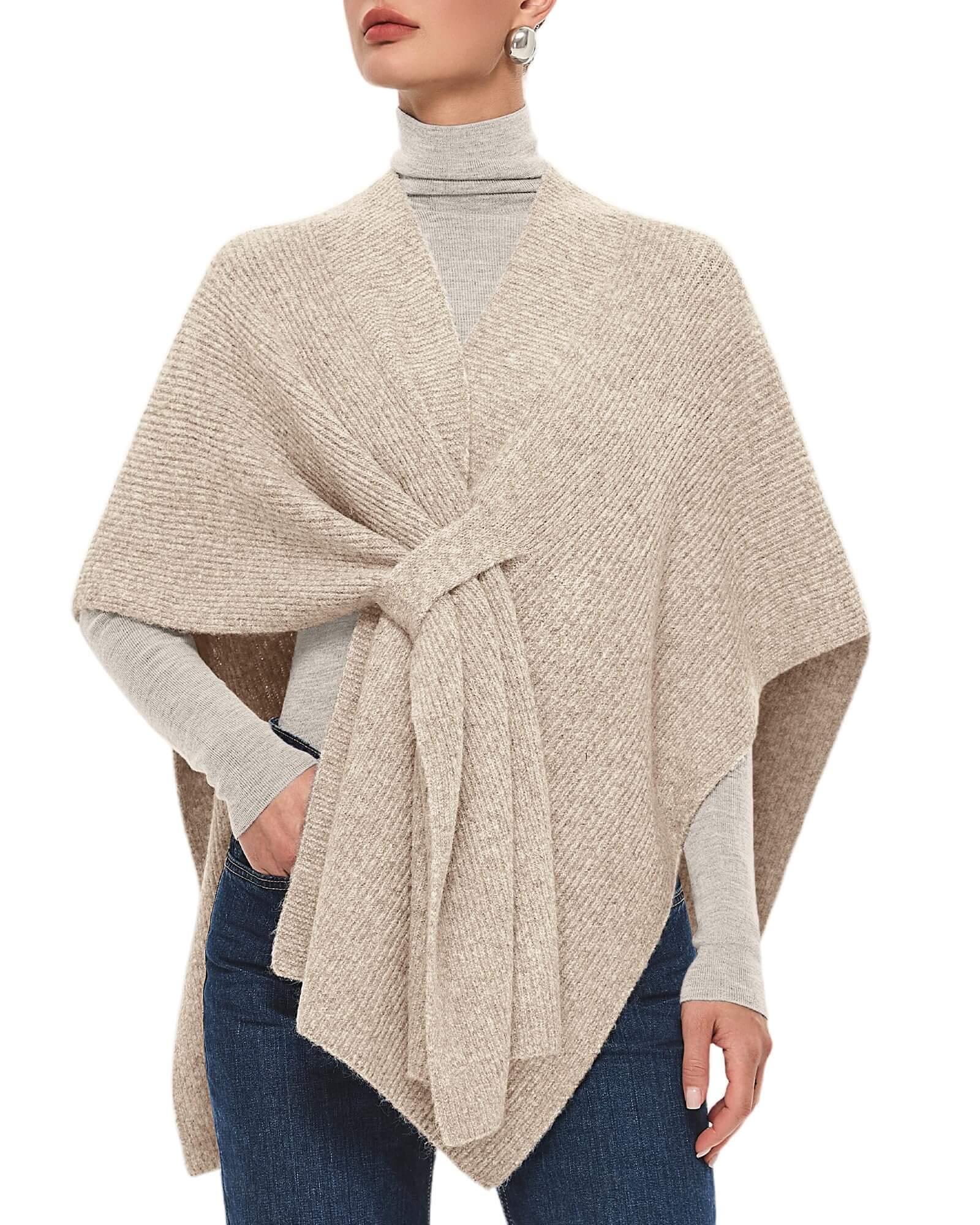
For everyday wear, that matters because it reduces decision fatigue. You can throw it on, pull through, and go. It is also practical for Slow Fashion because a stable styling system increases how often you actually wear the piece.
Shop: PULI Women's Shawl Wraps Casual Warm Travel Shawls Knit Poncho Sweater with Crossover Front
Commuter to Office Temperature Control
Why microclimates make wraps tricky
A winter day is rarely one temperature. You move through:
- cold sidewalk wind
- heated train or car
- warm office
- cold lobby or restaurant
A wrap is effective because it is modular. You can vent it, fold it, or shift coverage without removing your core outfit.
Outdoor strategy pair the wrap with an outer shell
A wrap alone can feel warm, but wind can still cut through many knits. The simplest upgrade is layering the wrap under a coat or shell.
A practical sequence:
- thin base layer
- wrap as mid layer
- coat as wind barrier
This keeps warmth stable while avoiding bulk at the arms.
Indoor strategy drape for polish vent for comfort
Once indoors, most people overheat at the neck and underarms first. You can fix that with shape.
Try these adjustments:
- Open the front to create airflow.
- Shift coverage from neck to shoulders.
- Fold the top edge down to reduce heat at the throat.
The goal is to keep the Quiet Luxury silhouette while feeling comfortable at a desk.
Travel strategy airplane blanket without the bulk
On flights, wraps shine because you can cover shoulders and legs. A poncho-style wrap also stays on when you stand up, which helps when you grab luggage or walk through a terminal.
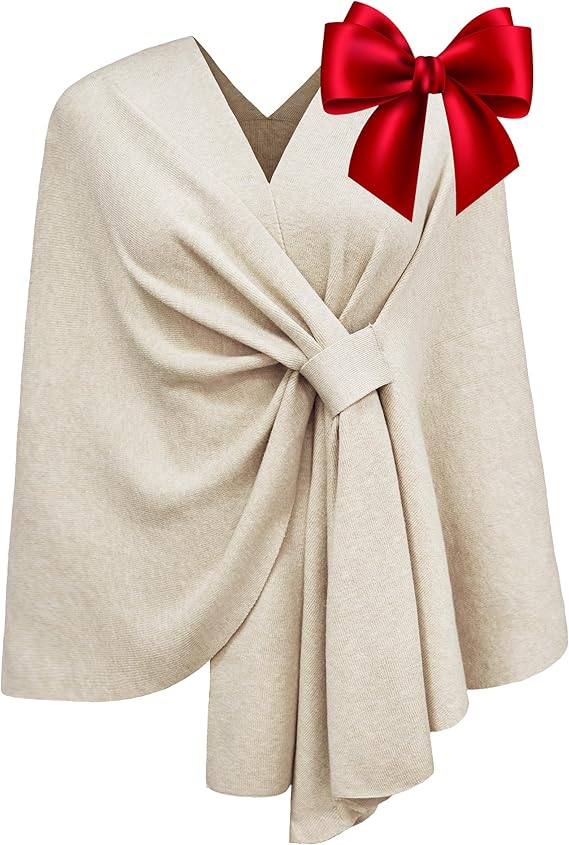
PULI describes this wrap as suitable for travel and for cold air conditioning. The blend includes spandex for stretch, which helps comfort when you sit for long periods.
Shop: PULI Women's Shawl Wraps Casual Warm Travel Shawls Knit Poncho Sweater with Crossover Front
Care Storage and Pilling Control
Refresh first wash less
Most wraps do not need frequent washing. Airing is often enough.
A simple refresh routine:
- Hang the wrap in a ventilated space for 24 hours.
- Brush lightly if you see surface lint.
- Spot clean small marks instead of washing the full piece.
This supports Slow Fashion because fewer washes mean less fiber stress.
Hand wash basics protect the knit structure
For delicate blends and wool mixes, hand washing reduces agitation.
Practical steps:
- Use cool water.
- Use a gentle detergent made for delicates.
- Press water out gently. Do not wring.
If your care label says hand wash, treat that as a durability strategy, not a chore.
Dry flat reshape while damp
Hanging a wet knit can stretch it out, especially at the shoulders.
Drying checklist:
- Lay flat on a towel.
- Smooth seams and edges back into shape.
- Keep away from direct heat.
Pilling control reduce friction and remove early
Pilling happens when loose fiber ends tangle on the surface. It is normal with many natural fibers and soft blends.
To reduce pilling:
- Rotate wear so the same shoulder does not face your bag every day.
- Store folded, not hung, if the knit is heavy.
- Remove pills early with a gentle fabric tool so they do not spread.
This is also where quality habits meet Quiet Luxury. A smooth surface keeps the wrap looking intentional.
How to Choose a Quiet Luxury Winter Wrap
Fiber content match warmth to lifestyle
Start with your real use case:
- Daily commute and travel: look for blends that keep shape and resist friction.
- Next-to-skin comfort: prioritize softness and finishing.
- Cold outdoor time: prioritize density and wind resistance.
If you are building a Slow Fashion wardrobe, favor pieces you can wear weekly without babying them.
Density and structure match wind and slip resistance
Ask two questions:
- Can wind pass through the knit easily?
- Does the silhouette have anchors?
Structured ponchos and crossover fronts often win on stability. Rectangular shawls win on styling variety.
Size and coverage match shoulder to hip protection
A wrap should cover the shoulder line without constant tugging.
Use this quick fit check:
- If it covers only the neck and upper chest, it behaves like a scarf.
- If it covers shoulders and upper arms, it behaves like a layer.
- If it covers to the hip, it becomes a true warmth tool for long sits and travel.
Care label match your time and effort budget
Slow Fashion only works if you can maintain the pieces.
Be honest:
- If you will not hand wash, choose a fabric you can realistically care for.
- If you travel often, choose a wrap that recovers shape after packing.
Decision table for real life scenarios
| Scenario | Priority | What to look for | Trade off |
|---|---|---|---|
| Windy commute | Warmth plus wind blocking | Denser knit or layered under a coat | Can feel heavier indoors |
| Office microclimates | Easy venting | Open front and controlled drape | Less neck warmth outdoors |
| Frequent travel | Stability and packability | Poncho or crossover front structure | Less styling variety than a rectangle |
| Sensitive skin | Soft feel at neck | Smooth yarn and gentle finishing | Softer fibers may pill more |
One more note on trends: interest in natural fibers and sustainability continues to shape buying choices. A 2025 review on natural fibers highlights how environmental concerns are pushing demand for alternatives to synthetics. According to ScienceDirect, natural fibers are often framed as part of a broader sustainability transition in textiles.
Best Practices and Pitfalls
Best Practices
- Choose tighter construction for wind.
A dense knit or weave often feels warmer outdoors than a looser, fluffier look because it blocks moving air. - Layer the wrap with an outer shell.
A wrap provides insulation, while a coat provides wind resistance. Together they make warmth more stable. - Refresh by airing for 24 hours.
This reduces the need for frequent washing and helps preserve drape, color, and surface smoothness. - Build a repeatable styling system.
Pick one stable method for commuting and one draped method for evenings. Consistency reduces slipping frustration.
Common Pitfalls to Avoid
- Machine washing delicate fibers.
Agitation can distort knits and increase pilling. If the label says hand wash, believe it. - Hanging wet wraps to dry.
Water weight can stretch shoulders and edges. Flat drying protects shape. - Ignoring early pilling.
Pills can multiply if left in place because friction keeps catching loose fibers. Remove them early with a gentle tool. - Overheating indoors and blaming the wrap.
Most overheating is a styling issue. Open the front, shift coverage lower, and vent the neck area.
Conclusion
A great winter wrap is a quiet power piece. It solves warmth, polish, and versatility in one layer, which is why it fits both Quiet Luxury and Slow Fashion.
Start with three decisions: fiber behavior, construction density, and silhouette stability. Then choose a styling system that fits your commute and your indoor life. When you care for the knit gently, the wrap keeps its drape and stays in your wardrobe for years.
Official Site: PULI
FAQ
Is cashmere always warmer than wool?
Cashmere can feel warmer for its weight because it is fine and sits close to the body, but it is not automatically warmer in every wrap. Warmth depends on fabric thickness, knit density, and how well the wrap blocks wind. A dense wool wrap under a coat can outperform a loosely made cashmere piece outdoors. The practical test is whether cold air passes through the fabric when you hold it up to light.
What is the difference between a shawl and a poncho wrap?
A shawl is usually a flat rectangle, so you control how it drapes and how it is secured. A poncho wrap has built-in structure, such as a neck opening or a front closure, so it tends to stay on with less adjustment. Shawls offer more styling variety, while ponchos often feel more stable for commuting. If slipping is your main complaint, a structured poncho is usually the easier starting point.
What is the easiest way to keep a wrap from slipping?
The fastest fix is to add an anchor point, either at the waist or at the shoulder. A belt over the wrap creates structure and stops downward slide, which works well for office outfits. A small pin or brooch at the shoulder can lock layers for evening drape styles. If you do not want accessories, choose a wrap with a built-in closure or crossover front.
How often should I wash a winter wrap?
Most wraps do not need frequent washing unless they pick up odors or visible dirt. Airing the wrap for about 24 hours between wears often refreshes it and reduces the need for washing. Spot cleaning is usually safer than full washing for small marks. Overwashing can weaken fibers, reduce softness, and increase pilling over time.
Why does pilling happen and how do I prevent it?
Pilling happens when loose fiber ends work their way to the surface and tangle under friction. Shoulder areas pill faster because bags, seat belts, and coat linings rub the same spots repeatedly. You can reduce pilling by rotating how you carry your bag, storing the wrap folded, and removing pills early with a gentle tool. A smoother surface also helps the wrap keep a Quiet Luxury look longer.
How do I choose a wrap for commuting and office microclimates?
You want a piece that can vent easily indoors while still giving coverage outdoors. Look for a silhouette that can open in front, so you can reduce neck heat at your desk. Also look for construction that holds shape after sitting, because stretched shoulders can make a wrap slide more. If you move between outdoor wind and warm interiors daily, a stable styling system matters as much as fiber choice.
Can I layer a wrap under a coat without feeling bulky?
Yes, if you treat the wrap like a mid layer and keep the rest of the outfit streamlined. Start with a thinner base layer, then use the wrap for insulation, and let the coat handle wind blocking. Avoid stacking multiple thick knits on the arms because that creates bunching. If bulk is a problem, choose a wrap that drapes cleanly over the shoulders instead of one with heavy fringe or thick edges.
How should I store wraps during spring and summer?
Store wraps clean and fully dry, then fold them to prevent shoulder stretching. Use a breathable storage bag or a drawer, and avoid tight compression that can crease knit texture. For delicate fibers, add a simple barrier against friction, like tissue paper between folds. When the season returns, a short airing helps the wrap regain its fresh feel and drape.