
Golf Apparel 101 starts with a simple truth: material differences decide comfort, mobility, and how “fresh” you feel on the back nine. The same cut of shorts can feel cool and crisp, or heavy and sticky, mostly because the fiber blend, knit, and finishes control sweat handling and airflow.
At the same time, labels can be confusing. “Moisture-wicking,” “quick dry,” “stretch,” and “water resistant” are often used together, even though they describe different mechanisms. Therefore, the best way to shop is to translate those claims into fabric basics you can verify on a care tag.
This guide compares the most common performance fibers, explains how blends behave in real tee-time conditions, and shows how to choose fabrics for golf, travel, and Athleisure. Along the way, you will see how PULI designs practical performance pieces that fit real use cases like humid rounds, commute-to-course days, and mixed-activity weekends.
Official Site: PULI
Golf Apparel 101 Material Differences Fundamentals
Breathability is about air paths, not hype
Breathability is the fabric’s ability to let heat and water vapor escape. It depends on the size and continuity of air gaps created by:
- Fiber diameter and yarn shape
- Knit or weave structure (how open the fabric is)
- Fabric weight (lighter usually vents faster)
- Finishes that may block pores (some coatings trade airflow for repellency)
A breathable short can still feel clammy if sweat cannot move off your skin. That is why breathability and Moisture-wicking must work together, especially in hot, still air.
Moisture-wicking is capillary transport plus evaporation speed
Moisture-wicking means liquid sweat is pulled off the skin and spread across a larger surface area so it can evaporate faster. In practice, wicking performance depends on:
- Capillary channels between fibers (how easily sweat migrates)
- Fabric-to-skin contact (too loose can reduce transfer)
- The outer face of the fabric (it must release moisture to the air)
On a humid morning tee time, evaporation slows down. Therefore, wicking alone cannot guarantee a cool feel. The “better” fabric is often the one that reduces stickiness and dries evenly, even when the air is heavy.
Stretch and recovery are different problems
Stretch helps you rotate, stride, and squat without restriction. Recovery is what prevents knees, seat, and waist from bagging out after 18 holes and a long drive home.
Two common stretch types:
- Mechanical stretch: stretch created by knit structure or yarn twist. It can feel airy, but it may not recover perfectly.
- Elastane stretch: stretch created by elastane fibers (often labeled Spandex). It improves snap-back, but higher percentages can reduce airflow and can hold more heat.
A useful mental model is “enough stretch for the swing, enough recovery for the week.” Your goal is not maximum stretch. Your goal is stable fit after repeated wear and wash cycles.
Fabric composition percentages predict trade-offs
Fabric content tells you what the garment is optimized for. You can often predict behavior from common blends:
- Polyester + elastane: often quick-drying, wrinkle resistant, and good at holding shape.
- Nylon (polyamide) + elastane: often smoother, more abrasion resistant, and “cooler” to the touch, with strong durability.
- Cotton blends: comfortable and breathable, but slower to dry and easier to feel damp.
Composition does not tell the whole story because construction and finishes matter. However, it is the fastest quality check you can do in a store or during Omnichannel Retail returns.
Moisture And Heat Management
Heat management on the course is mostly a moisture problem. If sweat sits on skin, it feels sticky. If sweat gets trapped in fabric, it feels heavy. A strong system moves moisture, vents heat, and avoids “wet patches” that stay saturated.
Use this step-by-step approach:
-
Start with contact transfer.
- A fabric must pick up sweat from skin before it can evaporate it.
- If the inside face is too slick or too loose, sweat can pool.
-
Then focus on spread.
- Wicking fabrics spread moisture over a wider area.
- This reduces the “hot spot” feeling at the waistband, lower back, and inner thigh.
-
Finally, check release and dry time.
- Fast-drying performance depends on how quickly the outer face releases moisture.
- In humid conditions, you want even drying and low cling, not just speed.
A practical test during a round is to notice where discomfort shows up first. If you feel clammy mainly at the waistband and pockets, airflow might be blocked by construction. If you feel sticky across the thigh, the fabric may not be spreading moisture well.
How PULI fits this module (in a real-life use case):
- If you want a fabric that balances Moisture-wicking with a smooth, durable feel, nylon blends can be a strong choice for warm-weather golf and travel.
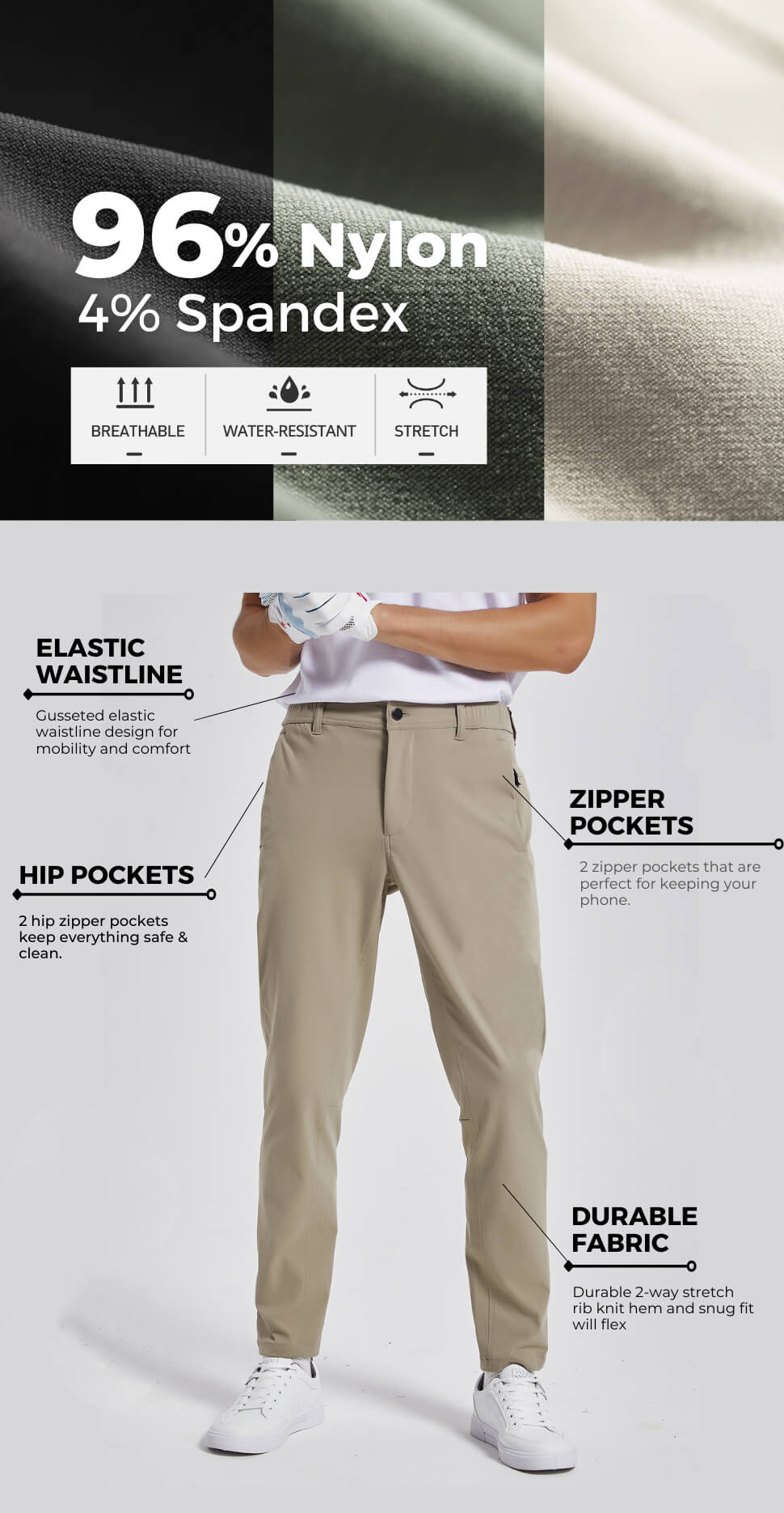
- PULI’s Men’s Stretch Cargo Pants With Pockets use a 96% polyamide (nylon) and 4% elastane blend, which is a classic performance activewear recipe for mobility plus abrasion resistance.
- The same product page emphasizes breathable, waterproof (water-resistant) and wrinkle-resistant use, which is especially useful when you wear the pants for golf, then keep them on for meetings or flights.
Shop: Men’s Stretch Cargo Pants With Pockets
Stretch, Mobility, And Shape Retention
Golf is rotational. Your lead hip clears, your torso rotates, and your trail leg stabilizes. Therefore, the “best” stretch fabric is the one that moves with you without drifting out of shape.
Use this mobility framework:
-
Waistband stretch vs. leg stretch
- Waist comfort matters when you bend and rotate.
- Leg stretch matters when you walk hills, kneel, and get in and out of carts.
-
Stretch amount vs. recovery quality
- Too little stretch can bind at the hip flexor.
- Too much low-quality stretch can bag at the knees.
-
Heat trade-off
- Elastane improves recovery.
- However, higher elastane content can reduce airflow and increase heat retention.
A good target for many golfers is a modest elastane percentage paired with a fabric that already feels light. That combination tends to move well without feeling rubbery.
How PULI fits this module (and why details matter):
- PULI Men’s Golf Dress Shorts Flat Front Hybrid 7 Inch use a 96% polyester and 4% Spandex fabric blend.
- This blend is common in Performance Activewear because it pairs quick-dry behavior with dependable recovery.
- The product listing also highlights features that affect comfort more than people expect, such as an engineered stretch waistband and a brushed tricot-lined waistband designed to help keep shirts tucked during the swing.
- Pocket design is also part of mobility. Zipper pockets and pocket placement can reduce bounce and reduce distraction during the walk.
Shop: PULI Men’s Golf Dress Shorts Flat Front Hybrid 7 Inch
Fiber Families Natural Synthetic Regenerated
When golfers talk about “feel,” they are often reacting to fiber family behavior. Each family has strengths, and the best choice depends on climate, activity overlap, and your comfort preferences.
Natural fibers (like cotton)
Natural fibers often feel soft and breathable. Many people like them for casual Athleisure because they feel familiar and comfortable.
Trade-offs:
- Cotton holds water, so it can feel heavy when you sweat.
- Dry time is slower, which can be uncomfortable in humid weather.
- Wrinkling is more common, which matters if you want a course-to-dinner look.
Synthetic fibers (polyester and nylon)
Synthetics dominate modern golf apparel because they can be engineered for fast dry, durability, and low wrinkle.
- Polyester is commonly used for quick-dry and easy care.
- Nylon (polyamide) is often chosen for abrasion resistance and a smooth hand feel.
Trade-offs:
- Some synthetics can hold odor if not washed well.
- Some polyester fabrics can pill over time, depending on yarn quality and abrasion.
Regenerated fibers (like lyocell)
Regenerated fibers can offer a soft feel and good moisture management. They are often used to create elevated “dress casual” comfort.
Trade-offs:
- Durability varies widely by blend and construction.
- Some regenerated fibers require more careful laundering.
Where Recycled Polyester fits
Recycled Polyester is still polyester in performance terms, but it changes the supply chain story. It can help brands reduce reliance on virgin inputs, although the category has real complexity around recycling infrastructure and end-of-life. In other words, recycled does not automatically mean low impact, but it can be part of a better materials strategy.
Finishes, Weaves, And Feature Claims
A care tag tells you fiber composition. However, “how it performs” is often decided by construction and finishing.
Construction: knit vs weave, and why it matters
- Woven fabrics often feel crisp, hold a clean silhouette, and resist snagging.
- Knits often feel softer and can provide mechanical stretch, but can sometimes cling when wet.
If you want golf bottoms that look business-casual, woven structures are common. If you want maximum lounge comfort, knits often win.
Finishes: what the common claims usually mean
- Water resistance: often a surface treatment that helps water bead.
- Wrinkle resistance: often related to fiber type (polyester) and finishing.
- UPF claims: often depend on fabric density, dye, and testing method.
Because finishes can wear off, care matters. Avoid harsh heat drying when you want longer-lasting water resistance and better stretch recovery.
Pocketing and trims are part of performance
Many golfers underestimate how much pocket bags and zippers affect comfort:
- Thick pocket bags can reduce airflow.
- Zipper garages and seam placement can reduce irritation.
- Pocket count and closure style matter for carrying tees, ball marker, phone, and keys.
This is one reason hybrid “golf and travel” bottoms can outperform minimal designs for real-life use.
Sustainability Signals And Certifications
Sustainable Fabrics and Eco-friendly Materials are easiest to evaluate when you separate marketing language from verifiable signals.
Start with the material story, but do not stop there
A practical sustainability checklist:
- Does the garment use Recycled Polyester or recycled nylon?
- Is the blend designed for durability (longer useful life)?
- Does the brand provide traceable certifications, not just claims?
Durability is a sustainability factor because a garment that stays in rotation longer reduces replacement demand.
Look for certifications that verify chemical safety and processes
Third-party textile standards can help you evaluate risk and transparency.
- OEKO-TEX Standard 100 is a widely recognized label for textiles tested for harmful substances. OEKO-TEX states it tests products against a list of over 1,000 substances, and it applies stricter requirements when a product has more direct skin contact. According to OEKO-TEX, the certification is reviewed and updated regularly.
Understand the scale of the textile waste problem
Sustainability is also about system-level impact. UNEP has highlighted the fashion and textile waste challenge and stated that about 92 million tonnes of textile waste is produced globally each year, while production growth and shortened use periods worsen the problem. According to the United Nations Environment Programme, production doubled from 2000 to 2015 and the duration of garment use decreased by 36 percent.
A realistic way to shop more sustainably
If you want Eco-friendly Materials without losing performance:
- Pick blends that match your climate so you actually wear them.
- Prefer designs that work for golf plus everyday Athleisure.
- Use Omnichannel Retail policies to test fit and mobility at home, then keep only what you will use weekly.
How to Choose Golf Apparel by Fabric
Climate and humidity: decide your baseline
Match fabric behavior to weather:
- Hot and humid: prioritize Moisture-wicking plus airflow. Avoid overly heavy, coated fabrics.
- Hot and dry: quick dry still matters, but sun protection and light weight become more noticeable.
- Shoulder seasons: a slightly denser weave can block wind without feeling sweaty.
If you always sweat on the walk, you want fabrics that dry evenly, not just “fast” in lab conditions.
Fit preference: stretch needs depend on silhouette
Your fit preference changes your stretch requirement:
- Slim fits need better recovery because strain is higher at hips and knees.
- Relaxed fits can use less elastane because the cut provides room.
If you prefer a clean, tailored look, a small elastane percentage can stabilize the fit after repeated washes.
Use case overlap: golf plus Athleisure plus travel
A good decision question is: “Will I wear these only on-course, or also off-course?”
- If you want Athleisure versatility, prioritize wrinkle resistance, pocket security, and a neutral drape.
- If you want pure course performance, prioritize breathability and low bulk.
This is where “hybrid” golf bottoms often win, because they handle walking, sitting, and errands in the same day.
Omnichannel Retail: reduce risk with a fit test plan
Omnichannel Retail makes apparel easier to try, but only if you test the right movements before removing tags.
Use a simple at-home check:
- Deep squat: checks thigh and seat strain.
- Swing simulation: checks waistband pinch and hip restriction.
- Pocket load: add a phone and tees to see if bounce or bulge annoys you.
Then decide based on feel after 10 minutes, not just how it looks in a mirror.
Quick decision table
| Scenario | Fabric priorities | Good signals on label | Trade-offs to expect |
|---|---|---|---|
| Humid summer morning rounds | Wicking, airflow, light weight | Polyester or nylon blends with modest elastane | Very light fabrics can show sweat more |
| Walk-heavy hilly courses | Mobility, recovery, abrasion resistance | Nylon (polyamide) with elastane | Can feel less “cotton soft” |
| Course-to-dinner Athleisure | Drape, wrinkle resistance, pocket security | Polyester blends, structured woven | Denser weaves can feel warmer |
| Travel and mixed activities | Quick dry, wrinkle resistance, secure pockets | Performance blends + zipper pockets | Coatings can reduce breathability |
Best Practices And Pitfalls
Best Practices
-
Read fiber percentages first.
- Composition is your fastest truth source.
- Use it to predict dry time, durability, and stretch recovery.
-
Match fabric weight to season.
- A heavier weave can feel great in wind.
- The same fabric can feel stifling in still summer heat.
-
Prioritize pockets that match your carry needs.
- Zipper pockets help when you travel or walk fast.
- Deep front pockets help keep tees and markers stable.
-
Wash for performance, not just cleanliness.
- Use cooler water when possible.
- Avoid high heat drying if you want longer-lasting stretch and finishes.
Common Pitfalls to Avoid
-
Assuming “stretch” means “recovery.”
- Some fabrics stretch out and stay stretched.
- Recovery usually improves with elastane and quality construction.
-
Overbuying elastane for hot rounds.
- More elastane can reduce airflow.
- In heat, a slightly lower-stretch but more breathable fabric can feel cooler.
-
Confusing breathability with Moisture-wicking.
- Breathability vents vapor and heat.
- Wicking moves liquid sweat. You usually need both.
-
Treating Sustainable Fabrics as automatically superior.
- Eco-friendly Materials need the right construction and durability.
- If you do not wear it, the impact per wear becomes worse.
Conclusion
Golf Apparel 101 comes down to choosing the right material differences for your climate, your swing, and your weekly routine. Breathability and Moisture-wicking help you manage heat, while stretch and recovery protect fit and confidence over time.
If you want fewer regrets, start with composition percentages, then validate with movement tests. Finally, use the decision table to match fabric priorities to your real scenarios, including Athleisure and travel.
Official Site: PULI
Shop: PULI Men’s 12" Inseam Golf Hiking Shorts
Shop: Men’s Stretch Cargo Pants With Pockets
FAQ
What does moisture-wicking actually mean?
Moisture-wicking means the fabric pulls liquid sweat off your skin and moves it through tiny capillary spaces so it can spread out and evaporate. It does not mean the garment is “cool” by itself, because evaporation still depends on airflow and humidity. In practice, good Moisture-wicking reduces cling and helps sweat dry more evenly. If you still feel clammy, the fabric may wick but not release moisture well on the outside face.
Is more stretch always better for golf?
More stretch is not always better because mobility and shape retention are different goals. A very stretchy fabric can feel great at first but lose recovery at the knees or waistband over time. Higher elastane content can also reduce breathability and feel warmer in summer rounds. A balanced approach is to choose enough stretch for your swing and stride, then prioritize recovery so the fit stays stable after washing.
How can I tell fabric quality quickly when shopping online?
First, check the fiber percentages because composition predicts many trade-offs like dry time and recovery. Next, look for construction clues such as pocket design, waistband details, and whether the garment is positioned as woven or knit. Then, use the reviews to spot consistent feedback on pilling, bagging at knees, or shrinkage. Finally, plan a short movement test at home so you can confirm comfort before committing.
What is the difference between polyester and nylon for golf bottoms?
Polyester is often chosen for quick dry behavior, wrinkle resistance, and easy care, which supports course-to-dinner Athleisure. Nylon (polyamide) is often smoother and more abrasion resistant, which helps when you walk a lot or use pockets heavily. Both can wick well when engineered correctly, so the blend and construction matter. If you prefer a cooler, slick hand feel, nylon blends often deliver that sensation.
Why do some "quick-dry" shorts still feel sticky in humidity?
Humidity reduces evaporation speed, so even if sweat spreads across the fabric, it cannot leave the surface quickly. Sticky feel can also come from a fabric that clings when wet, especially if the inside face stays saturated. Pocket bags and tighter areas can trap heat and moisture, creating localized clamminess. In those conditions, you often need both airflow (breathability) and wicking, not just one claim on a tag.
How does fabric composition affect durability and long-term fit?
Higher nylon content often improves abrasion resistance, which helps pockets and seat areas hold up under daily wear. Polyester can be durable as well, but some yarns are more prone to pilling depending on construction and friction points. Elastane improves recovery and reduces bagging, but it can degrade faster if exposed to high heat drying repeatedly. For long-term fit, look for modest elastane paired with a stable weave and strong waistband construction.
Are Sustainable Fabrics always more comfortable?
Sustainable Fabrics are not automatically more comfortable because comfort is driven by construction, finishing, and how the fabric manages moisture next to skin. Recycled Polyester can perform very similarly to virgin polyester, but the yarn and knit choices still determine hand feel and breathability. Some eco-focused fabrics prioritize durability, while others prioritize softness, so results vary. The most reliable approach is to match fabric properties to your climate and wear patterns so you actually get high use per garment.
Can I build a small golf wardrobe that also works for Athleisure?
Yes, but you should prioritize neutral colors, wrinkle resistance, and pocket security so items work outside the course. Choose bottoms with enough stretch for the swing and enough recovery to avoid bagging during long days. Then, make sure the fabric dries fast enough for travel and errands, not only for the course. A small set of versatile pieces often outperforms a larger collection of single-purpose items.