
Understanding Golf Shorts for Long Game Days
A short range session can make almost any pair of shorts feel acceptable. A full round is where weak gear gets exposed. When you walk, wait, sit, bend, rotate, and play for four or more hours, small issues like clingy fabric, a stiff waistband, or bulky pockets stop being minor annoyances and start affecting focus. Recent USGA discussion around pace of play notes that average 18-hole rounds have reached about 4 hours and 30 minutes, which is long enough for comfort problems to build steadily through the day. According to USGA, long rounds are now a normal part of the playing experience.
That is why golf shorts for long game days should be judged by endurance, not just by how they look on a product page. The best choices balance fit, fabric, movement, and storage so you stay comfortable from the first tee to the last putt. In the sections below, you will sort through the features that matter most, learn how to evaluate shorts before buying, and see how different priorities change the right pick for your game.
What Features Matter Most in Golf Shorts for Long Game Days?
Buying language can be vague, so it helps to translate product claims into things you can actually feel on the course. When people compare lightweight golf shorts, stretch golf shorts, or quick-dry golf shorts, they are really asking how the shorts behave after several hours of motion and heat. The strongest options combine low friction, easy movement, and enough structure to still look course-ready.
Fit and inseam basics
Fit affects comfort before fabric technology ever has a chance to help. A good rise lets the waistband sit securely without digging when you address the ball or sit in a cart. Inseam changes both coverage and ventilation, and leg opening influences whether the shorts brush the inner thigh or hang cleanly through your stride.
What to check:
- A waistband that stays in place during rotation
- Enough room through the seat and thigh for squats and bends
- An inseam that matches your height and comfort preference
- A leg opening that does not pinch or flare excessively
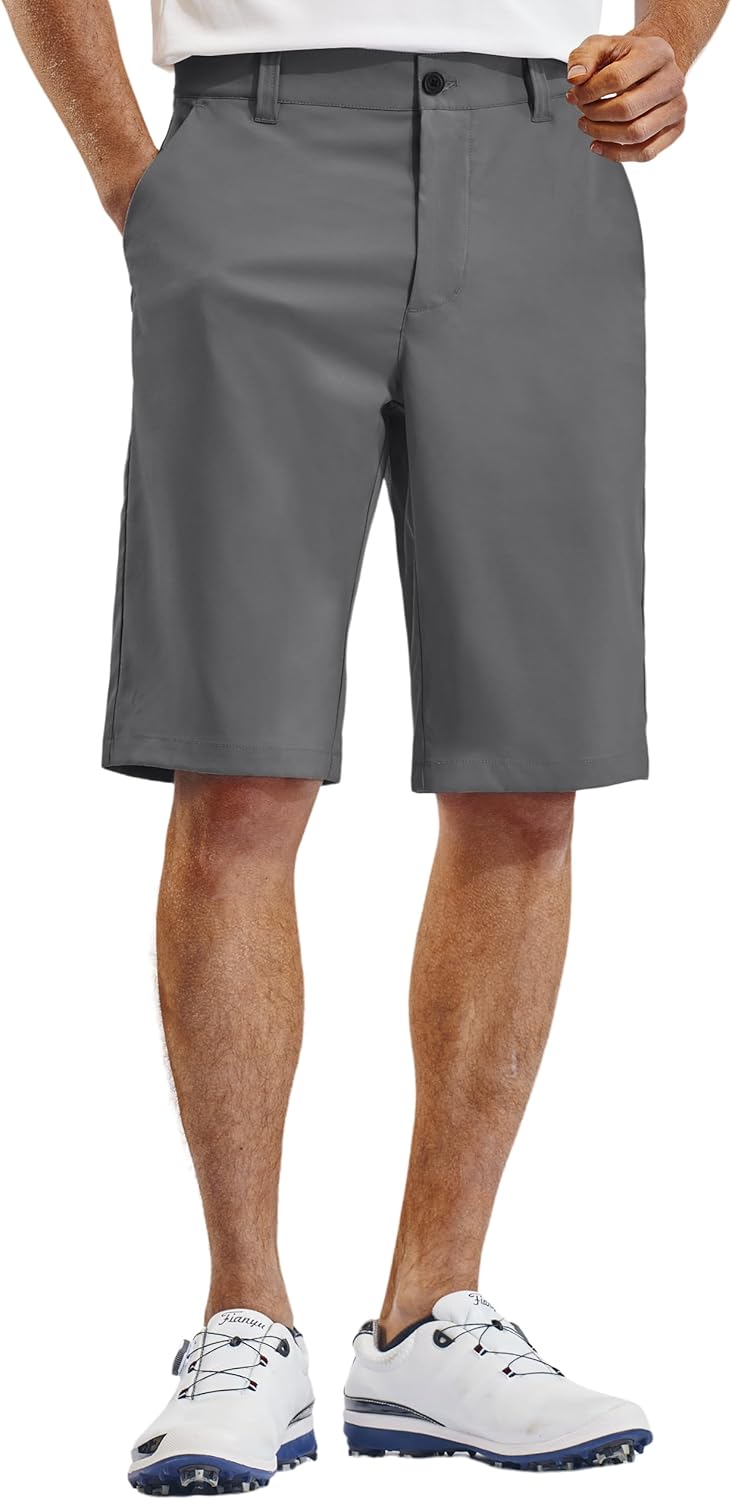
PULI’s [Men’s 12" Inseam Golf Hiking Shorts] use a longer 12-inch inseam, which gives more below-knee coverage than many standard golf shorts. For some golfers, especially taller players, that can reduce distraction and create a more relaxed hybrid look.
Fabric performance terms explained
Fabric labels tell you more when you know what each fiber is doing. Polyester usually handles sweat better than heavier natural fabrics because it moves moisture away from the skin and dries faster. Spandex adds stretch and recovery, which means the shorts flex during movement and then return closer to their original shape instead of bagging out by hole 14.
A practical way to read these claims:
- Lightweight golf shorts should feel airy without becoming flimsy
- Breathable golf shorts should release heat rather than trap it
- Quick-dry golf shorts should move sweat off the surface fast
- Stretch golf shorts should flex in the hips, seat, and thigh
The featured PULI shorts list a 96% polyester and 4% spandex blend, which is a common performance recipe for hybrid outdoor apparel. That mix aims to balance durability, moisture management, and movement rather than emphasizing one trait alone.
Storage and course utility
Pockets matter more on long rounds than many shoppers expect. You may carry tees, a ball marker, scorecard, glove, phone, or keys before and after the round. The problem is not just pocket count. Placement matters because overloaded pockets can bounce while walking, print through the fabric, or interfere with your swing.
Useful pocket signals include:
- Front pockets deep enough for small essentials
- Back pockets that keep a scorecard flat
- A phone pocket that secures weight close to the body
- Clean pocket openings that do not gape when you move
PULI describes this model as a five-pocket design with two front pockets, two back pockets, and one hidden phone pocket. That layout fits golfers who want men’s golf shorts with pockets but still prefer a clean, non-cargo silhouette.
How Should You Evaluate Golf Shorts Before Buying?
The easiest mistake is buying shorts based on one photo and one claim. Instead, use a simple test path that mirrors what happens during an actual round. You want to know whether the shorts hold up through motion, rising heat, and repeated access to your essentials. That is the difference between shorts that feel fine for 20 minutes and the best golf shorts for walking 18 holes.
Step 1: Check movement under golf motions
Start with the motions golf repeats all day. Rotate through a slow backswing, squat slightly as if reading a putt, and bend as if placing a tee. If the fabric pulls across the hips, the rise may be too shallow or the thigh cut too narrow. If the waistband digs in, the shorts may feel much worse after several hours.
A quick movement checklist:
- Turn your torso both directions
- Walk briskly for a minute
- Sit and stand twice
- Bend to ankle level
- Notice any pulling, pinching, or sliding
If you want one pair to cross from golf to travel and casual wear, hybrid designs can make sense. The [PULI hybrid golf hiking shorts] are positioned exactly around that idea, with stretch fabric and a clean front that works beyond the course.
Step 2: Review heat-management performance
Heat changes your clothing test. Shorts that seem fine indoors may feel heavy and sticky by the back nine. That is why breathable golf shorts and quick-dry golf shorts matter most in hot, humid, or walking-heavy rounds. According to OSHA, heat-related strain can build quickly outdoors, and proper hydration plus heat-aware clothing choices help reduce risk. OSHA also says workers in hot conditions should drink about 8 ounces of water every 20 minutes, a useful reminder for golfers spending hours in the sun.
What to look for:
- Polyester blends rather than heavy cotton-rich fabric
- Smooth fabric that does not stay damp after sweat
- A lighter hand feel with some airflow
- Less fabric stiffness around the thigh and seat
Step 3: Match pockets to your use case
Now think about what you actually carry. Golfers who walk usually notice pocket bulk more than cart riders do. A scorecard in one back pocket and a phone in a loose side area can create uneven weight and swing distraction. If you rarely carry more than tees and a marker, you may want fewer but smarter pockets.
Try this test before buying:
- Put a phone in the designated pocket
- Add 2 to 3 tees and a ball marker
- Walk several steps and mimic your swing
- Check whether items bounce or print visibly
That is where hidden storage earns its keep. A concealed phone pocket can reduce movement and keep the front profile cleaner than a standard open pocket.
Step 4: Compare versatility beyond golf
Some shorts only work on the course. Others earn their place in your closet because they also work for airports, resort trips, light hiking, or a casual dinner after the round. If you value repeat use, a hybrid build is often worth more than an ultra-specialized golf-only design.
Good signs of versatility:
- Neutral colors that pair with polos or tees
- Easy-care fabric that machine washes well
- A polished drape, not a technical shiny finish
- Pockets that are useful without looking bulky
This is where PULI fits naturally in the conversation. The brand’s broader positioning centers on performance-minded apparel that works across outdoor and casual settings, so its shorts make the most sense for golfers who want one garment to cover several low-to-moderate activity contexts.
Which Decision Factors Separate Good Shorts from Great Ones?
Once the basics are clear, your decision comes down to tradeoffs. Great shorts are not the ones with the longest feature list. They are the ones whose tradeoffs match the way you play. For golf shorts for long game days, three filters usually matter most: structure, coverage, and repeat-use value.
Comfort versus structure
Softer fabric usually wins on all-day wear, especially if you walk often. Still, a little structure helps the shorts drape better and look more polished with a tucked polo. If the fabric is too soft, the shorts can look casual too quickly. If it is too stiff, you may feel resistance during rotation.
Best fit:
- Walkers: favor softness and stretch
- Cart golfers: can tolerate slightly more structure
- Mixed use: aim for balanced drape and moderate stretch
Coverage versus ventilation
Longer inseams provide more coverage and can feel more secure for some players. Shorter inseams usually increase airflow and may feel cooler in high heat. Neither is automatically better. The right answer depends on height, stride, climate, and your comfort with how much leg exposure you want.
| Factor | Longer inseam | Shorter inseam |
|---|---|---|
| Coverage | Higher | Lower |
| Airflow | Moderate | Higher |
| Tall-player fit | Often better | Can feel short |
| Casual versatility | Hybrid look | Sportier look |
Price versus repeat-use value
You should not judge value by ticket price alone. A pair that works for golf, travel, commuting, and weekends often earns more wear than a course-only pair. Easy care matters too. Machine-washable shorts that dry fast and resist discomfort in heat reduce friction in real life, even if the product page never says it that way.
What Works Best for Different Golfing Scenarios?
Different playing patterns create different clothing priorities. That is why the best golf shorts for walking 18 holes may not be the same pick for resort golf or a quick weekday nine. Use your most common scenario as the tiebreaker when several options seem close.
Walking 18 holes
If you walk most rounds, comfort under motion matters more than almost anything else. You want lightweight golf shorts that stay stable at the waist, move easily through the thigh, and do not trap sweat. Four-plus hours of steady motion exposes rough seams, clingy fabric, and overstuffed pockets very quickly.
Prioritize:
- Stretch through hips and thighs
- Low-bulk pocket design
- Fast-drying synthetic blend
- A fit that limits inner-thigh friction
For this scenario, PULI’s 96/4 polyester-spandex build and hidden phone pocket make sense as practical features rather than buzzwords. The longer inseam will appeal more to golfers who want added coverage while walking.
Resort or travel golf
Travel golf adds another layer: packing and reuse. Shorts that wrinkle easily, dry slowly, or only match one shirt become annoying fast. Hybrid styling is especially useful here because one pair may need to work for a morning round, a midday transfer, and an evening casual meal.
Look for:
- Quick-dry fabric after heat or light rain
- Neutral colors with low visual noise
- Simple pocket layout
- Machine-washable easy-care construction
PULI’s product positioning around golf, hiking, travel, and casual wear lines up well with this scenario. If you prefer to pack fewer pieces, that kind of crossover design is often more useful than a highly specialized golf short.
Casual weekday rounds
Weekday rounds often blend convenience and presentation. You may head to the course after work or meet someone right after playing, so polished appearance matters along with comfort. In this case, the winning shorts are usually the pair that looks clean enough for the clubhouse but still feels easy through repeated movement.
A good weekday-round setup includes:
- A smooth front with minimal pocket flare
- Enough stretch for full swings
- Fabric that does not look overly technical
- Durable construction for repeat wear and washing
Best Practices & Pitfalls
Long-round comfort usually comes from several small right decisions rather than one miracle feature. Use the checklist below to avoid the problems golfers most often notice too late.
Do's
- Prioritize stretch in the seat and thigh for rotation and walking comfort.
- Choose quick-dry golf shorts when you regularly play in heat, humidity, or travel often.
- Match inseam length to your stride, height, and comfort level, not just trend.
- Test pockets with your real carry items before committing.
- Favor easy-care fabrics if you expect frequent repeat wear.
Don'ts
- Do not assume thin fabric is automatically breathable or moisture-managing.
- Do not overload pockets, especially if you walk 18 holes.
- Do not buy stiff shorts just because they look sharper on a hanger.
- Do not ignore waistband comfort; small pressure points grow over a long round.
- Do not judge performance by one marketing phrase without checking fiber blend and pocket layout.
Conclusion
The right golf shorts for long game days come down to fit, fabric, and function working together over time. If the shorts move cleanly through your swing, manage sweat well, and keep essentials organized without bulk, they will usually outperform a sharper-looking pair that fights your body by the seventh hole. Build your shortlist by testing movement first, then heat management, then pocket utility, and finally versatility beyond golf. That method gives you a more reliable answer than style alone.
FAQ
How long should golf shorts be for all-day comfort?
A comfortable length depends on your height, stride, and how much coverage you prefer. Many golfers do well in the 8- to 10-inch range, while taller players or those wanting more coverage may prefer an 11- or 12-inch inseam. The key is that the hem should not catch during walking or feel restrictive when you bend and rotate. Test the length while sitting, squatting, and taking a practice swing rather than relying on appearance alone.
What fabric blend is best for long golf rounds?
A polyester-spandex blend is usually one of the safest choices for long rounds. Polyester helps with moisture management and durability, while 3% to 10% spandex usually adds enough stretch for walking and rotation without making the shorts feel overly soft. The exact weave still matters, because a dense heavy fabric can feel warm even with good fiber content. Look for a blend that feels light in hand, dries fast, and keeps its shape after movement.
Are more pockets always better in golf shorts?
No, more pockets are not always better. Two front pockets and two back pockets are enough for many golfers, and one extra hidden pocket can be useful if it keeps a phone or key secure without adding bounce. The bigger issue is placement, because bulky or poorly placed pockets can interfere with walking comfort and create visible printing. Good pocket design should support your carry needs while keeping the shorts balanced and clean-looking.
Why does stretch matter in golf shorts?
Stretch matters because golf repeats rotation, bending, partial squats, and long periods of walking. Without enough give, the fabric can pull across the hips and thighs, which increases distraction and can change how comfortable your setup feels by the back nine. A small amount of spandex often improves freedom of movement and helps the garment recover its shape after sitting or repeated wear. The best result comes from balanced stretch, not overly elastic fabric.
How can shoppers tell if shorts are truly quick-drying?
You can usually tell by combining fabric clues with product positioning. Synthetic-heavy blends, especially polyester-based ones, tend to dry faster than heavier natural fabrics, and brands often pair that with moisture-management language or outdoor-use design. Reviews may also reveal whether the shorts stay comfortable after sweat exposure or dry reasonably after washing. If the shorts feel thick, stiff, or slow to release moisture on contact, the quick-dry claim may be less meaningful in practice.
Can golf shorts also work for travel or casual wear?
Yes, many golf shorts can also work well for travel or casual wear if the design is clean enough. Neutral colors, a smooth front, low-bulk pockets, and wrinkle-friendly fabric make the crossover much easier. Hybrid shorts are especially useful when you want one pair to cover golf, walking, airports, and relaxed dinners on the same trip. That kind of repeat-use versatility often matters more than having a highly specialized course-only short.