
Understanding Golf Shorts for Maximum Sun Protection
Long summer rounds can turn a comfortable front nine into a skin-management problem by the back nine. When your thighs stay exposed for four to five hours, the wrong pair of golf shorts for sun protection can leave you dealing with burns, sweat buildup, and fabric that starts to cling when you still have holes to play. That is why this choice is not only about appearance.
A better approach is to evaluate coverage, fabric behavior, and mobility together. In practical terms, you want sun-protective golf shorts that help reduce exposed skin, stay breathable in heat, and move easily through a full swing. The rest of this guide breaks that down in a simple order: first fabric and coverage, then buying checks, then on-course tradeoffs, and finally a real product example using PULI’s longer-inseam shorts.
What Makes Golf Shorts Sun-Safe?

Choosing golf shorts for sun protection starts with one core idea: no short gives full coverage, so every design detail matters more. The best pairs reduce UV exposure where they can, then make hot-weather wear comfortable enough that you will actually keep them on through the round.
UPF Ratings and Fabric Basics
UPF stands for Ultraviolet Protection Factor, which tells you how much UV radiation a fabric blocks. According to Cancer Council Australia, UPF 30 allows only 1/30th of UV through the fabric, blocking 96.7%, while UPF 50 and 50+ block about 98% and are considered excellent protection. If a short has a tested UPF label, that gives you a clearer signal than color or feel alone.
Even when a pair is not labeled with a UPF number, fabric still matters. Tighter weaves block more UV than loose weaves, and thin stretched fabric protects less than the same fabric worn without tension. For golf, that usually means you should favor technical polyester blends, denser fabric construction, and a fit that does not pull tightly across the thighs.
Coverage, Length, and Mobility
Coverage is the simplest part of the equation: more fabric means less exposed skin. That sounds obvious, but it often gets ignored when shoppers focus only on waistband comfort or style. A longer inseam golf shorts design can protect more of the upper leg than shorter casual cuts, which matters on sunny fairways where you are walking, standing, and waiting with direct light hitting the front of your thighs.
At the same time, more length only helps if the shorts still move well. Good breathable golf shorts need enough stretch for rotation, enough room through the seat and thigh for walking, and enough airflow to prevent heat buildup. If the fabric binds during your backswing or feels heavy after sweat, you are less likely to wear them consistently in strong sun.
Why Heat Management Matters Too
Sun protection fails in real life when clothing becomes too hot or sticky to keep wearing. The CDC notes that UV risk remains high outdoors, especially between 10:00 a.m. and 4:00 p.m., and that appropriate clothing with tighter weave and higher protection can help reduce damage. On a golf course, that same time window often overlaps with the middle of your round.
That is why quick-dry golf shorts and moisture-wicking blends matter, even though dry time is not the same thing as UV protection. Faster-drying fabric reduces cling, helps sweat evaporate, and makes longer shorts feel more wearable in humid conditions. In other words, heat control supports sun protection because comfortable gear is the gear you keep on.
How Should You Evaluate Golf Shorts Before Buying?
The easiest shopping mistake is judging shorts while standing still in a fitting room. Golf asks much more from a garment than that. You need a pair that covers well, stays cool, and works over eighteen holes, not just one that looks clean on a product page.
Step 1: Check Inseam and Exposed Skin
Start with coverage before anything else. Compare inseams side by side instead of relying on labels like “classic fit” or “summer short.” A 12-inch inseam will usually cover much more thigh area than a 7-inch or 8-inch cut, which can make a meaningful difference if you play midday rounds or spend long stretches walking open, unshaded holes.
What to check: - Look at where the hem lands when you stand and when you bend. - Make sure the shorts still cover well when you sit in a cart or crouch to read a putt. - If you burn easily, lean toward longer inseam golf shorts rather than short lifestyle cuts. - Match your inseam choice to your course conditions, not only your style preference.
Step 2: Review Heat and Moisture Features
Once length looks right, move to fabric performance. Breathable golf shorts should feel light enough for heat but substantial enough that the fabric does not turn sheer or overstretched in bright sun. Quick-dry materials help after sweat, light rain, or humid walking rounds, especially if you are playing 18 holes in summer.
Key specs or signals: - Polyester or nylon blends usually dry faster than heavier cotton-rich fabrics. - Added spandex helps motion, but too much stretch under tension can reduce effective coverage. - A smooth interior helps limit cling on sweaty skin. - Lightweight fabric is useful, but open or overly thin fabric is not always the best choice for UV management.
Step 3: Confirm Golf-Specific Function
A sun-safe pair still has to work like golf apparel. Test whether the waistband stays comfortable when you rotate, whether the pockets stay flat, and whether the leg opening rides up while walking. Shorts that twist, bunch, or hold sweat become distracting long before the round ends.
What this means on the course: - Stretch should support your takeaway, transition, and follow-through. - Pocket depth should hold tees, scorecards, ball markers, or a phone without bouncing. - The seat and thigh area should stay comfortable across several miles of walking. - Clean styling helps if you want one pair for golf, travel, and casual wear.
Which Features Matter Most on the Course?
Not every golfer wants the same hem length or fabric feel, so the goal is not to find one “perfect” spec. Instead, you want to rank features by what affects your round most: exposed skin, heat load, movement, and how often you will actually wear the shorts.
Decision Factors to Weigh
Here is the clearest way to think about sun-protective golf shorts when comparing options:
| Factor | Why it matters | Best fit for |
|---|---|---|
| Coverage | Reduces exposed thigh area | Midday rounds, walkers, golfers who burn easily |
| Breathability | Prevents overheating in direct sun | Hot climates, humid regions, summer travel golf |
| Stretch | Supports rotational movement | Full swings, walking, bending, all-day wear |
| Dry Time | Improves comfort after sweat | Humid weather, back-to-back rounds |
| Versatility | Makes the shorts easier to use often | Golf, commuting, travel, casual outdoor use |
What this means in real buying decisions
If you usually play in strong sun, coverage should come first. According to UT MD Anderson, garments with UPF 30 to 49 are considered good protection, while UPF 50 or higher is considered excellent protection. Even without a labeled rating, longer shorts with tighter fabric and less skin exposure often make more practical sense than very short, airy pairs.
If you struggle more with heat than burning, breathability and quick-dry performance move up the list. You still want meaningful coverage, but not at the cost of heavy, swampy fabric. The sweet spot is often a lightweight synthetic blend with moderate stretch, a longer hem, and enough airflow to stay wearable through the hottest part of the day.
Common mistake
A common mistake is treating all golf shorts as equally protective because they are made from “performance fabric.” Performance can mean stretch, wrinkle resistance, or moisture control, but not necessarily UV blocking. Another mistake is sizing too tight. When fabric stretches hard across the leg, coverage can become less effective, and comfort usually gets worse too.
A Practical Example: Choosing the Right PULI Golf Shorts
This is where a real product helps. Instead of talking in abstract terms, you can map your buying checklist to an actual pair and see whether the features support sun protection in practice.
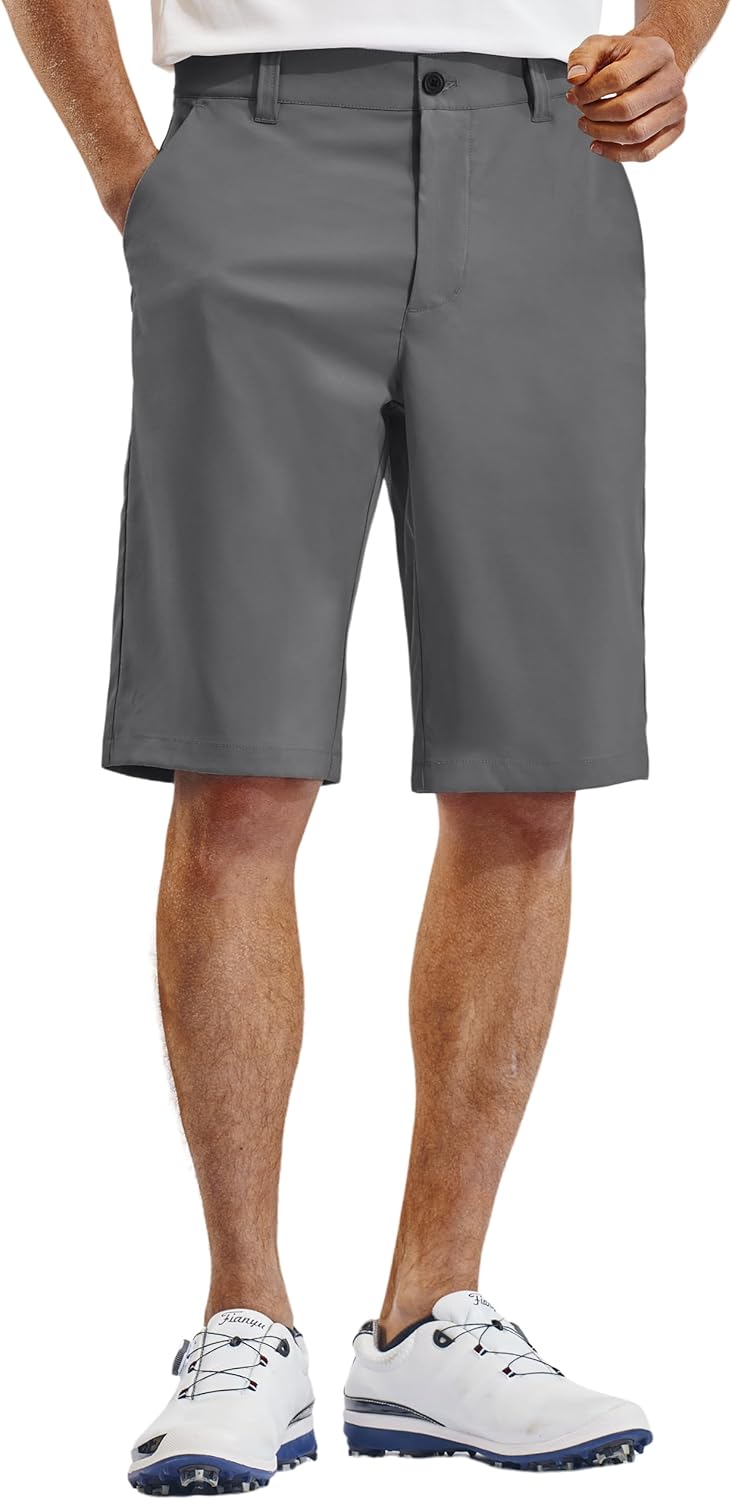
PULI’s [Men’s Golf Hiking Shorts] line up well with the selection criteria in this guide. The product page lists a 12-inch inseam, a 96% polyester and 4% spandex fabric blend, zipper closure, machine-wash care, and five pockets, including a hidden phone pocket. That combination matters because it addresses the three main shopping checks at once: more lower-body coverage, stretch for movement, and quick-drying synthetic fabric for hot conditions.
Why This Product Fits the Topic
The 12-inch inseam is the standout feature for golfers who want longer inseam golf shorts instead of shorter casual cuts. More hem length means more thigh coverage during walking rounds, range sessions, and travel days where you may be outside for hours. The polyester-spandex blend should also feel lighter and dry faster than heavier everyday shorts, which supports comfort when sweat starts building late in the round.
The five-pocket layout adds practical value rather than just extra detail. You can carry tees, a glove, a scorecard, ball markers, and a phone without overloading one side of the shorts. Just as important, the product is positioned as a hybrid style for golf, hiking, work, and travel, so it fits golfers who want one pair of quick-dry golf shorts that works beyond the course.
Shop: PULI Men’s Golf Hiking Shorts
Best Practices & Pitfalls
Good shorts help, but they work best as part of a wider sun plan. Since golf shorts leave part of the leg exposed by design, you should think in systems, not single products.
Best Practices
Use this checklist before summer rounds: - Choose golf shorts for sun protection with more thigh coverage when UV exposure is a regular issue. - Favor breathable golf shorts in technical fabrics that dry quickly after sweat. - If a garment has a UPF label, prefer UPF 30+ and ideally UPF 50+ for stronger protection. - Pair shorts with sunscreen on exposed skin, especially knees and lower legs. - Add a hat, sunglasses, and a sun-protective shirt for a more complete setup.
You should also consider your tee time. The CDC highlights that sunlight exposure is strongest between 10:00 a.m. and 4:00 p.m., which is exactly when many golfers are on the course. During those hours, the value of coverage and fabric performance becomes more noticeable, especially on courses with little tree shade.
Common Pitfalls to Avoid
The biggest pitfall is assuming any athletic short is automatically sun-safe. Some lightweight summer shorts feel cool but expose too much leg or use fabric that is too open, too thin, or too stretched in motion. A second mistake is choosing a longer pair that looks protective on paper but feels restrictive once you walk, squat, or swing.
Another common issue is ignoring the rest of your system. The American Cancer Society recommends combining clothing, sunscreen, and shade strategies rather than relying on one method alone. Shorts can improve comfort and lower-body coverage, but they work best when you also protect the skin that remains exposed.
Conclusion
The best golf shorts for sun protection are not simply the longest or the lightest pair on the rack. They are the ones that combine smart coverage, breathable comfort, and enough stretch to stay comfortable for an entire round. If you compare inseam length, fabric density, moisture management, and real walking comfort, you will make a much better choice than if you shop by appearance alone.
For many golfers, that means looking closely at longer, quick-drying hybrid styles instead of short casual cuts. A pair like PULI’s 12-inch inseam shorts shows how longer coverage, stretch fabric, and practical storage can work together. When you evaluate shorts this way, you are not just buying for style. You are building a more wearable sun-protection system for the course.
FAQ
What inseam is best for sun-protective golf shorts?
A longer inseam is usually best if your main goal is better lower-body coverage. For many golfers, inseams around 10 to 12 inches offer a strong balance between coverage and mobility, especially during warm-weather walking rounds. The right length also depends on your height, stride, and how much sun exposure you normally get. Always test where the hem sits when you bend, sit, and swing, not only when standing upright.
Are golf shorts enough for full sun protection?
No, golf shorts are not enough for full sun protection on their own. They help reduce exposure on part of the leg, but your knees, lower legs, arms, neck, and face still need coverage or sunscreen. A more complete setup includes a sun-protective shirt, hat, sunglasses, and broad-spectrum sunscreen on exposed skin. If you regularly play in strong midday sun, that full system matters more than any single garment feature.
Do quick-dry fabrics help with sun protection?
Quick-dry fabrics help indirectly, but they are not the same as tested UV protection. Their main value is comfort: they move sweat away, reduce cling, and make longer shorts easier to wear in heat and humidity. That matters because uncomfortable clothing tends to get adjusted, rolled, or avoided. In practice, better comfort often supports better sun habits over an 18-hole round.
Is UPF more important than color or thickness?
UPF is the clearest signal when a garment has been tested, so it should carry more weight than guesses based on color or feel. However, color, weave density, stretch, and coverage still matter because they affect how much UV reaches your skin in real use. A dark, tightly woven, longer short can outperform a lighter, thinner short without structure, even if both feel similar in hand. The best choice combines verified protection or strong fabric construction with enough breathability for golf.
How do I know if golf shorts are practical for walking rounds?
You can tell by testing movement, storage, and heat management together. Walk in them for several minutes, squat, simulate a full swing, and check whether the waistband shifts or the hem rides up. Pockets should hold small golf items without bouncing, and the fabric should not feel sticky after light sweating. If the shorts distract you before nine holes, they will not improve by the eighteenth green.
Can one pair of golf shorts work beyond the course?
Yes, one pair can work beyond the course if the design is clean and the fabric is versatile. Hybrid shorts with stretch, quick-dry performance, and practical pocket layout can transition well to travel, casual wear, and light outdoor use. That versatility often makes longer, performance-based styles easier to wear more often, which increases their overall value in your wardrobe. PULI’s golf-hiking hybrid approach fits that kind of multi-use setup well.