
Cold offices, over-air-conditioned flights, and windy commutes create the same problem: you need warmth, but bulky layers can swallow your outfit and make you feel restricted. The good news is that a well-chosen shawl can deliver real insulation, clean drape, and easy packability in one piece, which is exactly why it fits a Quiet Luxury wardrobe.
A warm-without-bulk shawl comes down to a few measurable details: fiber blend, knit structure, stretch and recovery, and a closure that keeps the wrap in place. When these pieces align, you get a layer that looks polished on camera, stays put while you move, and still feels like a soft blanket when you need it.
Official Site: PULI
How to Choose a Warm Shawl Without Bulk
Step 1: Define your warmth use-case
Before you compare fabrics or knits, define where the cold comes from. This keeps you from overbuying thickness (too warm, too heavy) or underbuying coverage (pretty, but useless).
- Office AC and indoor chill: You want breathable warmth and a wrap that stays on your shoulders while you type or present.
- Outdoors (short walks, errands): You need a bit more wind-blocking through knit density and enough length to cover your upper arms.
- Travel (planes, trains, hotels): Prioritize packability, wrinkle resistance, and a closure that stays put when you stand up, reach overhead, or nap.
A practical test: put on your typical base layer (tee, blouse, or thin turtleneck), then decide the coverage you need: upper-arm only, elbow, or hip.
Step 2: Prioritize breathable warmth fibers
Warmth without bulk starts with fibers that trap air but do not feel suffocating. Wool blends are a classic choice because wool buffers moisture and stays insulating even when conditions shift.
According to American Wool, wool can absorb more than 30% of its weight in moisture before it feels damp, which helps you stay comfortable when you move between cold AC and warmer spaces.
For a Quiet Luxury look, aim for fibers that drape smoothly:
- Wool blend: Adds warmth and helps the knit feel resilient.
- Viscose blend: Often adds smoothness and fluid drape.
- Acrylic/nylon in a blend: Can add durability and structure when balanced correctly.
With PULI, you can see this logic in the blend used for the shawl wrap: 65% RPET, 13% Acrylic, 13% Nylon, 6% Wool, 3% Spandex. That combination is designed to feel soft and warm while keeping shape and adding gentle stretch for comfort. (puliwear.com)
Step 3: Check fabric percentages and stretch
Percentages matter because two shawls can look similar online but behave very differently in real life.
Use this quick checklist:
- Look for a small stretch component: Around 2% to 5% spandex can help a shawl recover its shape after sitting, carrying a bag, or looping the front. Too much stretch can make it clingy or cause growth.
- Balance drape and structure: More fluid fibers can look elegant, but they can also slide off shoulders if the knit is too slick.
- Watch for “paper thin” blends: If the fabric feels overly light, the shawl may look neat but fail your warmth goal.
PULI lists 3% Spandex in this shawl wrap, which is a sweet spot for gentle give while still looking composed. (puliwear.com)
Step 4: Choose double-knit or structured knits
If you want warmth without bulk, look for knits that are dense and structured rather than fluffy. A structured knit can trap air (warmth) while keeping a clean surface (polish).
Signs of a structured knit that photographs well:
- Ribbed or textured surface that still looks smooth from a distance
- Enough thickness to resist wrinkling when packed
- Edges and hems that hang cleanly instead of curling
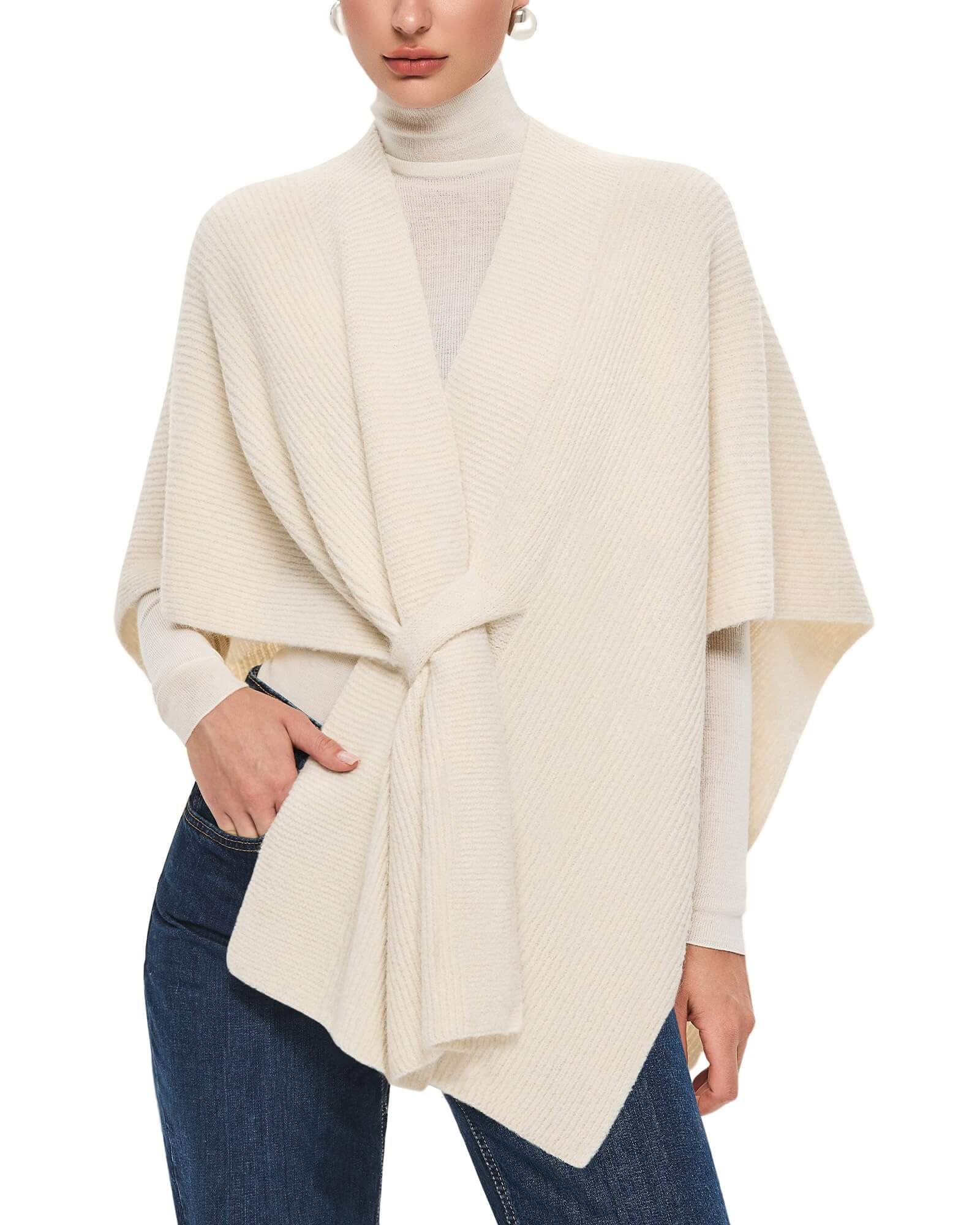
PULI describes this piece as a thick, ribbed-texture knit with a relaxed silhouette, designed for travel, office, and dressier moments. That style direction fits the Quiet Luxury goal: simple lines, solid hues, and drape that looks intentional. (puliwear.com)
Step 5: Use closure design to prevent slipping
A shawl can be warm and beautiful, but if it slides off, you will keep adjusting it all day. The easiest way to avoid bulk is to avoid extra pins, clips, or scarf ties in the first place.
Look for built-in closure designs:
- Pull-through tabs: One side threads through the other, creating a stable front.
- Crossover front: Locks at the chest/waist area and creates an asymmetric drape.
- Front tabs that self-adjust: Lets you fine-tune how fitted or relaxed the front sits.
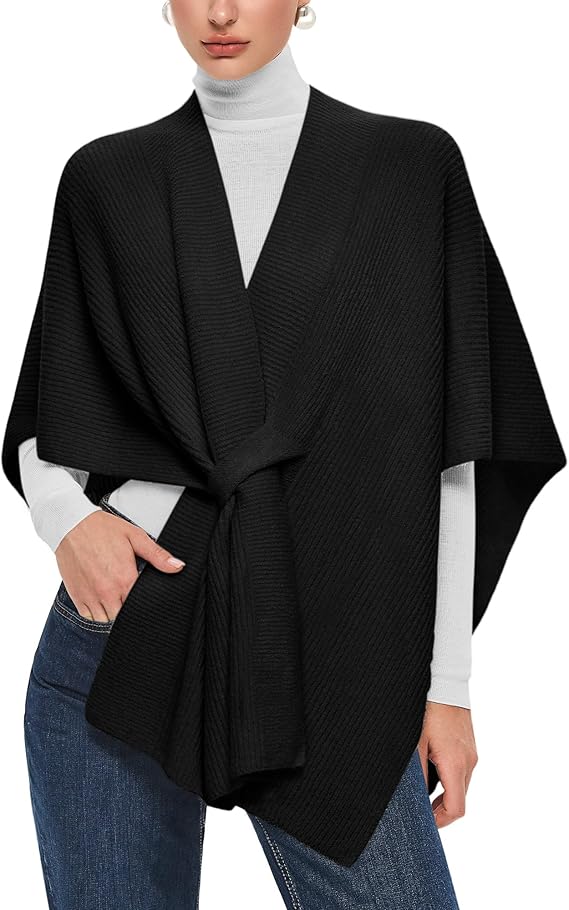
PULI highlights a signature pull-through closure and self-adjustable front tabs that create an asymmetrical drape while helping the wrap stay put. That is exactly the kind of functional design detail that supports a polished look without layering extra accessories on top. (puliwear.com)
Shop: PULI Women’s Shawl Wraps Casual Warm Travel Shawls Knit Poncho Sweater with Crossover Front
Step 6: Validate length, hem, and coverage
Coverage is where shawls either feel “cozy and sleek” or “bulky and random.” Use a measuring tape and decide what you want to cover.
A simple fit check:
- Shoulders: The wrap should sit comfortably without pulling at the neck.
- Upper arms: Coverage here is what makes you feel warm in AC.
- Front length: If the front is too long, it can look heavy. If it is too short, it can look like it is slipping.
Asymmetrical or irregular hems can be helpful when done intentionally because they create a long line and keep the silhouette from looking boxy. A crossover front can also “anchor” the drape so the hem looks deliberate rather than messy.
Step 7: Confirm care and longevity basics
A Quiet Luxury layer should look good after repeated wears, not just the first week. Care and handling matter because pilling and stretching often come from friction and aggressive washing.
PULI specifies hand wash care and advises air dry flat and avoiding hard rubbing, which helps protect the knit and reduce pilling over time. (puliwear.com)
Practical longevity habits:
- Hand wash with gentle detergent.
- Press water out with a towel instead of twisting.
- Dry flat to protect the shape.
- Use a lint brush or sweater comb lightly, and reduce friction from rough bags.
Quiet Luxury Shawls in Different Scenarios
- Airplane cabins: Choose a structured knit that packs without wrinkling. A pull-through or crossover front is helpful because it stays on when you stand, stow luggage, or sleep.
- Office AC: Prioritize breathable warmth and a closure that holds at the front. If you constantly adjust your shawl, it will never look polished.
- Evening events: Solid hues and clean drape read elevated. Skip bulky fringes and choose a knit that falls smoothly over a dress or slim trousers.
- Errands and school runs: A hands-free fit matters most. A secured front lets you carry bags, push a cart, or use your phone without the wrap sliding.
What You’ll Need Before You Start
Required Tools and Materials
- Soft measuring tape: Confirms the coverage you want (shoulder to hem, arm coverage).
- Base layer top: A tee or thin turtleneck helps you test warmth realistically.
- Mirror and good lighting: Helps you check drape and hem lines.
- Optional brooch or pin: Backup security if your shawl has no built-in closure.
- Lint brush or sweater comb: Keeps the surface looking smooth.
- Gentle detergent: Supports hand-wash care routines.
Safety Considerations
Most shawl “safety” is about avoiding snags and trips:
- Avoid snag-prone jewelry (sharp rings, bracelets) that can catch knit loops.
- Watch crossbody bag hardware and rough straps, which can cause pilling on one shoulder.
- Keep hems clear of escalators and rolling luggage wheels.
- If you drive, make sure the shawl does not restrict shoulder movement.
As a general layering principle, OSHA notes that multiple layers of loose-fitting clothing provide better insulation and that wool and many synthetics retain insulation better than cotton when wet. (osha.gov)
Troubleshooting
| Problem | Cause | Solution |
|---|---|---|
| Shawl slips off shoulders | No closure or low-friction knit | Choose a pull-through or crossover-front design so the front anchors the drape. |
| Shawl looks bulky | Fluffy yarn or overly oversized shape | Pick a structured knit with a cleaner surface and a defined front closure. |
| Pills quickly | High friction from bags, jewelry, or rough washing | Hand wash gently, avoid hard rubbing, and air-dry flat. Use a sweater comb lightly. |
| Front looks messy | Too much fabric at the chest | Adjust the pull-through/crossover so it sits slightly higher, then smooth the ribbed knit downward. |
| Neckline feels tight | Wrap is pulled too far back | Re-center the shawl on the shoulders, then secure the front so weight is not hanging from the neck. |
Conclusion
A shawl that stays warm without bulk is not luck. It is the result of choosing breathable warmth fibers, a structured knit that holds clean lines, and a closure that prevents slipping.
If your goal is Quiet Luxury layering for travel, office AC, and everyday errands, focus on drape plus stability. When the wrap stays put and keeps its shape, your outfit looks intentional and you feel comfortable all day.
Official Site: PULI
FAQ
What fabrics feel warm without heaviness?
Wool blends often feel warm without bulk because the fibers trap air while still breathing. Look for a blend that includes a small amount of stretch (around 2% to 5% elastane/spandex) so the shawl keeps its shape. Avoid very fluffy yarns if you want a sleek look, because fluff adds visual volume fast. A structured knit surface usually reads more polished.
How do I keep a shawl from sliding off?
Choose a design with a built-in closure like a pull-through tab or a crossover front. Put the shawl on, center it on your shoulders, then secure the front before you start moving around. If the shawl still drifts, adjust the closure slightly higher on your torso and smooth the knit downward. As a backup, use a small brooch on the shoulder, but avoid placing it where bags rub.
Are shawl-ponchos good for travel?
Yes, as long as the knit is structured enough to pack without heavy wrinkling and the front can be secured. For flights, prioritize coverage over your upper arms and a front closure that stays put when you reach overhead. Test it by sitting down and standing up a few times before you travel. If the shawl shifts a lot, it will be annoying on long trips.
How do I keep a knit shawl looking new?
Hand wash gently, avoid hard rubbing, and press water out with a towel instead of twisting. Dry the shawl flat so the weight of water does not stretch the knit out of shape. Reduce friction by rotating shoulder bags and keeping rough straps off the same spot. If pilling appears, use a sweater comb lightly and stop once the surface looks smooth again.
When should I replace my shawl for comfort and appearance?
Replace or retire a shawl when the fabric has thinned noticeably at high-friction areas like shoulders and underarms. If the knit no longer recovers after you secure the front, the drape can start looking sloppy even when styled well. Persistent pilling that returns immediately after grooming is another sign the surface fibers are breaking down. For a Quiet Luxury look, clean lines and stable drape matter more than having many pieces.
Can I wear the same shawl for office AC and outdoor errands?
You can, but you may need to style it differently for each setting. Indoors, secure the front and keep the silhouette close to the body so it looks polished and stays out of the way at a desk. Outdoors, let the shawl sit slightly wider on the shoulders for more arm coverage and add a wind-resistant outer layer if it is very breezy. If you start overheating, loosen the closure briefly instead of taking the shawl off completely.