
Ever finish the front nine feeling fine, then realize your thighs are stinging, your waistband is itchy, and your legs look like you cooked them in the sun? That combo of glare, sweat, and friction can turn a relaxing round into an all-day irritation loop.
Getting golf shorts wrong is not just uncomfortable. It can trigger rashes, worsen heat bumps, and make you avoid walking rounds or travel days altogether. This guide gives you a fast, practical checklist to buy sun-protective golf shorts that stay gentle on sensitive skin. You will work step-by-step from sun exposure needs to fabric feel, moisture control, breathability, fit, pockets, and care so your next pair supports your workflow on the course.
How to Choose Sun-Protective Golf Shorts Step-by-Step
Step 1: Confirm your sun-exposure needs

Start by matching the shorts to when and where you actually play. A 7:00 a.m. tee time with lots of shade is different from a noon round on wide-open fairways, and sensitive skin often reacts faster than you expect. Before you shop, write down your typical tee time, whether you mostly ride or walk, and if your legs are usually in direct sun for long stretches (tee boxes, long cart paths, practice range).
If sun protection is a priority, make UPF a non-negotiable filter. MD Anderson notes that UPF 50+ garments can block 98% of the sun's rays. (mdanderson.org)
- If you play 3+ hours in full sun, aim for UPF 50+.
- If you travel to high-sun locations, plan for stronger coverage.
- If you burn easily, treat UPF as core protection.
Step 2: Prioritize skin-safe, low-chafe fabric
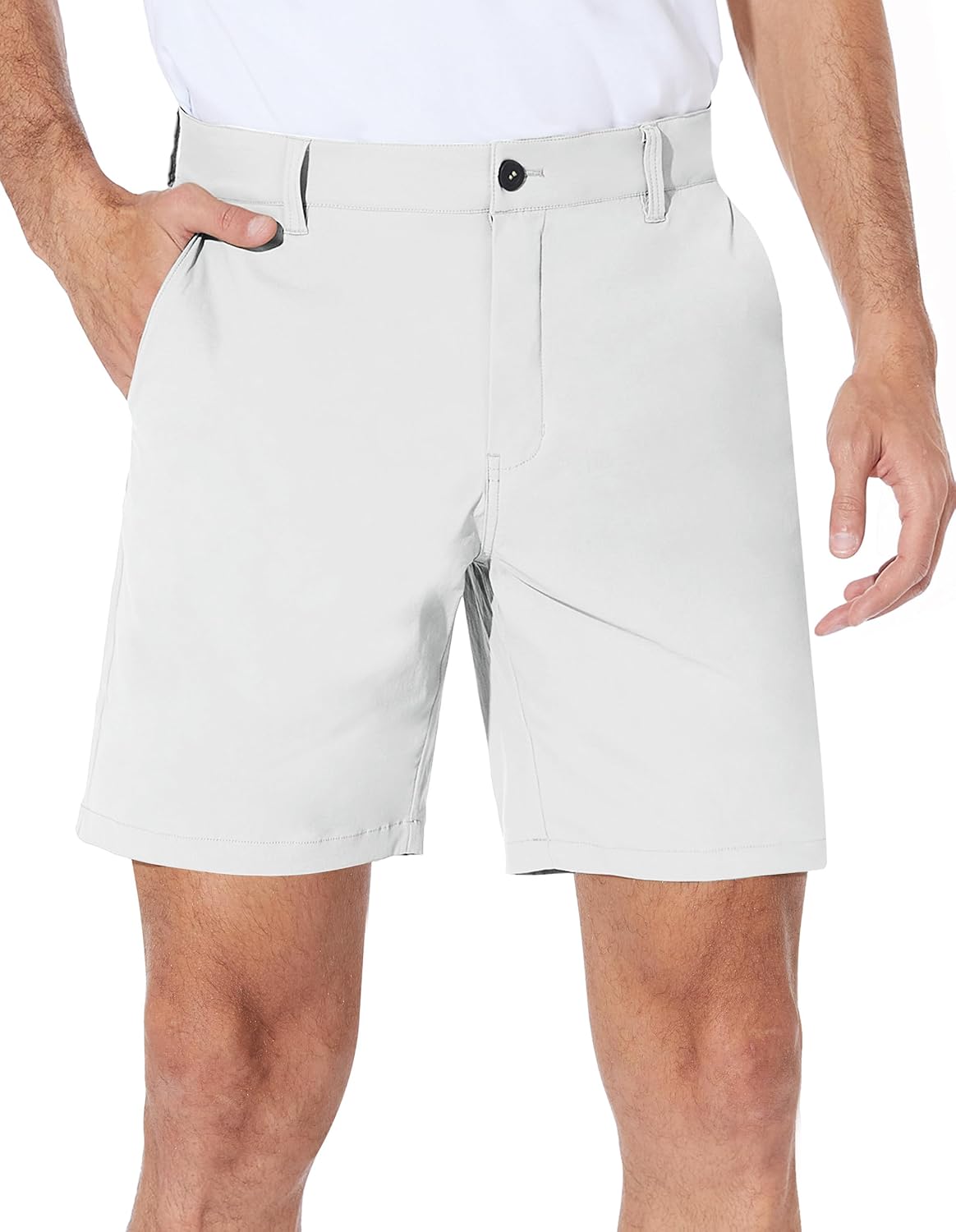
Lock in comfort first, because sensitive skin does not forgive rough handfeel or stiff fabric. When you read a product page, look for smooth, technical yarns with stretch instead of scratchy, rigid weaves. For sensitive inner thighs, you want a fabric that moves with you during a full swing and does not create hot friction points when you walk.
For example, PULI Men's 7-inch flat front hybrid golf shorts list a fabric blend of 95% polyamide and 5% elastane. That blend matters because polyamide can feel smooth and durable, while elastane adds stretch that reduces tugging at the seat and thighs during rotation. The product listing also calls out four-way stretch and a breathable feel, which supports the low-chafe goal when your legs heat up mid-round.
- Favor smooth stretch over rigid cotton.
- Avoid rough interior tags or bulky seams.
- Choose fabric that does not feel "paper dry".
Step 3: Validate moisture-wicking and quick-dry performance
Sweat is often the real trigger for irritation, because salt, heat, and trapped moisture keep rubbing the same spots. So do not just look for "lightweight". Look for language that confirms moisture-wicking and quick-dry behavior, and then pair it with your playing style. If you walk, you need the fabric to move sweat away from the skin; if you ride, you still need quick-dry so damp fabric does not cling when you stand up and swing.
PULI lists the shorts as moisture-wicking and quick-drying, which is exactly what you want when you are trying to stop the sweat-itch cycle before it starts. Also look for wrinkle resistance and durability if you travel, because re-wearing shorts that stiffen after a cramped suitcase can increase rubbing.
- Check for "moisture-wicking" and "quick-dry" together.
- Avoid heavy, slow-drying fabric for humid rounds.
- If you sweat heavily, pack a backup pair.
Step 4: Choose breathable activewear construction
Breathability is not a buzzword for sensitive skin. It is the difference between feeling dry and comfortable versus feeling overheated and inflamed by hole 6. When you evaluate Breathable Activewear, focus on how the shorts manage airflow, not just whether they are thin. A thin fabric that traps humidity can feel worse than a slightly heavier fabric that vents well.
Look for clues like "lightweight", "breathable", and outdoor-ready claims. PULI also notes ripstop fabric and durability features like resistance to tears and snags, which can matter if you play near brush, walk off-trail shortcuts, or use the same shorts for Hiking Gear crossover days. Breathability plus durability is a strong combination because you do not have to baby the shorts, and you can still stay cooler.
Quick scan checklist:
- Lightweight weave, not stiff twill
- Breathable feel in the description
- Enough stretch to prevent tight binding
Step 5: Dial in fit, rise, and inseam for mobility

Fit is a skin-safety feature. If the thigh is too tight, the fabric stretches, heats up, and increases friction. If the waist is too loose, the shorts shift while you walk and the waistband can rub. Start with a measuring tape: measure your waist where you actually wear your golf shorts, then confirm hip room if you have had seat binding issues in the past.
Inseam length is also practical. Many golfers find a 7-inch inseam hits a sweet spot for mobility without exposing too much thigh to direct sun. PULI's product is a 7-inch option, and the size chart image on the page shows inseam listed as 7 across sizes (and also displays a 9-inch inseam row), which helps you sanity-check your target length before buying. If your priority is UPF 50+ Protection, do not size down just for a slimmer look.
- Choose enough thigh room for a full squat.
- Avoid tight seat binding at address.
- Re-check fit while sitting and swinging.
Step 6: Inspect pockets for golf utility (without bulk)
Pocket design affects comfort more than most people admit. If you carry a phone, tees, or a ball marker in the wrong pocket, you will unconsciously adjust your stance and you will fidget all round. That extra movement can increase rubbing at the waistband and along the hip seam.
PULI lists two front slant pockets plus two back button pockets, which is a practical layout for Golf Apparel because you can separate items and keep weight balanced. For sensitive skin, also think about pocket bags and interior stitching. Bulky pocket linings can create pressure points when you sit in a cart or bend to read a putt.
Pocket check:
- Front pockets: phone access, no sharp edges
- Back pockets: secure closure for scorecard
- No overstuffing (reduces seam pressure)
Step 7: Verify care and durability details before you commit
Care mistakes can create irritation later. A short that feels soft out of the package can turn stiff if you wash it with harsh detergent, overload fabric softeners, or dry it too hot. Before you buy, confirm the care label and plan your routine around keeping the fabric flexible and residue-free.
PULI lists machine wash care instructions, which is convenient for travel and weekly play. Also note the brand calls out wrinkle resistance and durability, plus ripstop resistance to tears and snags. That kind of durability is useful if you want one pair that works for Athleisure days, the driving range, and a casual dinner, because you avoid rotating through multiple fabrics that may irritate your skin differently.
Care habits that protect sensitive skin:
- Use fragrance-free detergent
- Skip heavy softener buildup
- Air dry when possible
Adapting Your Approach in Different Scenarios
If you get inner-thigh chafing fast
Pick a smoother, stretchier fabric first, then size for thigh room. Add anti-chafe balm for the first few wears until you know where your hotspots are. Keep pockets light so the shorts do not twist as you walk.
If you play hot-humid summer walking rounds
Prioritize Moisture-Wicking and quick-dry claims, and avoid heavy pocket loads. Rotate pairs between rounds so the fabric fully dries and does not hold detergent or sweat residue. If you can, choose lighter colors that feel cooler, but keep UPF 50+ Protection as the deciding factor.
If you need packable Spring Break travel shorts
Choose wrinkle-resistant, machine-wash options so you can rinse and re-wear without stiffness. Confirm the inseam you like (7-inch is a common mobility length) so you are not guessing on vacation. If you plan to wear them to dinner, flat front styling is easier to dress up.
If you want Hiking Gear crossover (trail to town)
Look for durable weave language like ripstop and snag resistance, plus pockets that secure essentials. Stretch matters more on uneven ground, because you step higher and twist more than on the course. If you also wear Thermal Base Layers on shoulder-season hikes, avoid tight thighs that compress uncomfortably.
Before You Start: Prerequisites and Safety
Required Tools and Materials
Use this checklist to make your buying decision fast and reduce returns:
- Measuring tape for waist and inseam
- A pair of shorts you already like (for comparison)
- UPF target (ideally UPF 50+ Protection)
- Fragrance-free detergent for first wash
- Anti-chafe balm for first wear
- Wide-brim hat for sun management
- Broad-spectrum sunscreen for exposed skin
Safety considerations for sensitive skin and sun
Treat clothing as one layer in a complete sun plan, especially if you burn easily. UCSF Health explains that UPF measures how well a fabric blocks UV from reaching skin, which is why labeled UPF is useful for consistent coverage. (ucsfhealth.org)
- Patch test first: wear for 30-60 minutes at home
- Avoid harsh detergents: residue can trigger itching
- Re-apply sunscreen: legs still have exposed areas
- Watch stretch-fit areas: tight stretch can reduce comfort
- Change after the round: do not stay in damp fabric
Troubleshooting: Common Problems and Solutions
| Problem | Likely cause | Fast fix |
|---|---|---|
| Sunburn through shorts | Low or no UPF | Choose UPF 50+ |
| Itchy waistband | Tight fit, rough seam | Size up, softer band |
| Damp cling feel | Slow-dry fabric | Pick quick-dry weave |
| Inner-thigh rash | Friction plus sweat | Add balm, roomier thigh |
| Phone pulls pocket | Heavy item swing | Use back button pocket |
If a problem keeps coming back, treat it like a system issue. Start with fit (waist and thigh room), then correct moisture control (true quick-dry), and finally adjust your routine (first wash, detergent choice, and what you carry in pockets).
Conclusion
Buy for comfort first, then lock in UPF and sweat control so sensitive skin stays calm across a full round. Use the steps in order because each one removes a common failure point: sun exposure, fabric feel, moisture management, breathability, fit, pocket layout, and care.
After your first wash, re-check the waistband and thigh feel before you commit to wearing them for 18 holes. If anything rubs at home, it will rub worse on the back nine.
Official Site: PULI
FAQ
Are there any shawls with built-in UV protection for outdoor use? Some shawls use tightly woven fabrics or include a labeled UPF rating, which is the most reliable way to judge UV blocking. If you have sensitive skin, also prioritize a soft handfeel and a drape that does not saw back and forth on your neck or shoulders. For warm weather, choose breathable wraps so heat does not build up under the fabric. If you plan to wear it for travel days, test it at home for 30 to 60 minutes to confirm it does not itch.
Are there wool shawls with added features like built-in UV protection or water resistance? Some wool blends or treated wraps can add water resistance, and tighter weaves tend to block more light. For UV protection, the safest choice is a shawl that clearly lists a UPF rating rather than relying on color or thickness alone. If your skin reacts easily, check that the edges and seams feel smooth and do not have scratchy trim. Always confirm care instructions, because a fabric that becomes stiff after washing can start to chafe.
What are the benefits of wearing a wool shawl for outdoor activities like hiking or walking? A wool shawl can add adjustable warmth when the temperature swings, especially during breaks or windy overlooks. It also works as a flexible layer you can loosen or tighten without changing your whole outfit. If you sweat, wool can feel more comfortable than some synthetics because it can manage moisture without feeling clammy right away. For hiking, pick a wrap that stays put on your shoulders so you do not constantly readjust and create friction.
Are there wool shawls that are breathable enough for all-day wear? Yes, many wool and merino options balance warmth with breathability when the knit or weave is not overly dense. If you overheat easily, look for a lighter weight wrap that still feels soft against your skin. You should also pay attention to how it layers over collars and straps, because backpack or bag straps can grind fabric into your skin over time. Do a short wear test while moving around to confirm it stays comfortable.
Can wool shawls be worn in warmer climates for style and light protection? Lightweight wraps can work in warmer climates for sun, air conditioning, and evening temperature drops. Choose a looser, more breathable weave and avoid heavy, thick knits that trap heat. If you are wearing it for long periods, keep it clean and free of fragranced detergent residue, which can bother sensitive skin. Also consider how it packs, because tight folding can create creases that feel stiff on the shoulder.
How do wool shawls compare to synthetic options for warmth and comfort? Wool often feels warm across a wider temperature range and can be more odor resistant on multi-wear trips. Synthetics may dry faster, which can be helpful if you get caught in light rain or sweat heavily. For sensitive skin, comfort usually comes down to softness and seam finishing, not just fiber type. Your best choice is the one you can wear for an hour without itching, rubbing, or overheating.