
Summer Golf Shorts Core Foundations: The Comfort Triangle
The comfort triangle: airflow, stretch, and dry-time
Before you compare inseams or pocket layouts, decide what you actually need to feel cooler in motion. For most players, comfort in summer golf shorts is a triangle: airflow (heat escape), stretch (mobility without binding), and dry-time (how fast sweat stops feeling wet). If one corner is weak, the whole system feels worse, even if the other two are strong.
A useful way to think about it is workload and exposure. Walking 18 in the sun with a push cart creates steady heat and sweat. Riding creates less leg heat but more sit-sweat and pressure points at pockets and seams. Therefore, walkers should prioritize airflow and low cling, while riders should prioritize smooth hand-feel, pocket placement, and a waistband that stays comfortable while seated.
Fabric taxonomy for summer golf shorts: polyamide, polyester, and blends
You will see two dominant synthetics in performance golf shorts: polyamide (often called nylon) and polyester. Both can be engineered for Moisture-wicking Tech and quick-dry performance, but they tend to feel different. Polyamide blends often feel smoother and more durable for abrasion, while polyester blends are common in very light, fast-drying weaves.
Stretch almost always comes from elastane (spandex). Even a small percentage changes swing comfort improves recovery after you rotate and step. However, stretch alone does not guarantee breathability. A dense, tightly woven fabric can stretch well and still trap heat, which is why you want to evaluate the weave, pocket bags, and any venting details.
Heat management: evaporation, wicking, and venting
In hot weather, your body cools itself mainly through evaporation. Shorts that support evaporation do two things well: they move moisture off your skin (wicking), and they let that moisture evaporate (airflow). If fabric pulls sweat outward but the weave is too tight to release heat, you still feel damp.
When brands talk about airflow, a lab proxy often referenced is air permeability testing, like ASTM D737, a method for measuring how easily air passes through a textile under a set pressure. That matters because higher air flow generally means less trapped heat against your skin in still conditions. (s3.us-gov-west-1.amazonaws.com)
Build quality: seams, pockets, and waistband design
The best fabric can still fail if the build is wrong for golf movement. Start with seams: look for clean stitching at the inseam and seat, because those areas see constant friction. Next, evaluate pockets: deep front pockets reduce drop risk, but pocket bags that are too heavy or non-breathable can trap heat.
Finally, check the waistband system. A zipper closure with belt loops is standard for golf, but a touch of elastic can stabilize fit as you walk and swing, especially if you carry a phone or rangefinder. Inclusive Sizing is also a performance factor, not a marketing line: if you are between sizes, a waistband with controlled stretch often lets you choose comfort without giving up a clean look.
Fabric Performance: Breathable And Quick-Dry
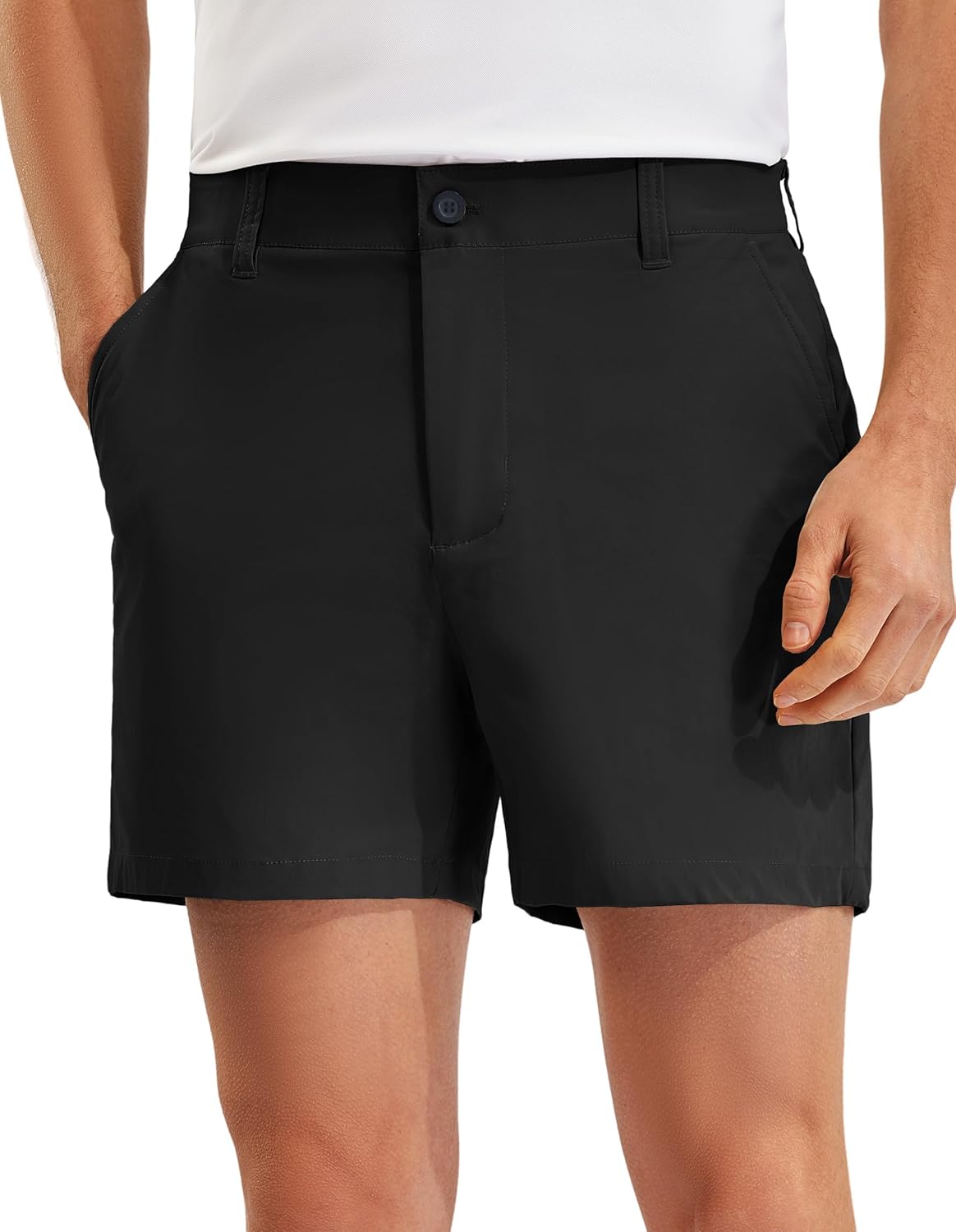
Heat management starts with matching your fabric to your heat load, not to a generic label like quick-dry. If you sweat heavily or play in humid conditions, prioritize a lighter, smoother synthetic with real wicking behavior and fast evaporation. If you play in drier heat but walk a lot, airflow and fabric-to-skin feel become your biggest levers.
Use a simple three-step check in your workflow:
- Step 1: Touch test for cling: smooth, low-grab face.
- Step 2: Pocket-bag check: lighter, less bulky pockets.
- Step 3: Post-sweat recovery: Does it dry fast?
If you want a technical proxy, brands and labs often evaluate air permeability using methods like ASTM D737. You do not need the exact numbers to benefit from the concept: more air movement through the fabric usually feels cooler when you are standing over the ball and between shots. (s3.us-gov-west-1.amazonaws.com)
PULI has two relevant fabric directions in its men’s golf shorts lineup. The PULI Men’s Golf Shorts Relaxed Fit Stretch Dress Lightweight Casual Waterproof Travel Quick Dry Summer Shorts 7 Inch Inseam uses a 95% polyamide, 5% elastane blend and is positioned as quick-drying, lightweight, moisture-wicking, and UPF 50+. That polyamide blend is a strong choice when you want a smooth feel and durable performance in repeated wear, especially if your round includes a lot of walking and bag contact.
Fit And Inseam: Mobility Without Ride-Up

Fit is where comfort becomes swing consistency. Your shorts should let you rotate, hinge, and take a full walking stride without pulling across the hips or binding at the front thigh. In golf, the most common fit failures are (1) tightness across the upper thigh that causes ride-up, and (2) a waistband that shifts when you bend into posture.
Start with inseam selection because it changes friction and stability. A 5-inch inseam often feels cooler and freer, but it can increase inner-thigh contact for some players, especially in humidity. A 7-inch inseam adds coverage and can reduce chafe for walkers, but it should not feel heavy or restrictive.
Use this mobility check before you commit:
- Address position: no front-thigh pulling.
- Practice swing: no waistband roll.
- High step: hem does not bind.
PULI offers clear inseam options that map to this decision. The PULI Golf Shorts Men’s 5 Inch Inseam Stretch Casual Dress Shorts with Pockets Waterproof Lightweight Quick Dry uses a 96% polyester, 4% elastane fabric and pairs it with a 5 Inch Inseam and an elastic waistband. That combination is useful if you want a more athletic, ventilated feel for very hot rounds, while still keeping a golf-appropriate zipper closure.
Pocketing And Carry: Course Essentials Secure
When your pockets are wrong, your round feels disorganized. The problem is not just storage; it is movement. A bouncing phone changes how you walk. A shallow pocket makes you check for your wallet every few holes. A bulky pocket bag traps heat in the exact area you want to ventilate.
Decide what you carry, then choose pocket architecture that supports that load:
- Tees and marker: shallow is fine.
- Phone: needs depth and stability.
- Scorecard glove: benefits from easy access.
- Keys: better in a secure pocket.
A secure zip pocket is the simplest way to reduce risk without turning your shorts into cargo shorts. Pocket placement matters too. A zip pocket that sits slightly behind the hip line tends to bounce less than one that sits directly on the front thigh.
In PULI’s lineup, pocketing is a consistent feature. The PULI Men’s Golf Shorts Relaxed Fit Stretch Dress Lightweight Casual Waterproof Travel Quick Dry Summer Shorts 7 Inch Inseam lists five pockets including two front slant pockets, one zipper pocket, and two back button pockets. That layout fits a typical golf carry because you can separate items: keep your phone in the zip pocket, tees/marker up front, and wallet or glove in the back.
Weather Protection: Light Rain And Dew
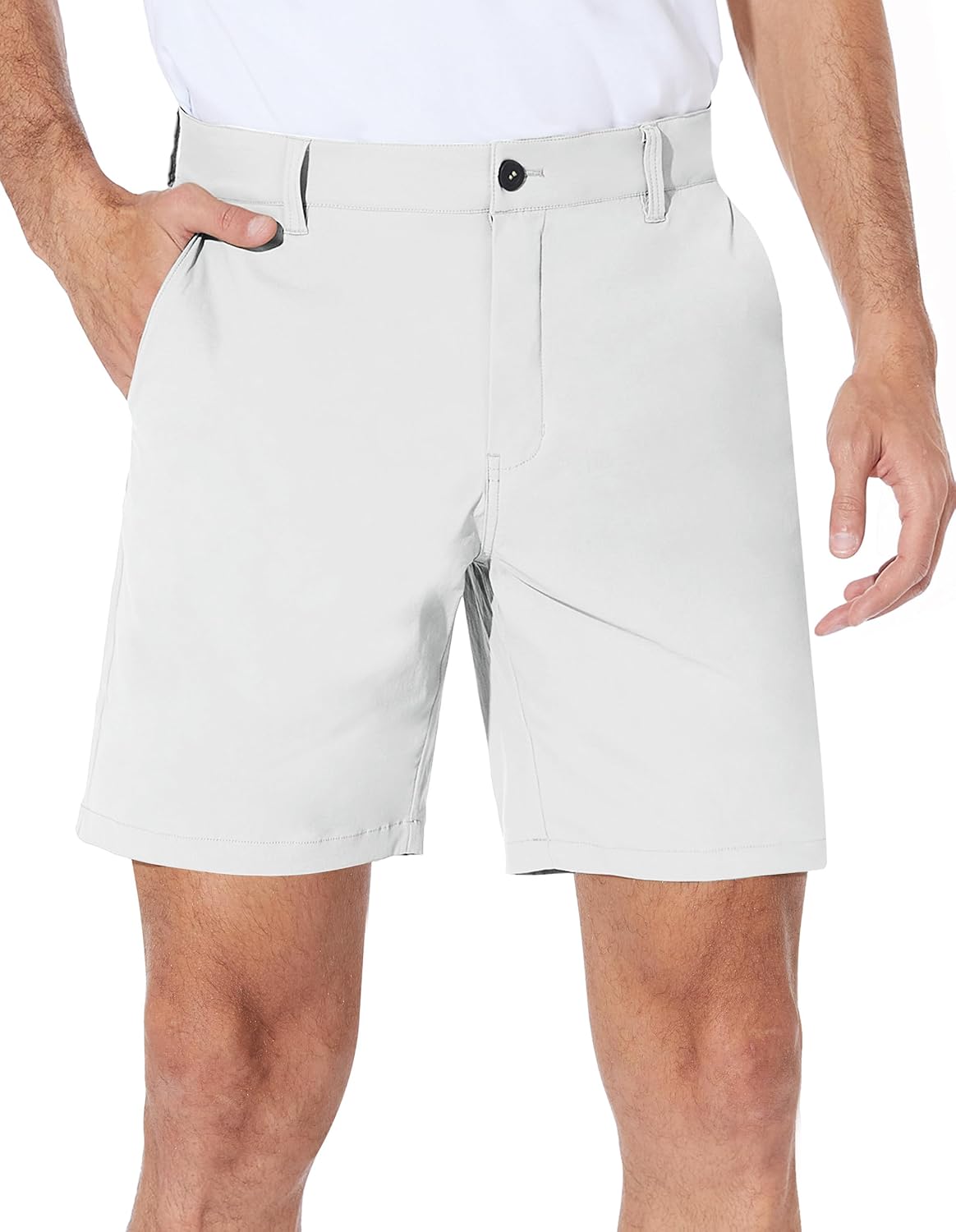
A little protection from dew and light rain can be a comfort multiplier, but only if it does not choke airflow. The key is to treat water resistance as a situational tool, not the primary requirement for summer comfort. In other words, do not accept a heavy, clammy fabric just to win a drizzle that lasts 10 minutes.
When you see spray ratings referenced in apparel testing, one common method is AATCC Test Method 22, which evaluates water repellency using a spray test and a visual rating scale. It is useful for understanding surface wetting behavior from light rain or splashes, but it does not mean the garment is waterproof like a rain shell. (members.aatcc.org)
For golf, the practical checklist is:
- Repels brief drizzle or wet grass.
- Does not feel sticky when humid.
- Dries fast after a passing shower.
PULI’s men’s golf shorts are positioned with water-resistant or waterproof language alongside quick-dry performance. In real use, this is best interpreted as a light-weather advantage for morning tee times, damp fairways, or quick summer storms. If your priority is breathability in high heat, keep your filter order consistent: airflow and dry-time first, then repellency as a bonus.
Shop: PULI Men’s 7" Flat Front Hybrid Golf Shorts Stretch Lightweight Quick-Dry Chino Casual with Pockets
How to Choose Summer Golf Shorts: A Decision Framework
Fabric blend: cooling versus durability
Choose your base fiber based on friction and heat. If you want a smoother, more durable feel with stretch, polyamide-elastane blends are a common direction. If you want a very light, quick-dry feel, polyester-elastane blends are common and often feel slightly crisper.
For sustainability-focused shopping, watch for recycled nylon or recycled polyester claims (Recycled Nylon is increasingly used in performance apparel). A useful market reality check is that recycled polyester volumes have grown, but virgin polyester growth still keeps recycled share relatively limited in the overall market; Textile Exchange reports recycled polyester tonnage rose from about 8.9 million tonnes (2023) to about 9.3 million tonnes (2024), while market share slipped from 12.5% to 12%. (textileexchange.org)
Stretch percent: rotation and stride comfort
Stretch supports golf movement, but it must recover. In practice, you are looking for a controlled give that does not bag out at the seat after a few holes. Elastane at a small percentage can be enough, but construction and waistband design often determine whether stretch feels stable.
Use these quick checks:
- Squat test: no waistband gap.
- Step-up test: he does not bite.
- Pocket load: waistband stays level.
Dry-time cues: weave, finish, and pocket mesh
Dry-time is not only about fiber content. Weave density, surface finish, and pocket bag material all matter. Mesh pocketing can improve airflow, but only if the pocket bag is not overly thick. Also, the fastest-drying shorts tend to feel lighter when damp; heavy pocket bags are often the hidden culprit when shorts stay wet at the hips.
If you play in regions with increasing heat extremes, plan your kit like an athlete. NOAA’s 2025 climate analysis reported multiple U.S. regions among their warmest years on record, reinforcing why breathable, quick-dry gear has become a practical necessity for outdoor summer activities. (ncei.noaa.gov)
Waistband build: elastic, belt loops, and grip
Your waistband should do two jobs: look golf-clean with a belt, and move with you through rotation and walking. Elastic sections help if you fluctuate between sizes or carry more in pockets. Belt loops matter if you prefer a stable fit and a tucked polo.
Quick comparison table: match scenario to build
| Your round scenario | Heat priority | Fit priority | Pocket priority | Best direction |
|---|---|---|---|---|
| Walking 18, humid | Max airflow | Anti-chafe | Zip phone pocket | Light, smooth quick-dry |
| Riding, very hot | Dry-time | Seat comfort | Low-bounce pockets | Soft hand-feel, stable waist |
| Morning dew | Dry-time | Stable hem | Secure essentials | Light water resistance |
| Travel golf day | Wrinkle control | All-day comfort | Multi-pocket | Stretch + quick-dry |
Best Practices & Pitfalls
Best Practices
The biggest performance gains come from care and rotation, not from overthinking one feature. Treat your shorts like a piece of gear: keep finishes clean, preserve stretch, and avoid build-up that blocks wicking.
Best-practice habits that work:
- Wash cold to reduce fiber stress.
- Skip heavy fabric softeners that can coat fibers.
- Air dry when possible to preserve elastane.
- Rotate pairs to reduce odor build-up.
- Empty pockets before washing to protect seams.
Common Pitfalls to Avoid
Most mistakes are predictable because they come from shopping for looks first and movement second. You do not notice the failure until you are sweaty, walking, and trying to keep tempo.
Avoid these common errors:
- Sizing down for a slimmer look.
- Choosing dense fabric for the structure only.
- Overloading pockets during the swing.
- Assuming water-resistant equals breathable.
- Ignoring pocket bag thickness and bounce.
Conclusion
The best summer golf shorts are not defined by one buzzword. They win because the comfort triangle is balanced: airflow to release heat, stretch to move with your swing, and dry-time to prevent cling and distraction.
Use the modules in this guide as a repeatable workflow. First, choose a fabric direction that matches your heat and sweat load. Next, validate fit with a simple mobility test and the inseam that stays stable for your stride. Finally, pick pocketing and light weather features that support how you actually play, not how you shop.
FAQ
How do I tell if golf shorts are truly breathable?
Breathable golf shorts feel like they release heat quickly when you stop moving, not like they trap warmth at the hips and seat. In practice, you will notice less cling after a sweaty walk and faster comfort recovery after you leave the shade and step into the sun. Check pocket bags because thick, non-breathable pocketing can make a breathable fabric feel hot. If you can do a quick motion test, walk briskly for 3 to 5 minutes, and see whether the fabric feels damp and sticky or starts drying while you keep moving.
What inseam length is best for hot-weather rounds?
The best inseam is the shortest length that stays stable during your full swing and walking stride without riding up. A 5-inch inseam often feels cooler and freer, but it can increase inner-thigh rubbing for some body types in humid weather. A 7-inch inseam adds coverage and can reduce chafing, especially for walkers, but it should not feel heavy or restrictive at the hem. If you are unsure, choose based on your friction pattern: inner-thigh rub usually improves with slightly more coverage and a stable leg opening.
What fabric blend dries fastest in summer conditions?
Synthetic blends that combine a performance base fiber with a small amount of elastane typically dry faster than heavier, more absorbent fabrics. Polyester blends are commonly used for very fast dry-time, while polyamide blends often balance quick-dry with a smoother hand-feel and abrasion durability. The weave and pocket bag materials matter as much as the fiber label, so two shorts with the same percentages can dry at different speeds. As a rule, lighter, less dense fabrics and lighter pocketing usually dry faster after sweat or light rain.
Do water-repellent finishes make shorts less breathable?
They can reduce breathability if the finish is paired with a dense weave or if it changes how moisture vapor escapes the fabric. In golf shorts, water repellency works best as a light-weather bonus for dew and brief drizzle, not as the main spec for extreme heat. If you play in high humidity, prioritize airflow and dry-time first, then treat repellency as optional. You can often feel this trade-off immediately: if the fabric feels slick but clammy during a warm-up, breathability is probably compromised.
How should I care for quick-dry golf shorts to keep their performance?
Wash in cold water on a gentle cycle to reduce stress on elastane and to help the fabric keep its shape. Avoid heavy fabric softeners because they can leave residue that interferes with wicking and can trap odor over time. Use low heat or air dry when possible, since high dryer heat can shorten stretch life and reduce finish performance. If odor builds up during humid seasons, rotate multiple pairs and wash soon after the round instead of letting sweat sit overnight.
Why do my shorts chafe even when they are labeled moisture-wicking?
Chafing usually comes from friction plus salt build-up, not from a lack of wicking claims. If the fabric moves with sweat but stays pressed against your skin, you can still get rubbing at the inseam and inner thigh. Fit is often the hidden cause, because shorts that are tight at the upper thigh ride up and create constant seam contact while walking. Try a slightly longer inseam or more room through the thigh, and prioritize smooth seams and stable hems rather than chasing stronger wicking language.
How many pockets should summer golf shorts have for a normal round?
Most golfers do well with four to five pockets as long as one is secure for a phone or keys. Two front pockets handle tees, ball markers, and occasional glove storage, while back pockets can hold a wallet or scorecard items. A zip pocket reduces the need to overload one side and helps prevent bounce during the swing. The key is not the number alone, but whether the pockets are deep enough and positioned so items stay stable when you walk and rotate.
What does inclusive sizing mean for performance golf shorts?
Inclusive sizing means more golfers can find a fit that supports movement without sizing down or living with waistband gaps. From a performance standpoint, correct sizing reduces ride-up, seam friction, and pocket bounce, which all matter more in summer heat. It also improves consistency because your stance and walking stride stay natural when the garment does not shift. If you are between sizes, look for a waistband with controlled elastic and a fabric with recovery so the shorts feel secure without needing to be overly tight.