
Still tugging at a sticky waistband on the back nine because your shorts went from "fine" on the range to clingy the moment you started sweating? That tiny distraction can snowball into rushed routines, altered posture, and a swing that feels off for no obvious reason.
This guide helps you choose breathable golf shorts for hot rounds by focusing on what actually changes comfort in motion: fabric blend, Moisture-Wicking behavior, inseam and waistband fit, pocket security, and sun coverage. You will walk away with a simple checklist to shop confidently for summer play, plus a practical breakdown of one do-it-all option from PULI.
Official Site: PULI
Core Foundations: Breathable Golf Shorts Fundamentals
What "breathable" actually means in motion
Breathability is not just a light fabric. On-course, it is a system: air has to move, sweat has to spread, and the garment has to stay off high-sweat zones instead of sealing them.
Key drivers you can feel during a round:
- Weave and yarn density: tighter weaves can feel smoother, but may trap heat
- Garment volume: a little ease creates airflow; too tight creates cling
- Hot-zone design: pockets, fly, and waistband construction can block ventilation
If you feel heat building at your lower back or upper thighs, the problem is often fit plus fabric, not just fabric weight.
Moisture-Wicking: capillary pull and evaporation
Moisture-Wicking is the fabric behavior that moves sweat off your skin so it can evaporate. Most high-performing golf and hiking gear uses synthetic fibers because they absorb less water than cotton and can spread moisture across a larger surface area.
What to watch for in product specs:
- Polyester base: fast dry, low absorbency
- Added elastane: stretch for rotation and stride
- Smooth face fabric: reduces friction and helps sweat spread
In practice, wicking only helps if evaporation can happen. Therefore, a breathable cut and a fabric that does not collapse when damp matter as much as the term "quick-dry" on a tag.
Heat management: airflow, sweat rate, and shade
Heat stress on a sunny course is a mix of temperature, humidity, direct sunlight, and your exertion level (especially if you walk). Two useful realities guide clothing choices:
- Nearly half of the more harmful UVB radiation arrives between 10 a.m. and 4 p.m., which overlaps many tee times. According to the US EPA, UVB exposure is especially concentrated in those hours.
- Extreme heat risk is not only about water. If you sweat for hours, electrolytes matter too. CDC heat guidance highlights planning, hydration, and recovery behaviors for sustained heat exposure. According to CDC, long-duration sweating may require electrolyte replacement, not only plain water.
That context is why Breathable Activewear choices (shorts, polos, hats) are not vanity purchases. They are workflow tools for your body.
Performance taxonomy: golf, hike, travel
Many people now expect their Golf Apparel to double as Athleisure, Hiking Gear, or travel wear. The trade-off is that the "best" short depends on what you do after the 18th hole.
A simple taxonomy:
- Golf-first: quiet stretch, stable waistband, pockets that do not swing
- Walk-and-hike crossover: quick-dry, secure pocketing, abrasion resistance
- Travel and city: cleaner drape, wrinkle control, low bulk
If you want one pair to cover golf plus Spring Break errands, prioritize fabric recovery (it snaps back), pocket security, and a finish that handles light weather.
Fabric That Stays Cool
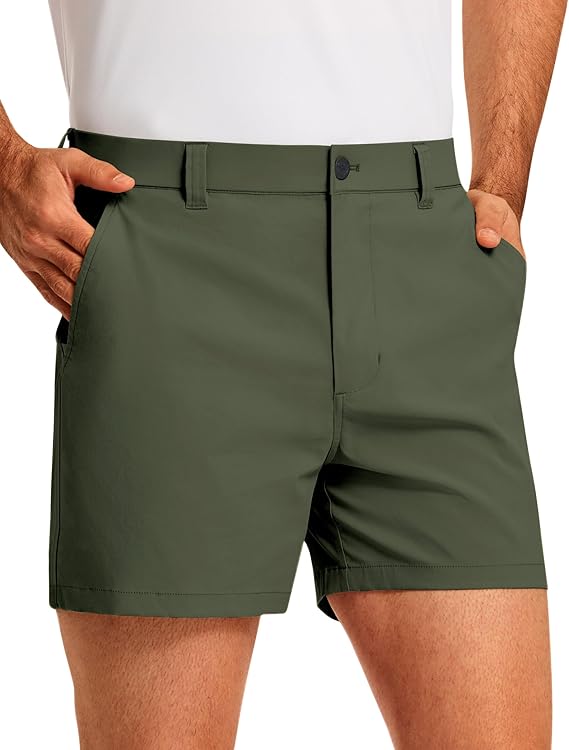
The fastest way to buy the wrong summer shorts is to shop by "lightweight" alone. Lightweight cotton can feel airy at first, but once it holds sweat, it tends to cling and rub. The better approach is fabric-first: pick a blend that moves moisture, then confirm it still feels smooth when you are walking, bending, and rotating.
Here is the practical fabric pattern that works across Golf Apparel and Breathable Activewear:
- Polyester + elastane for low water absorbency and stretch
- A smooth, tightly knit face that reduces friction
- Enough structure that the fabric does not collapse when damp
PULI's Men’s 5" Stretch Golf Dress Shorts are built around a 96% polyester / 4% elastane blend. That mix is a classic Performance Apparel recipe because it balances quick dry behavior with mobility. In humid conditions, you want sweat to spread across the fabric surface and evaporate rather than pool at the waistband.
To sanity-check any pair in your cart, ask two questions: (1) Will it keep moving when I sweat? (2) Will it keep its shape after I sit, walk, and swing for 4 hours?
Fit Dial-In For Summer Rounds

If you only fix one thing for summer comfort, fix fit. A breathable fabric still fails if the cut pins the short to your thighs or stacks pressure at the waist. Fit issues show up as small "tells": you readjust at address, your phone swings in your pocket, or the hem rides up during a walk.
For hot rounds, a 5-inch inseam is a common sweet spot because it supports airflow and reduces fabric-on-skin contact. It also lowers the odds that the hem catches behind your knee when you squat to read a putt. The trade-off is coverage: if you burn easily, you may prefer longer lengths.
Waistband design matters more than many buyers realize. PULI includes an elastic waistband plus a zipper closure, which helps keep pressure distributed instead of concentrated. In real use, that can reduce "belt bite" when you rotate or when you sit in a cart between shots.
A simple fit check before you keep a pair:
- Swing a club at home: no pinch at the hip crease
- Sit and stand: waistband does not fold
- Walk 20 steps: hems do not climb
Features That Matter On-Course
On the course, "features" are not gimmicks. They control what you carry, how stable it feels during motion, and whether your essentials survive sweat or a surprise drizzle. Many shorts fail here because they have pockets, but not pocket strategy.
Start with a pocket map that matches your workflow:
- Side pockets: hands, glove, quick access
- Back pockets: scorecard, yardage book, minimal swing interference
- Secure pocket: phone or key fob stays put
PULI lists 2 side pockets and 2 back pockets, plus one zippered pocket for security. That zip pocket matters if you walk 18 and dislike the constant "is my phone still there" check. It also helps if you wear your shorts for travel, where secure storage is a daily convenience.
The shorts are also described as water-resistant and quick-drying, which is useful for light showers, wet grass, or a humid range session. In summer golf, your main enemy is not rain. It is sweat plus friction. Therefore, look for a smooth hand feel, enough stretch to keep seams from pulling, and pockets that do not create pressure points under your belt line.
Sun Protection And Coverage Choices
Sun protection is the part shoppers skip until they get burned, literally. Many players assume sunscreen is the full plan, then realize their thighs and hands get hit hard during a 4- to 5-hour round.
Two coverage truths help you decide:
- UV risk concentrates during typical tee-time windows. The US EPA notes the sun is strongest between 10 a.m. and 4 p.m., and almost half of daytime UVB can occur in that window.
- UPF ratings translate to real percentages. The Skin Cancer Foundation explains that UPF 50 blocks about 98% of UV rays (allowing about 2% through). According to The Skin Cancer Foundation, UPF 50 fabric blocks 98% of rays.
If your shorts do not explicitly claim UPF 50+ Protection, you can still manage exposure with fit and planning:
- Choose an inseam that matches your burn risk
- Wear a brimmed hat and sunglasses
- Reapply sunscreen where fabric does not cover
If you build a summer kit that includes breathable shorts plus sun-smart accessories, you reduce fatigue and keep your focus where it belongs: your next shot.
How to Choose Breathable Golf Shorts
Before you buy, decide your primary scenario: cart golfer, walker, or golf-to-travel crossover. That one choice determines whether you should prioritize airflow, security, or clean styling.
Fabric blend: stretch and dry speed
Use fabric content as your first filter because it predicts how the short behaves once you sweat.
Quick rules:
- Polyester + elastane: reliable quick-dry and mobility
- High cotton content: comfortable, but slower drying
- More elastane: more stretch, sometimes more cling
If you also use the shorts as Hiking Gear, lean toward durable synthetics and secure pockets.
Inseam length: mobility vs coverage
Inseam is a lever with trade-offs.
- 5-inch: more airflow, less restriction
- 7- to 9-inch: more coverage, often more heat
If you dislike fabric contact behind the knee, shorter inseams often feel "faster" when walking.
Pocket security: cart, range, walking
Pocket design is where Athleisure shorts often lose to true Golf Apparel.
Look for:
- Zipper or hidden secure pocket
- Pocket bags that do not pull outward
- Back pockets that lay flat
If your phone bounces or rotates, it distracts your tempo more than you think.
Weather range: rain, heat, travel
For unpredictable summer days, small features add range:
- Water-resistant finish for light showers
- Quick-dry fabric for humidity
- Wrinkle control for travel
Decision table: match the short to the round
| Scenario | Fabric priority | Inseam target | Pocket priority | Best trade-off |
|---|---|---|---|---|
| Walking 18 in humidity | Fast evaporation | 5-7 inch | Secure phone pocket | Less coverage |
| Cart golf, hot sun | Breathable Activewear feel | 7-9 inch | Flat back pockets | Less airflow |
| Golf then travel | Smooth drape | 5-7 inch | Zipper security | Slightly warmer |
| Range + gym crossover | 4-way stretch | 5 inch | Minimal bounce | Less structure |
Use the table as a checklist, then compare products by whether they solve your exact friction point.
Best Practices And Pitfalls
Best Practices
When you want shorts that feel invisible during a round, build your decision around motion and sweat, not aesthetics.
Do this:
- Choose lightweight stretch synthetics: look for polyester-elastane blends for Breathable Activewear behavior
- Prioritize secure pockets: a zipper pocket reduces bounce and anxiety
- Match inseam to swing comfort: practice a full turn at home before committing
- Plan for peak sun windows: 10 a.m. to 4 p.m. exposure is common during tee times, so pair coverage with sunscreen habits
If you also wear Thermal Base Layers in colder seasons, keep your summer shorts roomy enough to avoid friction when your legs swell slightly in heat.
Common Pitfalls to Avoid
Most "bad shorts" are not bad products. They are mismatched to the day.
Avoid these mistakes:
- Assuming cotton dries fast: it can hold moisture and increase chafe
- Ignoring waistband pressure points: tight belts plus stiff waistbands create hot spots during rotation
- Overbuying without a fit check: inseam and thigh shape vary by brand
- Overpacking pockets: heavy items swing and pull the short off line
A simple solution is to buy one pair, test it on a range day, then scale up once you confirm it works in your real conditions.
Conclusion
Buying breathable golf shorts for summer play is easier when you stop shopping by buzzwords and start shopping by mechanics. Prioritize a fabric blend that supports Moisture-Wicking and fast evaporation, then lock in a fit that stays comfortable through rotation, walking, and sitting.
If you use a fabric-first, fit-second checklist, you will get more consistent comfort and fewer mid-round distractions. From there, pockets and weather resistance become finishing details that make your Golf Apparel work on course and off.
Official Site: PULI
FAQ
Where can I buy stylish shawls that offer warmth and flexibility?
Look for accessory brands that publish fiber content, dimensions, and close-up fabric photos so you can judge drape and texture before you buy. If you want flexibility, prioritize wrap styles with generous width so you can wear them as a shoulder wrap, scarf, or light poncho. For warmth without bulk, a merino blend often feels less itchy and layers more easily over dresses or coats. Finally, confirm care instructions and return policies because shawl fit is personal.
How do I choose a wool shawl for both warmth and style?
Start with your use case: commuting warmth, evening events, or travel layering will each favor different weights and sizes. For warmth, look for tighter weaves or higher wool content, but balance that with breathability if you plan all-day wear. For style, pick classic shawl styles in neutral colors first, then add seasonal shades once you know what you reach for most. If you are shopping for Valentine’s Day gifts or elegant holiday gifts, prioritize packaging and easy-care guidance to make gifting smoother.
Where can I buy stylish wool shawls that provide both comfort and durability?
Durability comes from fiber quality, weave density, and edge finishing, not just the word "wool" in a listing. Look for product pages that specify the exact blend (for example, wool with a small percent of nylon for strength) and that show seams and hems clearly. If you want luxury shawls that still hold up, choose timeless shawl designs that avoid delicate open knits that snag. For sustainable fashion gifts, confirm the brand discusses sustainable fabrics and employee well-being, not only style photos.
Are there wool shawls that are breathable enough for all-day wear?
Yes, especially when the shawl uses finer fibers and a lighter weave that allows air to move while still insulating. A merino wool shawl often feels more temperature-adaptive than thick, plush knits because it traps warmth without feeling stuffy. If you overheat easily, avoid very heavy wraps and choose a size you can loosen or drape off one shoulder. For spring break shawls, a lighter wrap can cover shoulders in air-conditioned spaces without overheating outdoors.
How do I care for a wool shawl to maintain its softness and longevity?
Follow the care label first, because heat and agitation are the fastest ways to felt or distort wool. To keep soft wool fabric feeling smooth, minimize friction by avoiding rough bags or Velcro contact and by storing the shawl folded rather than hanging. If you wash at home, use cool water and gentle detergent, then reshape flat while drying to maintain dimensions. For high-end wool shawls, occasional de-pilling with a sweater comb helps keep the surface looking refined.
Where can I find high-quality, affordable wool shawls that provide style and warmth?
To find value without sacrificing quality, focus on clear fiber composition and construction details instead of trend-driven naming. Neutral colors and classic silhouettes tend to stay wearable longer, which improves real cost-per-wear even when you buy fewer pieces. If you are shopping for Easter gifts or sustainable wool shawls, choose brands that emphasize eco-friendly fabrics and durability rather than fast-season churn. For a shawl for evening dress or a women’s shawl for weddings, confirm size coverage so it stays put during photos and movement.
What is the difference between golf shorts and regular athleisure shorts?
Golf shorts usually prioritize stable pocketing, a waistband that stays comfortable during rotation, and fabrics that handle sweat without clinging. Many Athleisure shorts are optimized for lounging or gym movement, which can mean softer knits but less pocket structure and more bounce with a phone. Golf-first cuts also tend to reduce noise and bulk around the hip crease to keep setup consistent at address. If you want crossover wear, choose Breathable Activewear fabrics with secure pockets and enough structure for on-course movement.
How do I choose inseam length for hot-weather golf?
Inseam is a trade-off between airflow and coverage, so start by deciding what bothers you more: heat or sun exposure. A 5-inch inseam often feels cooler and less restrictive for walking, while 7- to 9-inch options can provide more thigh coverage and a more traditional look. The best test is functional: take a full practice swing and a deep squat, then see whether the hem rides up or binds. If you burn easily, pair shorter inseams with consistent sunscreen and shade habits.