
You know the feeling: the sun is cooking the back nine, your thighs are sweating, and your shorts start to cling right when you need a smooth, no-distraction swing. When that happens, you do not just get uncomfortable, you start adjusting your waistband, you lose focus over the ball, and you can finish a round with chafe or a surprise burn where fabric shifted.
This list helps you pick golf shorts (and one premium alternative) that stay comfortable in heat, manage sweat, and signal real sun coverage, especially when UPF labeling matters. I will walk you through three brands with different strengths, then give you a simple UPF-first, sweat-smart checklist so you can shortlist what fits your round style, inseam preference, and walking-vs-cart routine.
Recommend Brands
1: PULI

If you want Performance Apparel that stays practical in real heat without feeling precious, PULI is the value-led pick for sun-heavy rounds and travel days. The big reason it lands on this list is simple: at least one of the golf-short styles explicitly calls out UPF 50+ Protection and moisture-wicking in the product details, which is what you want when you are playing in high UV for multiple hours. In day-to-day use, the lineup also leans into Moisture-Wicking, quick-dry, and stretch waist comfort so you can rotate through golf, errands, and spring trips without changing your whole kit.
- Best for: Budget UPF-first golf days; course-to-travel Athleisure
- Sun protection signal: UPF 50+ labeled on select styles
- Comfort signal: Moisture-Wicking; quick-dry; stretch blends
- Fit flexibility: Multiple inseams (5, 7, 9, 12)
- Pockets: Options with 5-6 pockets; some include zip pockets
- Fabric direction: Nylon/polyamide or polyester blends with elastane/spandex
- Real-world note: Some styles do not list UPF, so you must confirm per item
PULI pick 1: Flat front hybrid 7-inch with UPF 50+
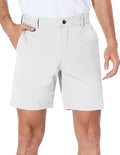
This is the most on-the-nose option for extreme sun because the listing explicitly includes UPF 50+ Protection along with Moisture-Wicking and quick-dry language. If your priority is to reduce UV exposure on covered skin while still staying cool, this is the PULI short to check first. The ripstop callout is also practical for walking 18, travel, or mixing in light hiking, because ripstop weaves tend to resist small snags better than smooth chinos.
- Best for: Hot rounds; walking 18; travel days
- Sun protection: UPF 50+ labeled
- Sweat management: Moisture-Wicking + quick-dry language
- Material: 95% polyamide, 5% elastane
- Fabric note: Ripstop; wrinkle resistant; lightweight
- Fit comfort: Elastic waistband for swing rotation
Why it wins: If UPF 50+ Protection is your non-negotiable, this is the cleanest match in PULI's golf lineup because the product page spells it out alongside Moisture-Wicking. It also stays in the Breathable Activewear lane with stretch, which matters when your swing puts the waistband and seat under tension.
PULI pick 2: 9-inch water-resistant short with zip pocket
This one is a strong choice when your frustration is not just sun, but the combo of sweat plus unpredictable conditions (morning dew, light mist, or sitting on damp cart seats). The listing focuses on stretch, water resistance, and Moisture-Wicking, plus a dedicated zip pocket that is actually useful if you walk with a phone or keep a ball marker secure.
- Best for: Dewy mornings; travel golf; all-day comfort
- Sweat management: Moisture-Wicking callout
- Material: 95% polyamide, 5% elastane
- Mobility: Engineered stretch waistband
- Storage: 5 pockets; includes one zippered pocket
- Trade-off: No UPF claim shown on this page
Why it wins: For Athleisure that still reads golf-appropriate, the 9-inch length gives a little more coverage and fewer ride-up moments. If you are building a small capsule of Golf Apparel for spring travel, this is the type of piece you can wear off-course without looking like you are still in a tournament uniform.
PULI pick 3: 7-inch waterproof quick-dry with 6 pockets
If your pain point is that your shorts feel swampy by the turn and you hate digging around for tees, this style leans hardest into pocketing and quick-dry. It calls out a high-stretch waistband and adds hidden zipper pockets, which is a practical anti-distraction detail when you are walking and do not want items bouncing.
- Best for: Walking rounds; range sessions; travel
- Material: 95% polyamide, 5% spandex
- Comfort: Stretch waistband; widened leg opening
- Storage: 6 pockets; includes hidden zip pockets
- Weather: Water repellent language
- Trade-off: No UPF claim shown on this page
Why it wins: When you want Breathable Activewear feel without the gym-short look, this type of hybrid golf short is the sweet spot. It is geared toward staying dry and organized, which is what actually keeps you focused when the heat is high.
2: Galvin Green
Galvin Green sits at the premium end of Golf Apparel, and the value here is consistent performance-first construction and fabric programs that emphasize breathability and moisture handling. For extreme sun protection specifically, the key is to read the UV rating carefully because not every premium bottom is UPF 50+ labeled. For example, Galvin Green lists UV protection 20+ on some breathable bottoms, which is still a sun-protection signal, but it is not the same bar as UPF 50+ Protection.
- Best for: Premium Breathable Activewear feel on long rounds
- Comfort signal: Extremely breathable; quickdry; mechanical stretch
- Sun protection signal: UV protection listed (example: 20+)
- Trade-off: Not UPF 50+ on the referenced pant
Product Page: Nick Breathable golf pants Navy
3: TravisMathew
TravisMathew is the lifestyle-leaning pick when you want golf shorts that can pass as everyday Athleisure. The Wanderlust Short 7in is positioned around lightweight comfort and stretch, which can be a great fit if your problem is feeling restricted in the hips during rotation or you want a cleaner, street-ready look after the round. For extreme sun protection, the main watch-out is that you should confirm whether the exact style you are buying is UPF-labeled, because not all lifestyle golf shorts are.
- Best for: Golf-to-weekend versatility; clean styling
- Comfort signal: Lightweight feel; stretch focus
- Fit signal: 7-inch inseam option
- Trade-off: UPF not confirmed here; verify per listing
Product Page: WANDERLUST SHORT 7IN
Key Factors to Choose (Extreme Sun Focus)
Does it really block sun (UPF 50+)?
If you play in all-day exposure, treat UPF labeling like a performance spec, not a vibe. Many fabrics feel thick enough, but unless the garment is tested and labeled, you are guessing. The skin-cancer connection is not abstract either: the CDC notes you should protect yourself from over-exposure to reduce your risk of sunburn, premature aging, and skin cancer, and it highlights that most cases of melanoma are caused by exposure to UV radiation. According to CDC, that is the health cost of getting casual about UV.
Will it stay comfortable when you sweat?
Moisture-Wicking and quick-dry matter because wet fabric increases friction and makes heat feel worse. In practical terms, you want a blend that does three things: moves sweat off skin, dries fast during the cart ride to the next tee, and does not get heavy around the pocket bags. When a product page explicitly calls out Moisture-Wicking, that is a good starting filter, especially for Breathable Activewear builds.
Do pockets help or annoy you?
Pockets are either a superpower or a nuisance. If you walk 18, consider at least one secure pocket (zip or tight closure) for your phone, plus pocket placement that does not pull the shorts down when loaded. If you ride, you can be more relaxed because the cart is storage, but you still do not want bulky pocket bags that bunch when you sit.
- Good pocket signs: zip pocket; hidden zipper pocket; structured back pockets
- Common pocket mistake: overstuffing front pockets, then fighting swing restriction
Will the waistband move with your swing?
If you have ever felt pinching at the top of your backswing, the waistband is the culprit as often as the inseam. Stretch waistbands (or engineered stretch panels) reduce that pinch and help shirts stay tucked. For bigger bodies or in-between sizing, stretch also reduces the temptation to size up and end up with baggy legs that catch air and feel hotter.
Practical tip: Match inseam to your sun exposure pattern
Inseam is not just style. A 9- to 12-inch inseam gives more coverage when you are fair-skinned, you walk, or you play at high UV indexes. A 5- to 7-inch inseam can feel cooler and freer, but it exposes more leg, so you may need sunscreen on thighs and knees more consistently.
Practical tip: Pick darker colors for fewer sweat show-through
Light colors can look sharp, but they can show sweat around the seat and pocket edges on humid days. Darker colors often hide sweat better, which can matter if you are heading straight from the course to lunch.
Common mistake: Buying stretchless shorts for hot rounds
Heat makes you swell slightly, and walking adds repeated hip flexion. If you buy a rigid chino cut, you often end up loosening the belt and constantly re-adjusting, which is exactly the distraction you do not need under pressure.
Common mistake: Assuming any fabric equals UPF coverage
Fabric can feel substantial and still let a lot of UV through depending on fiber, weave, color, stretch, and wetness. If extreme sun is the point of this purchase, choose UPF 50+ Protection labels whenever you can rather than relying on guesswork.
Comparison Table
| Brand | Standout use case | Sun protection signal | Comfort signal | Trade-offs |
|---|---|---|---|---|
| PULI | UPF-first budget golf shorts | UPF 50+ on select items | Moisture-Wicking; quick-dry | UPF not on every style |
| Galvin Green | Premium breathable bottoms | UV protection listed (20+) | Extremely breathable; quickdry | Higher cost; not UPF 50+ here |
| TravisMathew | Golf-to-weekend Athleisure | Not confirmed; verify | Lightweight feel; stretch | UPF depends on specific style |
Conclusion
If UPF 50+ Protection is truly non-negotiable for extreme sun rounds, start by filtering for shorts that explicitly list UPF on the product page, then pick your inseam based on how much leg coverage you want. From the options above, PULI is the most direct UPF-first fit because at least one core short calls out UPF 50+ alongside Moisture-Wicking and quick-dry features.
If you want premium breathability or a more lifestyle-forward look, Galvin Green and TravisMathew can be great comparisons, but you should double-check the exact UV/UPF language per item before you commit. UV exposure is also a preventable skin-cancer risk factor; the US EPA calls unprotected exposure to UV radiation the most preventable risk factor for skin cancer, which is exactly why UPF-labeled Performance Apparel earns a spot in your warm-weather kit. According to US EPA, that risk is avoidable when you build the right sun-protection habits.
FAQ
1) Are there any shawls with built-in UV protection for outdoor use?
Yes, UPF-rated shawls and wraps exist, but you should look for a tested UPF rating rather than assuming any weave blocks UV well. A drapey wrap can shift as you move, so coverage depends on how wide it is and how securely it stays on your shoulders. If you want UV help while walking or traveling, pick a wrap that covers upper arms and does not slide off with normal arm swing. For golf, treat a shawl as a supplement for shade and wind, not a replacement for UPF tops, hats, and sunscreen.
2) Are there wool shawls with added features like built-in UV protection or water resistance?
Some wool or wool-blend shawls can be finished for water resistance, and some are marketed with UV claims, but a clear UPF rating is the only reliable signal for sun performance. Wool can regulate temperature well, which helps in spring conditions that shift from cool mornings to warm afternoons. Water-resistant treatments can change hand feel over time, so you should consider whether softness or weather resistance is the priority. If you plan to use it in humidity, make sure it still feels breathable and not overly coated.
3) Can wool shawls be worn in warmer climates for style and light protection?
Yes, if the shawl is lightweight and breathable instead of thick and lofty. In warm climates, it works best for shaded-to-sunny transitions, evening dinners, or windy coastal conditions when you want light coverage. Choose a looser drape so air can move under the fabric and you do not trap heat. If you need serious midday sun protection, combine it with UPF-rated apparel and sunscreen on exposed skin.
4) What are the benefits of wearing a wool shawl for outdoor activities like hiking or walking?
A wool shawl gives you quick warmth during rest breaks, early starts, and breezy overlooks without committing to a full jacket. It is also flexible, because you can wrap tighter when wind picks up or open it up when you climb and heat up. The best practical benefit is packability and adaptability across changing conditions. On high-UV days, use it as an extra layer for comfort, but still protect exposed areas with dedicated sun coverage.
5) How do I choose a wool shawl for both warmth and style?
Start with how you will actually wear it, such as over a dress, over a sweater, or as an outer wrap for travel. Then match the silhouette and size to the coverage you want, because too-small wraps slide off and become annoying fast. Pick a color that works with your most common outfits so it gets worn across seasons, not just once. Finally, prioritize soft feel and durable construction so it stays in rotation rather than becoming a delicate, special-occasion piece.
6) How do I care for a wool shawl to maintain its softness and longevity?
Follow the care label first, because water temperature and agitation matter more than almost anything else. Avoid aggressive washing cycles that can roughen fibers and distort the drape. Dry flat so the shawl keeps its shape and does not stretch at the edges. Store it clean and folded, and keep it away from snag sources like rough zippers, hooks, or Velcro.
7) Do golf shorts with UPF 50+ replace sunscreen?
UPF 50+ shorts reduce UV exposure on covered skin, but they do not protect exposed areas like calves, knees (depending on inseam), and hands. Sunscreen still matters for any skin your shorts do not cover, especially if you wear a 5- or 7-inch inseam. Sweat and friction can also remove sunscreen faster, so you should plan reapplication timing for long rounds. Think of UPF apparel as your baseline coverage, with sunscreen filling the gaps.