
Golf style is not only about looking sharp. Golf clothing needs to support performance and still match course etiquette. That is why random gym or basketball shorts often fail on the course, even if they feel comfortable at first.
Sports shorts usually target one movement pattern (running, lifting, court sports). Golf involves twisting, walking, bending, and standing still for long stretches. Because of that, the best choice is a tailored hybrid short that delivers Performance Activewear comfort without the sloppy gym look.
The fix is simple: replace sports shorts with golf-ready shorts built around structure, secure pockets, and Moisture-wicking comfort. You get fewer distractions during your swing, fewer dress-code surprises at check-in, and a cleaner look that works on and off the course.
Official Site: PULI
Core Foundations
Golf setting: tradition, etiquette, dress codes
Golf has a long tradition of treating the course like a shared, respectful space. Many facilities expect clothing that looks intentional: collared shirts, belt loops or a structured waistband, and shorts that do not look like gym gear.
Dress codes vary, but the direction is consistent. “Athletic shorts” and “gym shorts” are frequently called out as prohibited items, especially in events and junior programs. That matters because dress enforcement can happen at the starter, not after the first tee.
Fit engineering: structure plus swing mobility
A golf swing needs rotation through the hips and torso, plus stable contact between waistband and body. Shorts that are too baggy can snag during the backswing and bunch at setup. Shorts that are too soft can shift as you walk, then you end up adjusting them mid-round.
Golf-ready shorts use a more structured shell with controlled stretch. The goal is simple: the short moves with you, but it also returns to shape so it stays clean-looking after repeated bending and walking.
Fabric performance: stretch, drying, durability
A round can mean 4+ hours outdoors, often in direct sun. Breathability matters, but so does how fabric manages sweat. In practical terms, Moisture-wicking fabric moves sweat away from skin so it can spread and evaporate faster.
Wicking is driven by capillary action in fibrous structures, and fabric structure strongly influences how moisture moves through the textile. Research teams studying wicking describe it as moisture uptake due to capillary forces, affected by yarn and fabric structure. According to ETH Zurich, wicking is capillary-driven and depends on fiber and fabric construction.
Storage needs: pockets for small essentials
Golf looks minimal, but you carry more than you think:
- Tees and a ball marker
- Phone and keys
- Scorecard or yardage notes
- A glove between shots
Sports shorts often have shallow hand pockets or loose openings. Golf-ready shorts prioritize deeper pockets and closures where needed, so you can keep your routine consistent and your hands free.
Course Dress Codes and Access
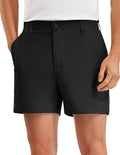
Some public courses are relaxed, but many private clubs and organized events treat gym shorts as a hard “no.” The risk is not just a side-eye from another group. The real risk is getting asked to change before you can tee off.
Junior golf policies show how explicit the rules can be. The U.S. Kids Golf dress code lists “gym shorts or pants” as prohibited, along with denim and short shorts. A player who is not appropriately attired is not permitted to participate. According to U.S. Kids Golf, gym shorts are prohibited.
A golf-ready short solves this at the root because it signals “I am dressed for golf” from the parking lot to the clubhouse. You do not need to guess if a starter will interpret your shorts as workout gear.
To keep access stress-free, use this quick check:
- Does the fabric look like a woven chino or hybrid, not a mesh knit?
- Does the waistband look structured enough to hold a tucked polo?
- Does the length land near the knee (or at least mid-thigh with a tailored cut)?
Fabric and Movement Mechanics
A golf short has to do two things at once: allow rotation and maintain shape. That is where sports shorts often miss. Many are made to maximize airflow and looseness, but they can shift under a belt line and bunch during hip rotation.
A better approach is a stretch-woven hybrid. You get controlled stretch for:
- Setup posture (hip hinge)
- Rotational swing mechanics
- Walking stride length
- Squatting or kneeling to read greens
In warm rounds, Moisture-wicking becomes the comfort multiplier. Wicking works because capillary action pulls moisture through the textile structure, spreading it across a larger area for faster drying. That mechanism is why a good performance weave can feel drier than a soft gym knit, even when both are “breathable.” According to ETH Zurich, wicking is capillary-driven and depends on textile structure.
PULI’s hybrid golf-short approach fits the “golf plus movement” requirement well. For example, the PULI Men’s Golf Dress Shorts Flat Front Hybrid 7 Inch uses a 96% polyester / 4% spandex blend and lists features like quick-drying, moisture-wicking, and UPF 50+, plus an engineered stretch waistband intended to keep a shirt tucked through the swing.
If you want that Performance Activewear feel without the “gym short silhouette,” prioritize:
- A woven face (cleaner drape)
- Elastane/spandex for stretch recovery
- A waistband design that stays stable under rotation
Pocket System and On-Course Carry
Pockets are not a nice-to-have in golf. They are a focus tool. When your tees, marker, and phone live in predictable places, your pre-shot routine stays consistent.
Sports shorts commonly fail in three ways:
- Pockets are shallow, so items pop out when you sit in the cart.
- Pocket openings are loose, so gear shifts during walking.
- There are not enough pockets, so everything stacks in one spot.
A golf-ready pocket system spreads items across multiple zones:
- Front pockets for tees and ball marker
- A secure pocket (zip) for phone or keys
- Back pockets for glove or scorecard notes
PULI’s men’s golf shorts emphasize multi-pocket utility. The PULI Men’s Golf Dress Shorts Flat Front Hybrid 7 Inch calls out “5 Practical Pockets,” including deep side pockets and zip closures, designed to hold phones and golf balls.
Use this pocket test before a round:
- Put three tees and a marker in one front pocket.
- Put your phone in a secure pocket.
- Walk 30 steps and do two practice swings.
If anything bounces, slides, or feels heavy on one side, the pocket layout is not doing its job.
Sun, Heat, and All-Day Comfort

A full round usually means hours of exposure, and the course offers less shade than people expect. Heat management is not only about “thin fabric.” It is about sweat control, airflow, and avoiding cling as humidity rises.
Two practical ideas matter most:
- Moisture-wicking to reduce that sticky feel during long walks.
- Sun protection habits, because UV risk rises during peak hours.
Public health guidance is clear about peak UV timing. The CDC notes that sunlight exposure is highest during the summer and between 10:00 a.m. and 4:00 p.m., which overlaps with many tee times and turn hours. According to CDC, outdoor exposure is highest between 10 a.m. and 4 p.m.
Golf shorts that include UPF claims and a more substantial weave can help, especially when paired with sunscreen on exposed areas. Comfort also improves when fabric dries quickly, because evaporative cooling works better when sweat spreads across the surface instead of pooling.
Style, Versatility, and Post-Round Wear
Looking appropriate matters because golf blends sport with social spaces. You might go from the range to the clubhouse, then to lunch or errands. Sports shorts often look out of place in those transitions.
A tailored hybrid short fixes that because it sits in the “athletic chino” lane:
- Flat front or clean front styling
- A waistband that reads polished
- Fabric that performs like Performance Activewear
PULI’s hybrid golf shorts are positioned for that all-day use case. The PULI Men’s Golf Dress Shorts Flat Front Hybrid 7 Inch lists a 96% polyester / 4% spandex fabric blend, which supports a cleaner drape while still giving stretch.
If you want one short that travels well, choose:
- A length that is accepted at most courses
- Neutral colors for easy pairing
- A pocket layout that works off-course too
Selection and Decision Guide

Length: avoid dress-code problems
The safest choice is a mid-to-near-knee length. Extremely short cuts can violate policies at stricter clubs, while overly long shorts can feel heavy and restrict stride.
Decision rule:
- If you often play mixed venues (public plus private), choose the more conservative length.
- If you play mostly casual courses, you can choose slightly shorter, but still tailored.
Fabric: get Performance Activewear comfort
Golf shorts should feel like Performance Activewear while keeping structure. Stretch-woven blends (polyester or polyamide with elastane) commonly hit that balance.
Decision rule:
- Choose stretch for mobility.
- Choose a woven face for polish.
- Avoid thin, floppy knits that cling when damp.
Moisture-wicking: manage sweat, reduce cling
Moisture-wicking matters most for walking rounds, humid climates, and summer tee times. Wicking relies on capillary action within textile structures, so fabric build and fiber properties matter, not just marketing.
Decision rule:
- If you sweat heavily, prioritize wicking plus quick drying.
- If you ride every round, you can tolerate less aggressive wicking.
Pockets: keep the routine consistent
Pockets are a performance feature because they reduce distraction. Look for deep fronts and at least one secure closure.
Decision rule:
- If you carry your phone, use at least one zip pocket.
- If you use a glove between shots, make sure a back pocket fits it comfortably.
Scenario comparison table
| Scenario | What usually goes wrong with sports shorts | What to prioritize instead | Trade-off |
|---|---|---|---|
| Private club tee time | Dress code rejection risk | Tailored look, structured waistband, conservative length | Slightly less “loungy” feel than gym shorts |
| Walking 18 in summer | Sweat, cling, constant adjusting | Moisture-wicking, quick-dry woven stretch | Performance fabric can feel less “cotton soft” |
| Cart round plus clubhouse lunch | Looks too casual, pockets dump items | Clean front styling, secure pocket, polished drape | More intentional styling requirements (belt/polo pairing) |
| Travel golf weekend | Wrinkles, inconsistent versatility | Hybrid short that pairs with polos and casual tees | You may want two lengths for different venues |
Best Practices and Pitfalls
Best Practices
- Check the course dress code the day before.
A quick look prevents surprise enforcement at check-in. It also helps you choose length and overall formality. - Choose a structured stretch waistband.
A stable waistband supports rotation and helps your shirt stay tucked. It also reduces mid-round adjusting, which keeps focus on the shot. - Prioritize deep pockets with at least one secure closure.
A phone sliding out of a pocket is not a small issue. Secure storage prevents distractions and protects your gear. - Build a “ready-to-golf” outfit formula.
Use the same basic template: polo, belt (if needed), hybrid shorts, golf shoes. Consistency reduces packing mistakes and makes early tee times easier.
Common Pitfalls to Avoid
- Wearing basketball shorts or running shorts to “keep it simple.”
They often read as gym gear, and many policies explicitly prohibit them. Even when allowed, they usually shift and bunch during the swing. - Picking ultra-thin, clingy knits in hot weather.
Thin knits can trap sweat against skin and stick when you sit, bend, or walk. A breathable woven with Moisture-wicking often feels cooler over a long round. - Relying on minimal pockets.
If everything goes in one pocket, weight shifts and you lose your routine. Spread essentials across pockets and keep a dedicated secure pocket for valuables. - Ignoring sun exposure timing.
Many golfers spend peak hours outside. The CDC notes higher exposure between 10 a.m. and 4 p.m., so plan for sweat control and sun protection habits during those windows. According to CDC, outdoor exposure is highest between 10 a.m. and 4 p.m.
Conclusion
Sports shorts feel easy, but they often fail the real golf test: course acceptance, stable swing mobility, functional pockets, and a polished look. A hybrid golf short delivers Performance Activewear comfort while staying golf-appropriate.
If you want one upgrade that improves comfort and confidence immediately, focus on three things: tailored structure, Moisture-wicking quick-dry fabric, and a pocket system that supports your routine.
Official Site: PULI
Frequently Asked Questions
Are sports shorts ever acceptable for golf?
Sports shorts can be acceptable on some public courses, especially if the facility has a relaxed culture. However, many clubs and organized events ban gym-style shorts, and enforcement can happen before you tee off. A tailored hybrid short reduces the risk because it looks intentional and course-appropriate. If you play new courses often, choose the safer option.
What inseam length is best for golf shorts?
A mid-length inseam that lands near the knee is the lowest-risk choice for most dress codes. Shorter inseams can work on casual courses, but they are more likely to be questioned at stricter facilities. Comfort also improves when the hem does not ride up during walking or squatting. If you are between two lengths, choose the slightly longer cut for versatility.
What does moisture-wicking mean in shorts?
Moisture-wicking means the fabric pulls sweat off your skin and spreads it through the textile so it can evaporate faster. That can reduce cling and help you feel cooler during long rounds. Wicking performance depends on fabric construction, not only fiber type, so two “polyester” shorts can feel very different. For summer golf, pair moisture-wicking with quick drying for the best effect.
What features matter most in golf shorts?
Start with fit and structure because they control how the shorts behave during rotation and walking. Next, prioritize pockets, including at least one secure pocket if you carry a phone or keys. Then look for comfort features like stretch and moisture control for hot rounds. Finally, choose a look that works in the clubhouse so you can wear the same pair post-round.
Why do sports shorts bunch up during the golf swing?
Many sports shorts use softer knits and looser patterns designed for straight-line motion, not rotational torque. During a golf swing, the hips rotate and the lead leg loads, which can pull fabric across the seat and thighs. If the waistband is also soft, the short can shift instead of returning to shape. A stretch-woven hybrid short helps because it has controlled give and better recovery.
Should I prioritize pockets or fabric first?
If you regularly carry a phone, wallet, or extra balls, pockets should be a top priority because they affect focus and routine. Fabric becomes the next filter, especially for hot or humid conditions where sweat control matters. The best option combines both: secure pockets plus a quick-dry, moisture-managing woven. If you compromise, do not compromise on secure storage for valuables.
Can I wear the same golf shorts for hiking or travel?
Yes, hybrid golf shorts are often a strong choice for hiking and travel because they balance stretch, structure, and storage. The pocket system can be more useful than typical casual shorts, and quick-dry fabric helps for long days. The main caution is formality: a very tailored golf short may feel dressier than you want on a rugged trail. If you want one pair for everything, choose a neutral color and a pocket layout that works off-course too.
How do I prevent my shirt from untucking during a round?
First, choose shorts with a stable waistband because it anchors the shirt during rotation. Second, use a belt if the shorts have belt loops and you prefer a tighter hold. Third, avoid overly slick inner waist materials that let fabric slide. Finally, keep your shirt length in mind: a slightly longer polo tail stays tucked better through repeated bending and walking.