
Hot, humid rounds can make even great swings feel harder than they should. Slim fit golf shorts look sharp and stay out of the way, but humidity adds extra pressure: sweat has fewer chances to evaporate, fabric can cling, and friction hotspots show up faster.
This guide explains how slim fit golf shorts behave in sticky weather and what features matter most. You will learn how airflow, moisture wicking, stretch, seams, pockets, and sun coverage work together so you can stay comfortable without going baggy.
You will also see how Sustainable Fabrics fit into hot weather comfort. Many eco-minded options focus on fiber choices and responsible sourcing, but in humidity you still need the right weave, finish, and drying behavior to avoid a heavy, damp feel.
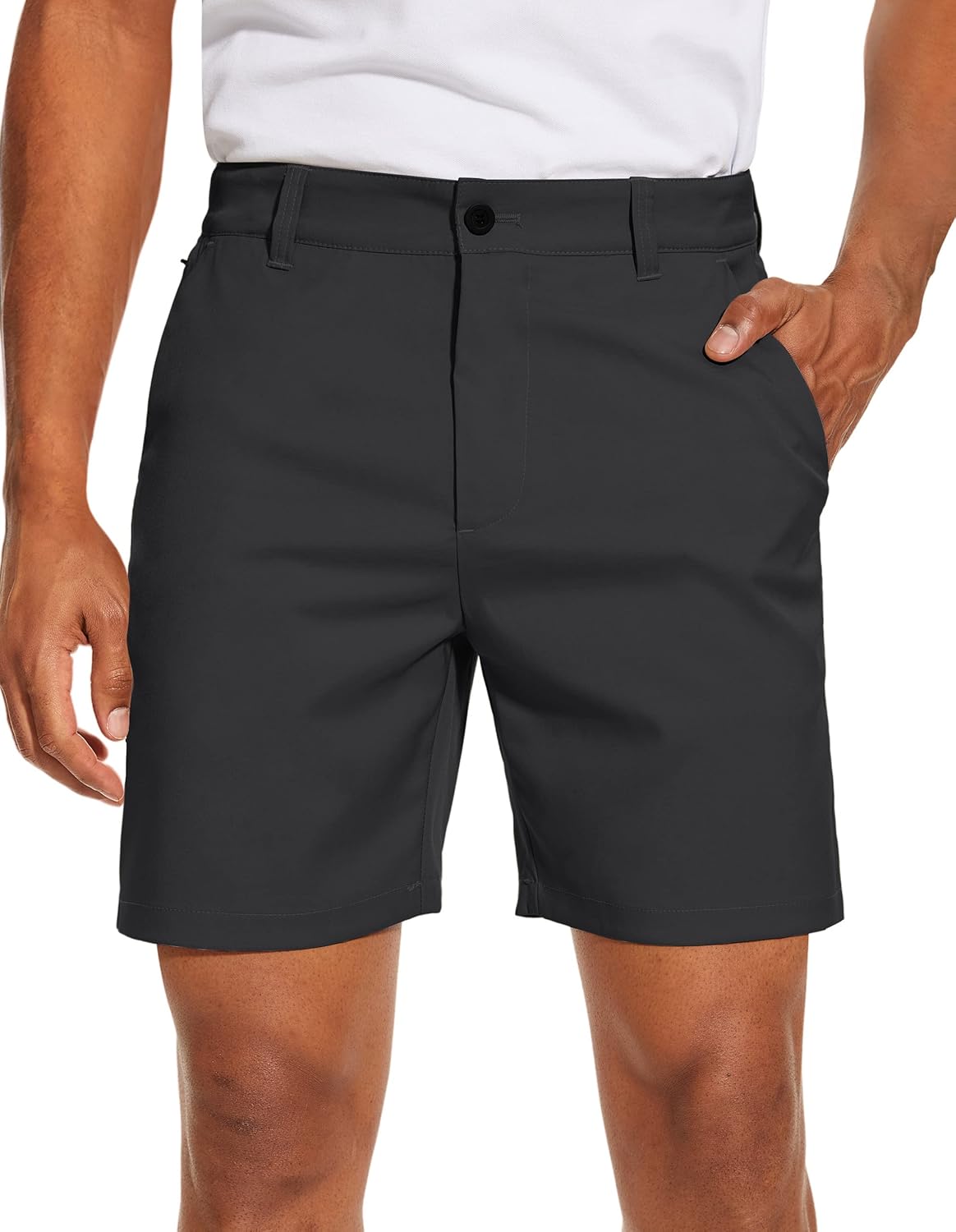
Official Site: PULI
Core Foundations
Heat index: why humidity feels heavier than heat
Humidity changes how your body cools itself because sweat needs evaporation to pull heat away from skin. When relative humidity is high, sweat evaporates more slowly, so you feel warmer at the same air temperature.
The Heat Index is a simple way to think about this combined load. The National Weather Service defines heat index as how hot it feels when relative humidity is factored in with the actual air temperature, and it also notes that full sunshine can raise that effective feel even more. (weather.gov)
For golf shorts, the practical takeaway is direct: your shorts should help sweat spread and evaporate, rather than trapping moisture against your thighs and waistband.
The comfort stack in humidity: airflow, wicking, drying
In hot-humid weather, comfort is not one feature. It is a stack:
- Airflow: small air gaps between fabric and skin allow convective cooling.
- Wicking: the fabric moves sweat off skin into the textile structure.
- Drying speed: the fabric releases that moisture to the air so it does not stay heavy.
If any layer fails, slim fit starts to feel tighter than it measures. The shorts did not shrink, but the wet fabric effectively increases skin contact and friction.
Fit physics: ease, stretch, and contact points
Slim fit does not mean skin-tight. In humidity, you want controlled shape with the right type of ease:
- Thigh ease prevents inner-thigh rub during walking and knee flex.
- Rise and seat ease prevent pulling at address and on uphill lies.
- Stretch recovery helps the shorts return to shape after a sweaty round.
Stretch matters most at high-motion points: hip rotation, lead-leg load, and the waistband. A stretch waistband can also reduce pressure spikes after hydration and meals.
Fabric stack: fiber, weave, and finishing
Most modern golf shorts rely on synthetic blends because they can wick and dry quickly. A common performance baseline is a polyester + elastane/spandex blend.
In humidity, the finishing and weave become just as important as the fiber:
- A tighter weave can resist snags and look dressy, but may reduce airflow.
- A textured inner face can reduce cling by creating micro air channels.
- A smooth outer face can reduce friction with your glove, towel, or bag strap.
If you are prioritizing Sustainable Fabrics, look for options that still meet the performance stack. Sustainability goals and humidity comfort can align, but only when the material system supports wicking and quick drying.
Thermoregulation and Airflow
Why air gaps drive cooling in slim fit
Airflow is your first defense against that sticky, trapped feeling. Even a slim silhouette can feel cooler if it preserves small, consistent air gaps around the upper thigh and behind the knee.
Use this quick mental model:
- More fabric-to-skin contact equals more cling and slower evaporation.
- More controlled air gap equals less cling and faster cooling.
In practice, this means the shorts should not pinch at the seat or pull across the quads. When fabric is under tension, it presses into skin and holds sweat film in place.
What design details help in humid rounds
In slim fit golf shorts, airflow usually comes from construction rather than loose volume:
- Athletic patterning that follows movement so fabric does not collapse into folds.
- Stretch blend that lets you size for a clean look without choking the thigh.
- Pocket bags that lay flat so you do not create extra layers over the hip.
How PULI supports airflow without going baggy
PULI Mens Golf Dress Shorts Flat Front Hybrid 7 Inch Lightweight Quick Dry Chino Casual with Pockets uses a 96% polyester, 4% spandex fabric with a focus on lightweight and breathability, plus moisture-wicking and UPF 50+ coverage. The engineered stretch waistband helps keep the fit close without forcing you to size down, which is a common cause of overheating and cling.
The 7-inch inseam is a practical middle ground for airflow. It exposes more lower thigh than longer lengths, but still looks course-appropriate and reduces the chance of the hem catching on the back of the knee.
Shop: PULI Men’s Golf Dress Shorts 7 Inch with Pockets
Sweat Control and Drying Speed
Why polyester blends usually win in humidity
Humidity punishes fabrics that hold water. Polyester blends tend to move moisture and dry faster than many natural fibers, especially when paired with elastane for stretch.
Your goal is not to avoid sweating. Your goal is to prevent sweat from staying as a continuous wet layer on skin, because that creates:
- cling during your pre-shot routine
- friction during the walk
- a heavier feel that distracts late in the round
Look for wicking plus fast release
Some fabrics wick but still dry slowly because they hold moisture deep in the yarn structure. In humid weather, that can feel like you are wearing a damp towel. Better options spread moisture thinly so it can evaporate.
PULI highlights quick-drying and moisture-wicking performance in its golf shorts lineup, and it commonly pairs that with UPF 50+ protection for summer rounds.

How PULI’s hybrid short builds a hot-weather system
PULI Men’s Golf Hybrid Dress Shorts Casual Summer Stretch Flat Front Lightweight Hiking Shorts Quick Dry with Pockets uses a 96% polyester, 4% spandex fabric and is described as quick-drying, wrinkle resistant, stretchy, UPF 50+, and moisture-wicking.
In real use, that combination matters because it reduces the worst humidity failure modes:
- Less damp cling at the upper thigh when you sit in the cart.
- Faster comfort recovery after a sweaty walk up a hill.
- Less fabric collapse at the waistband after repeated bending.
It also includes a pocket system designed for carry, including multiple pocket types and a zipper pocket on the right leg. In humid weather, secure storage helps because you can keep pockets flatter and avoid stuffing items that create extra layers.
Shop: PULI Men’s Golf Hybrid Dress Shorts Quick Dry
Mobility Through the Swing
The swing is rotation plus stability
A golf swing is not just leg motion. It is hip rotation with stable foot pressure and consistent posture. In humidity, stiff or clingy shorts can subtly change your setup because you will unconsciously seek relief.
Mobility in slim fit shorts comes from two elements:
- Elastane content for stretch during rotation and squat depth.
- Waistband engineering so the top edge does not dig in at address.
Even a small restriction can show up as a rushed transition or a finish you cannot hold.
The waistband matters more than most golfers think
A good waistband is the control center of the garment:
- It anchors the shirt so you do not re-tuck constantly.
- It spreads pressure so you can breathe and rotate.
- It helps pockets stay aligned so items do not swing around.
This becomes more important in humidity because fabric friction increases when damp.
A slim fit option for golfers who want more leg freedom
For golfers who want a shorter, sportier cut that still stays functional, PULI Golf Shorts Men’s 5 Inch Inseam Relaxed Fit Stretch Dress Lightweight Casual Travel Quick Dry Summer Shorts uses a 96% polyester, 4% spandex fabric with a focus on durability and moisture-wicking.
A shorter inseam can reduce fabric bunching at the hip crease, especially for golfers with larger quads. However, shorter lengths can increase inner-thigh friction if the hem rides up, so you should prioritize proper thigh ease and smooth seams.
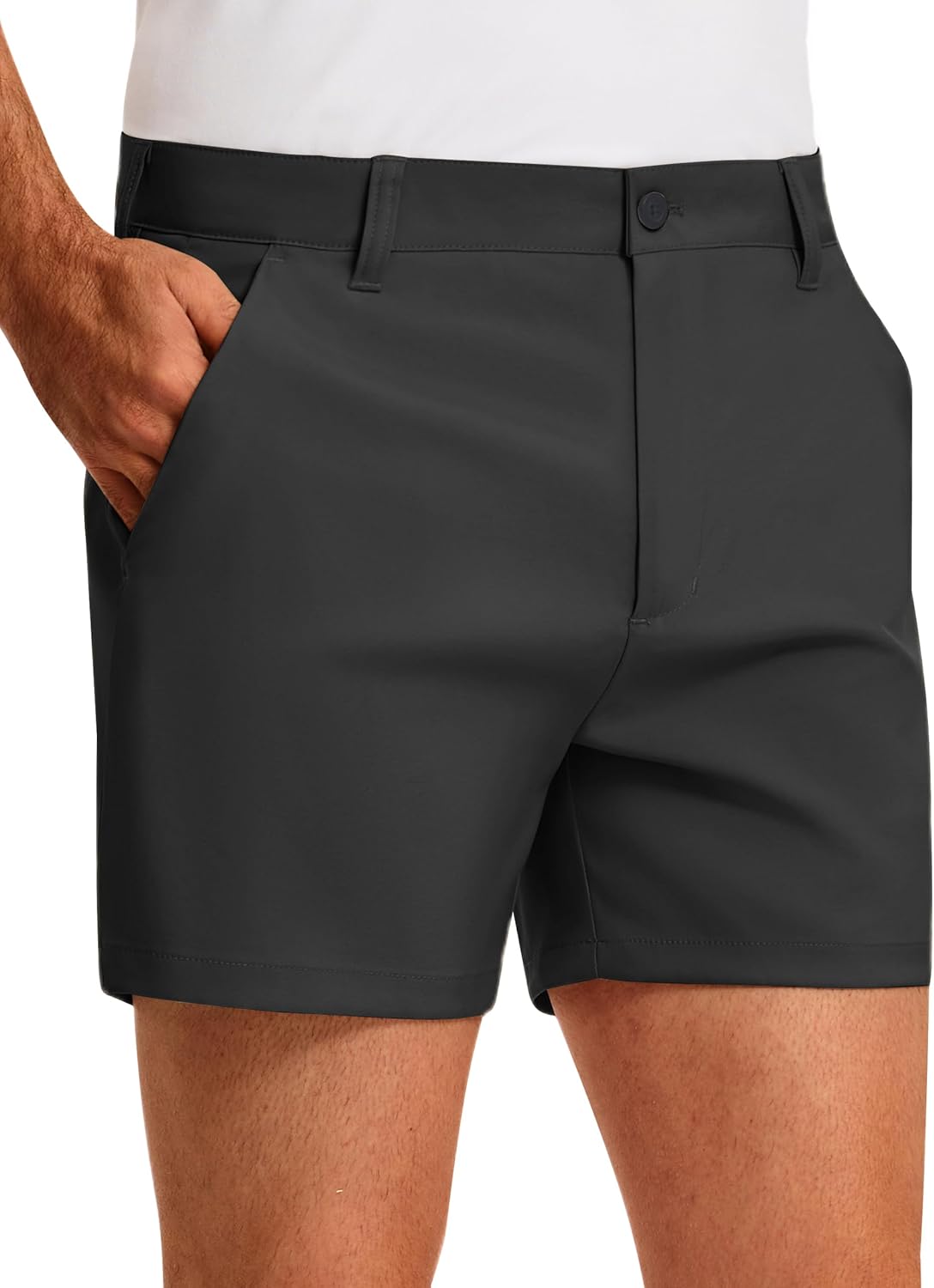
Shop: PULI Golf Shorts Men’s 5 Inch Inseam
Chafe, Friction, and Waist Security
Why humidity increases chafe risk
Chafing is friction plus moisture plus repeated motion. In humid weather, moisture is always present, so you must control the other two:
- reduce friction at seams and high-contact zones
- reduce repetitive rubbing by stabilizing fit
Common hotspots in slim fit golf shorts include inner thigh, the base of the zipper area, and waistband edges.
What to look for in construction
Use this checklist when you evaluate shorts for hot-humid play:
- Smoother seam placement away from inner-thigh contact.
- Sufficient rise so the crotch seam does not pull under tension.
- Brushed or grippy waistband lining so shirts stay tucked.
- Secure pockets so you do not overload one side and create swing friction.
How PULI addresses shirt stay and practical carry
PULI’s 7-inch golf dress shorts highlight an engineered stretch waistband and a brushed tricot-lined waistband designed to help keep your shirt tucked during the swing. That detail matters because repeated re-tucking increases skin friction and distraction.
PULI also emphasizes multi-pocket layouts, including deep side pockets and zipper pockets. In humidity, zipper storage is not only about security. It also helps you avoid clenching your phone in your hand, which can change grip pressure and tempo.

Sun Exposure and Coverage Choices
UPF and why coverage is still part of comfort
In humid heat, sun exposure can feel like extra load on your body. Sun-protective clothing reduces UV reaching skin, which helps limit sunburn risk and can reduce the overall discomfort that makes you feel hotter.
Many golf shorts now include UPF ratings. PULI repeatedly lists UPF 50+ as a key feature across multiple shorts, which is a practical baseline for sunny, high-UV rounds.
SPF context: why SPF 50 is not double SPF 25
Sunscreen and clothing are different tools, but golfers use both. For perspective, SPF scaling is not linear. The AIM at Melanoma Foundation summarizes common approximations: SPF 30 filters about 97% of UVB rays, while SPF 50 filters about 98% of UVB rays. (aimatmelanoma.org)
The practical golf takeaway is that you should treat clothing as steady background protection and sunscreen as the adjustable layer for exposed skin.
Heat and UV: plan like a summer athlete
Heat and sun compound each other. The National Weather Service notes that full sunshine can increase heat index values by up to 15 degrees Fahrenheit. (weather.gov) That is one reason humid rounds can feel surprisingly draining.
To reduce exposure risk, the US EPA also emphasizes sun-safety basics, including reapplying broad spectrum sunscreen every 2 hours, especially after sweating. (epa.gov)
Selection and Decision Guide
Fabric blend: start with a performance baseline
If you play often in humidity, a common baseline is a polyester-elastane blend such as 96% polyester, 4% spandex. PULI uses that exact blend across several core golf short options.
If Sustainable Fabrics are part of your decision, treat them as an additional requirement, not a replacement for performance. First confirm that the fabric wicks and dries quickly, then evaluate sourcing and longevity.
Inseam length: mobility versus coverage
Inseam is not only style. In humidity, inseam changes your friction map:
- 5-inch: more airflow and less fabric weight, but you must manage inner-thigh rub.
- 7-inch: balanced coverage and modern look, often the easiest all-around choice.
- 12-inch: more coverage and sun protection, but can trap heat around the knee area.
PULI offers multiple inseam directions, including a 7-inch dress short and a 12-inch golf hiking short.
Pocket layout: carry without bulk
In humidity, bulky pockets add heat and create pressure points when you sit or rotate. Use this rule:
- carry fewer items
- choose deeper pockets that keep items stable
- prioritize at least one zipper pocket for phone or keys
PULI designs often include zipper storage and multi-pocket layouts, which helps you distribute carry without stuffing one pocket.
Finishes and claims: quick-dry and wrinkle resistance
Wrinkle resistance is not just about looks. In humidity, wrinkled fabric can fold into thicker ridges that increase friction. Quick-dry finishes matter most when you sweat heavily early in the round.
PULI’s hybrid dress shorts call out quick-drying, wrinkle resistance, and easy care wash guidance, which aligns with the demands of a humid summer rotation.
Decision table: match conditions to the right short setup
| Humid-round scenario | Main comfort risk | What to prioritize | A practical short profile |
|---|---|---|---|
| Walking 18 holes, 80%+ humidity | cling and inner-thigh rub | wicking + thigh ease + smooth seams | slim fit with stretch fabric and stable waistband |
| Cart golf with frequent sitting | waistband pressure and damp seat | stretch waistband + quick-dry fabric | 7-inch slim fit with engineered waistband |
| Tournament pace, long pre-shot routine | distraction from sweat and re-tucking | shirt-stay waistband lining + pocket stability | brushed waistband lining + zipper pocket |
| Sunny and humid, high UV | sun load plus heat index | UPF fabric + exposed-skin sunscreen plan | UPF 50+ shorts with balanced inseam |
Best Practices & Pitfalls
Best Practices
- Choose fit for movement, not the mirror. A slim fit should still allow you to pinch a little fabric at the thigh. That small air gap helps reduce cling when sweat builds.
- Use the pockets as a system. Keep your phone in a zipper or hidden pocket so it does not swing. Split tees, marker, and glove across pockets to reduce bulk.
- Wash for performance. Use cold or cool water and skip fabric softeners when possible. Softeners can reduce wicking by coating fibers.
- Rotate pairs in peak season. In a humid summer, giving shorts a full dry cycle between rounds helps preserve stretch recovery and reduces lingering odor.
Common Pitfalls to Avoid
- Sizing down for a tighter look. Tight shorts collapse airflow and increase friction. In humidity, that often feels worse by the back nine.
- Ignoring rise and crotch comfort. A low or tight rise can pull seams into high-friction areas during walking and address posture.
- Overloading pockets during the swing. Extra items create friction and can subtly change your tempo. A heavy pocket can also tug fabric and reduce mobility.
- Assuming UPF replaces sunscreen. UPF helps on covered skin, but you still need a sunscreen plan for legs, arms, face, and neck.
Conclusion
Slim fit golf shorts can work extremely well in hot, humid weather when they are built around airflow, wicking, quick drying, and stretch. Fit choices matter as much as fabric because humidity punishes excessive skin contact and unstable waistbands.
Start with the comfort stack, then use inseam, pockets, and construction details to reduce friction and distractions. If Sustainable Fabrics are part of your priorities, keep performance requirements front and center so your shorts feel good for the full round.
FAQ
Do slim fit golf shorts feel hotter in humidity?
Slim fit golf shorts can feel hotter if the fabric holds moisture or if the cut presses tightly against your thighs. Humidity slows sweat evaporation, so any extra skin contact increases cling and discomfort. A stretch-wicking fabric and proper thigh ease can keep small air gaps that improve comfort. If the shorts feel damp and heavy by the back nine, drying speed is usually the missing piece.
What inseam is best for hot, humid rounds?
A mid-length inseam around 7 inches is often the easiest balance of airflow, coverage, and reduced chafe risk. A 5-inch inseam can feel cooler, but it may ride up for some golfers and increase inner-thigh friction. Longer inseams like 10 to 12 inches add coverage but can trap heat around the knee when you walk. The best inseam is the one that prevents rubbing during your normal stride length.
Are polyester golf shorts better than cotton in humidity?
Polyester blends are usually better in humidity because they tend to wick and dry faster than cotton. Cotton can absorb a lot of sweat and stay wet, which increases cling and friction. A small amount of elastane or spandex also helps because the fabric moves with your swing instead of pulling tight. If you prefer natural fibers for comfort or Sustainable Fabrics goals, focus on options that still dry quickly and keep structure when damp.
How can I reduce chafing in slim golf shorts?
First, make sure the shorts are not overly tight at the inner thigh, because tension increases seam pressure and rubbing. Next, look for smooth seam placement and a rise that does not pull upward when you walk. Moisture management is also critical, since damp fabric increases friction even when the fit is correct. If you are prone to chafe, consider adding an anti-chafe balm to high-friction areas before you tee off.
Why do my shorts cling when I sit in a cart?
Cling often happens because sweat builds at the seat and upper thigh, then the fabric stays in full contact with skin. When you stand up, the damp textile can feel like it grips your legs until it dries. Quick-dry fabrics help, but so does fit that avoids excessive tightness across the hip and seat. If the cling repeats every few holes, you likely need better drying speed or slightly more ease in the cut.
Does a stretch waistband actually help my golf swing?
A stretch waistband can help because it reduces pressure spikes at address and during rotation, especially after hydration and meals. When the waistband stays comfortable, you are less likely to adjust your posture or rush your motion to relieve pressure. It also helps keep your shirt tucked, which reduces distractions during your routine. For humid rounds, waistband comfort becomes more important because damp fabric increases friction at the waist.
Should I prioritize UPF 50+ in golf shorts for summer?
UPF 50+ is a strong feature for summer because it reduces UV exposure on covered skin during long rounds. That matters on bright days because sun load can add to fatigue and discomfort even when the temperature is stable. However, UPF does not replace sunscreen on exposed skin, especially the lower legs in shorter inseams. A good summer setup combines UPF clothing with consistent sunscreen use.
Can I wear slim fit golf shorts for hiking or travel in humid climates?
Slim fit golf shorts can work well for hiking or travel if they have enough stretch and secure pocketing. In humid climates, quick-dry performance helps after sudden rain, sweat, or frequent sitting. You should also check pocket layout, since travel carry often includes a phone, wallet, and keys that can create bulk. If you plan long walks, prioritize thigh ease and smooth seams over the most aggressive slim silhouette.