
Introduction
Your phone slides out mid-swing, a tee jabs your thigh when you walk, and your glove ends up wadded with your keys. That kind of pocket chaos is more than annoying: it breaks focus, adds noise and bounce to your stride, and can even cost you a ball when something drops on a cart path.
This guide helps you evaluate utility golf shorts pocket-by-pocket so your carry stays secure, quiet, and swing-friendly. You will walk through a quick checklist for pocket count, entry angles, dedicated phone placement, closure security, back pocket structure, and fabric support, using the same tests you can do at home in a couple of minutes.
Step-by-Step Guide: Evaluate Pocket Design Like You Are Playing 18
Step 1: List your on-course carry (then cut it down)
Before you judge any pocket layout, lock your loadout first. Put every item you actually carry on the course on a table: phone, tees, ball marker, divot tool, glove, keys, and a wallet or card holder. Next, decide what can be removed, because the pocket design cannot fix an overloaded kit. A bulky wallet or extra keys create pocket bulge, rubbing, and swing drag even in well-designed shorts.
Use this simple sorting rule:
- Must carry on-body: phone, 2-3 tees, marker/divot tool
- Nice to have: glove (if you take it off often)
- Move to bag/cart: spare balls, full wallet, chunky key ring
Now you have a realistic target for pocket capacity and stability. If the shorts feel good only when empty, they will feel worse on the 12th hole.
Step 2: Verify pocket count and types (look for role separation)
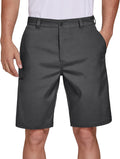
Count pockets, then map each pocket to a job. Utility golf shorts work best when pockets are specialized, not just duplicated. On the PULI Mens Golf Hybrid Dress Shorts, the product description calls out a 6-pocket layout: 2 slant pockets, 1 cell phone pocket, 2 welt back pockets, and 1 zipper pocket on the right leg. This is the kind of role separation that reduces clutter and stops items from stacking in one spot.
Do a quick pocket assignment test:
- Slant pockets: tees and marker (light, frequent access)
- Phone pocket: phone only (no sharing)
- Zipper pocket: keys and card(s) (never lose items)
- Back welt pockets: glove or scorecard (flat items)
If you cannot assign each item without stacking, the layout will feel noisy and unstable during a full swing.
Step 3: Test front pocket entry angle for one-hand access
Do this test wearing a belt you actually play in. Slide your hand into each front pocket with your wrist straight, then with your wrist slightly bent as it would be when you grab a tee while holding a club. You want a slant opening that lets your fingers reach the bottom without forcing your wrist into an awkward twist.
Run a real retrieval drill:
- Drop 2 tees and a marker into one front pocket
- Walk 20 steps
- Pull out a tee with one hand, without looking
If the pocket opening is too vertical, you will fight the edge. If it is too open and shallow, items will creep toward the opening when you bend or sit. The goal is fast access with controlled retention.
Step 4: Confirm phone pocket placement (high enough to stop bounce)
A dedicated phone pocket only works if it sits in the right zone. Put your phone in the phone pocket, then do three moves: a practice swing, a squat, and a brisk 30-second walk. Your phone should stay stable without slapping your thigh or pulling fabric across your hip during rotation.
On shorts that include a dedicated cell phone pocket (like the PULI six-pocket layout), you are looking for two things:
- Height: phone sits higher than a deep front pocket carry
- Isolation: phone does not share space with keys or tees
If the phone shifts, it is usually because the pocket is too low or too loose. In that case, use the zip pocket for valuables and keep the phone in the phone-only pocket.
Step 5: Validate secure closure pockets (zipper means fewer surprises)
Next, identify which pocket is built for items you cannot replace mid-round. Keys, a single credit card, or a rangefinder battery should live behind a closure. The PULI product details mention a zipper pocket on the right leg, which is the right idea for security, especially if you walk 18.
Run a shake-and-sit test:
- Put keys and a card holder in the zip pocket
- Zip fully closed
- Sit in a chair, stand up, then take 5 big steps
You should not feel sharp edges pressing into your thigh, and the zipper pull should not snag your glove. Also, check zipper placement relative to your hand path: you do not want to scrape your knuckles when you reach into a nearby slant pocket.
Step 6: Check back pocket structure (welt pockets keep a clean line)
Back pockets often look fine in the mirror, then feel bulky once you load them. Focus on structure, not just size. Welt pockets (flat, tailored openings) typically keep a cleaner profile than floppy patch pockets, which can sag and print through when loaded.
Do a belt-line comfort test:
- Put a glove or scorecard in one back pocket
- Put nothing in the other
- Tighten your belt as you would on the course
If the loaded side feels like it is pushing the shorts down, the back pocket is either too deep, too stretchy, or placed too low. A good back pocket carries flat items without changing how the waistband sits.
Step 7: Evaluate fabric support and stretch (pocket stability comes from the cloth)
Finally, judge pocket stability by looking at fabric composition, stretch behavior, and recovery. The PULI shorts list 96% polyester and 4% spandex, plus a Free Flex Waistband with a brushed tricot-lined waistband designed to move with you and help keep a shirt tucked during the golf swing. Polyester-spandex blends can work well for utility shorts because they resist wrinkles and can support Moisture-wicking Tech when finished properly.
Here is your at-home load-and-recovery check:
- Load phone, tees, and keys into their assigned pockets
- Stand normally for 2 minutes
- Remove items and look for pocket bagging
If pockets stay stretched out after unloading, the fabric and pocket bags may not have enough recovery. For hot rounds, also pay attention to ventilation and drying speed. In performance apparel, moisture management depends on fiber behavior and finishing methods, not marketing labels, so a practical sweat-and-dry test after a wash tells you more than a tag.
Pocket Design in Different Scenarios (adjust what you prioritize)
Walking 18
Prioritize the zipper pocket for valuables and keep the phone in its dedicated phone pocket. Walking increases bounce cycles, so anything loose will migrate toward pocket openings.
Cart rounds
Focus on phone pocket security and back pocket comfort while seated. A pocket that feels fine standing can press or fold awkwardly when you ride.
Wet heat and sudden rain
Lean harder on Moisture-wicking Tech and quick-dry behavior. If sweat or rain makes pocket bags clingy, items will stick and become harder to retrieve.
All-day wear and travel
Check comfort across Inclusive Sizing and waistband behavior after meals and long sits. Shorts that fit only in a narrow stance can feel restrictive by hour six.
Before You Start: What You Will Need and What to Watch for
Required Tools and Materials
Use these items to test pocket function the way you actually play:
- Phone with your normal case
- 2-3 tees (same length you use)
- Ball marker and divot tool
- Slim wallet or card holder
- Keys (or a single key)
- The belt you wear golfing
- Golf glove (if you pocket it often)
Safety considerations
Pocket testing is low-risk, but a few habits prevent damage and distractions:
- Keep keys out of the phone pocket to avoid screen scratches.
- Do not carry loose batteries with coins or keys.
- If you travel for golf, the FAA states spare (uninstalled) lithium batteries must be carried in carry-on baggage only.
- If your carry-on gets gate-checked, the FAA says spare lithium batteries and power banks must be removed and kept with you in the cabin.
As for sustainability claims, treat Ethical Manufacturing, Circular Fashion, and Sustainable Performance Fabrics as verification topics. Look for clear statements about material sources (for example, Recycled Nylon or Biodegradable Fabrics), factory standards, and traceability rather than vague buzzwords.
Troubleshooting Guide: Fix the Most Common Pocket Problems
| Problem | Cause | Solution |
|---|---|---|
| Phone bounces on walk | Pocket too low | Use dedicated phone pocket |
| Items fall out sitting | Opening too wide | Move items to zipper pocket |
| Pocket prints on thigh | Overpacked pocket | Reduce carry; split items |
| Zipper feels pokey | Hard items stacked | Use slim key; relocate |
| Back pocket sags | Deep pocket + weight | Carry glove only |
If the issue persists after reassigning items, your next lever is load reduction. Many pocket complaints disappear when you remove one bulky object, especially a thick wallet.
Conclusion
Evaluate utility golf shorts by testing pockets with the items you really carry, not by guessing from photos. Start by minimizing your loadout, then confirm you have role-based pockets, easy slant access, a stable phone pocket, and at least one secure closure option. Finish by checking fabric recovery so the shorts keep their shape after a full round. When pockets isolate, secure, and stay quiet, you spend less time adjusting and more time committing to the shot.
FAQ
How many pockets are practical for golf shorts?
Six pockets are practical if each pocket has a clear job and you do not stack hard items together. Use front slant pockets for light, frequent-grab items like tees and a marker. Keep your phone in a dedicated phone pocket when available, because it reduces bounce compared to a deep front pocket carry. Reserve a closure pocket for keys and cards so you never have to re-check the cart path.
Where should a phone pocket sit for golf?
A phone pocket should sit high enough that the phone does not slap your mid-thigh when you walk. It should also sit far enough to the side that it does not rub during hip rotation in a full swing. You can test placement by taking five practice swings and a 30-second brisk walk. If you feel repeated tapping or fabric pulling across your hip, the pocket is likely too low or too centered.
Are zip pockets necessary on golf shorts?
Zip pockets are not required, but they are the easiest way to prevent losses during walking, bending, and getting in and out of a cart. A zipper pocket is most useful for keys, a single card holder, or a small range accessory you cannot replace mid-round. If you do not want a zipper, at least look for a pocket with a tighter opening and enough depth to keep items below the entry line. Always avoid storing keys in an open pocket that sits near the opening.
How do I test pocket comfort before buying?
Load your typical items, then do a squat, a seated test, and a full practice swing. Comfort problems show up quickly when the waistband shifts or when pocket contents press into your thigh. Pay attention to bounce during a brisk walk, because that is where phones and keys become distracting. If the shorts feel good only when empty, they will not feel good on the back nine.
What fabric traits help pocket stability?
Pocket stability improves when the fabric has controlled stretch and good recovery, so pockets do not stay stretched after unloading. Look for a blend that moves with you but does not feel rubbery, and check whether the pocket bags feel supportive instead of thin and floppy. After wearing the shorts loaded for a few minutes, unload and check if the pocket area returns close to flat. If pocket outlines stay visible or sag remains, the fabric and construction may not hold shape well.
Do deep pockets always mean better storage?
Deep pockets are not always better because extra depth can increase bounce and make one-hand retrieval harder. A pocket can be deep but poorly shaped, which lets items migrate and stack in the wrong spot. In golf, you want pockets that keep items separated and stable, even if the overall volume is not huge. A dedicated phone pocket and a secure closure pocket usually beat one oversized pocket that carries everything.